by Ace Concierge | Virtual Assistant | Apr 10, 2024 | Business Transformation, Productivity, Small Business
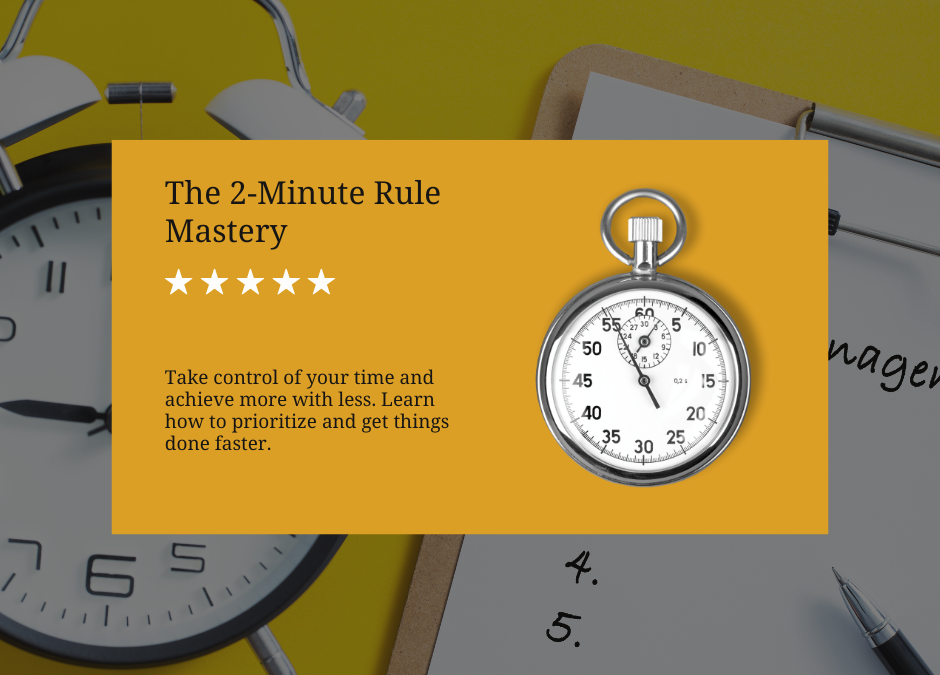
Hey, productivity masters! Today, I’d like to discuss a practical tool that significantly impacted my daily routine—the 2-Minute Rule. If you’ve ever felt overwhelmed by an ever-growing to-do list, this approach might be the solution you’re looking for.
It is quick, effective, and efficient. Let’s go!!
The Struggle of Overwhelming To-Do Lists
We’ve all been there. You sit down at your desk, determined to conquer the day, armed with a list of tasks that seems to grow exponentially as the hours tick by. It’s like playing a never-ending game of whack-a-mole, except the moles are your responsibilities, and they keep coming back. It’s just not doable.
I believed in prioritizing big tasks for maximum productivity. However, complex, high-level tasks require scheduled ‘deep focus.’ Allocate dedicated time for those larger projects and employ the 2-Minute Rule for the rest.
Enter the 2-Minute Rule
Cue the entrance of the 2-Minute Rule, my knight in shining armor, in the battle against an unruly to-do list. The concept is simple yet profound – if a task takes less than 2 minutes, do it immediately. No delays, no procrastination. Set a timer if you must, but get it done.
This strategy works wonders because, let’s face it, the small tasks are like weeds. Ignore them for too long, and suddenly your garden is overrun. Addressing tasks that take less than 2 minutes immediately prevents the accumulation of tiny chores that collectively can be a time-consuming nightmare.
Identifying the 2-Minute Tasks
You might wonder how to spot these quick 2-minute tasks. It’s simpler than you think. Consider them the readily manageable items in your productivity list—the emails needing a swift response, the postponed phone calls, or the documents needing minor edits.
If a task requires minimal effort and can be completed quickly, it falls into the 2-minute category. Remember that we’re not discussing monumental challenges; instead, we’re focusing on those doable tasks that, when addressed collectively, significantly enhance your daily efficiency.
Setting the Timer and Taking Control
One of the beauties of the 2-Minute Rule is its simplicity. All you need is a timer – your phone, a kitchen timer, or even an old-school hourglass. When you come across a task that fits the criteria, set the timer for 2 minutes and dive in. You’ll be amazed at how much you can accomplish in such a short time.
The timer serves as your accountability partner, urging you to stay focused and avoid getting lost in the black hole of small tasks. It transforms the mundane into a challenge, and who doesn’t love a good challenge, especially when it leads to increased productivity?
Breaking the Procrastination Cycle
Let’s be real; we’re all guilty of procrastination. There’s something strangely satisfying about pushing tasks to the bottom of the pile, convincing ourselves we’ll get to them eventually. But here’s the kicker – eventually rarely comes.
The 2-Minute Rule is a procrastination buster. It breaks the cycle by making tasks so manageable that delaying them becomes absurd. It’s like telling yourself, “Why put it off for later? What can I finish now and be done with it?”
My Transformation
I can’t stress enough how this simple rule transformed my daily life. The feeling of accomplishment that comes from quickly knocking off tasks is addictive. Instead of feeling overwhelmed by the never-ending to-do list, I now see it as a series of small victories waiting to be claimed.
The big tasks still loom on the horizon, but they no longer cast a shadow over my entire day. By mastering the 2-Minute Rule, I’ve regained control of my time. I no longer dread the small tasks, and my productivity graph has shot through the roof.
So, there you have it – the secret weapon that helped me regain control of my time and boost my overall productivity. The 2-Minute Rule is not just a strategy; it’s a mindset shift. It’s about acknowledging the power of small actions and understanding that they add to significant results.
Try it; set a timer, tackle those quick tasks, and witness the magic unfold. The 2-Minute Rule is not just a time management technique; it’s a game-changer that puts you back in the driver’s seat of your day.
Say goodbye to the overwhelm and hello to ultimate time control! ⏰
by Ace Concierge | Virtual Assistant | Mar 6, 2024 | Executive Assistant, Virtual Assistant
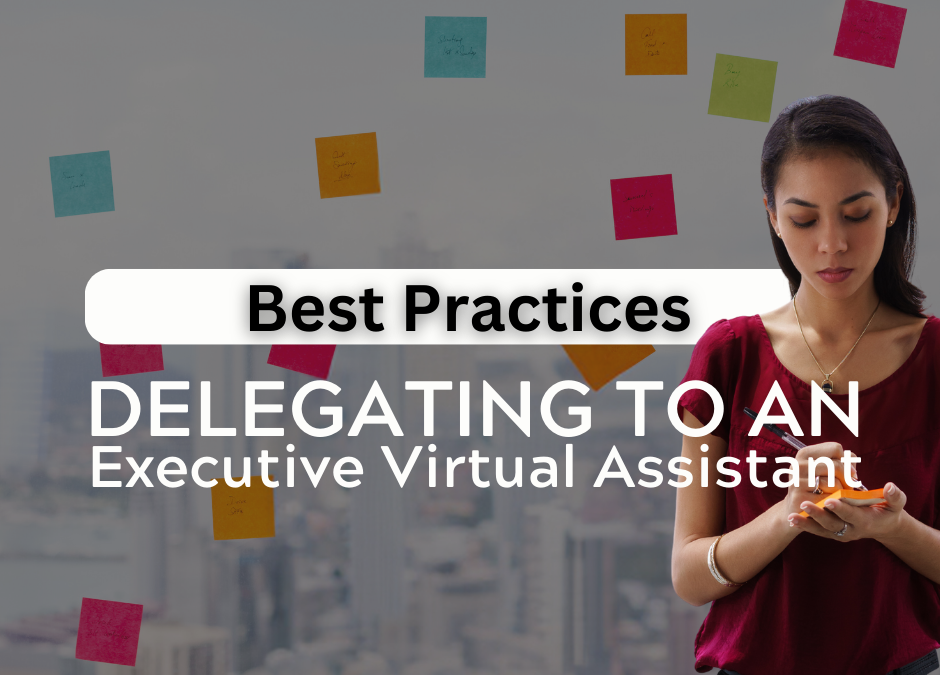
Delegating tasks to a virtual assistant can be a game-changer for individuals seeking to boost productivity and focus on high-priority projects. To ensure a successful working relationship with your executive virtual assistant, it’s essential to implement some best practices that can streamline the delegation process, maximize efficiency, and amplify your time management.
Define Clear Objectives: Before assigning tasks, articulate your goals and expectations clearly. By outlining the tasks that require assistance and the desired outcomes, you can avoid any potential misunderstandings and set the stage for a productive collaboration.
Choose the Right Tasks: Focus on assigning repetitive, time-consuming, or specialized tasks that do not demand your direct involvement. Tasks such as email management, appointment scheduling, calendaring, event support, research, data entry, and social media management are ideal candidates for delegation, allowing you to free up valuable time for strategic decision-making and core business activities.
Effective Communication: Provide your virtual assistant with detailed instructions, including specific steps, deadlines, and any preferences you may have. Leveraging communication tools such as written briefs, video instructions, or virtual meetings can enhance clarity and ensure that your assistant comprehends your requirements thoroughly.
Establish Trust: Avoid the temptation to micromanage and instead empower your assistant to execute tasks autonomously while adhering to your guidelines. Trust is a two-way street, and by fostering a relationship built on trust, you can cultivate a sense of ownership and accountability within your virtual assistant.
Utilize Task Management Tools: Task management tools play a pivotal role in streamlining delegation processes. Platforms like Salesforce, Redbooth, or Monday.com facilitate task assignments, priority setting, progress tracking, and real-time updates from your virtual assistant, promoting transparency and accountability in task management.
Regular Check-ins: Schedule periodic meetings to discuss ongoing projects, address any queries, and provide constructive feedback. By maintaining consistent communication through video calls, chats, or emails, you can ensure alignment on project goals and swiftly resolve any issues that may arise.
Encourage Questions: By fostering an environment where questions are welcomed, you can preempt misunderstandings and guarantee that tasks are executed to your satisfaction. Additionally, providing constructive feedback upon task completion can aid in enhancing your assistant’s skills and refining their performance over time.
Adaptability is Key: Acknowledge that there may be a learning curve initially as your assistant familiarizes themselves with your preferences and workflow. Exercise patience during this adjustment period, understanding that efficiency will improve as your assistant becomes more attuned to your requirements.
Review and Reflect: Reflect on what is working well and identify areas for improvement. By engaging in this continuous improvement process, you can optimize your collaboration with your virtual assistant and derive maximum benefit from their support.
To wrap it up, mastering the art of delegating tasks to a virtual assistant requires a blend of clear communication, trust-building, effective task management, and a commitment to ongoing improvement. By implementing these best practices, you can harness the full potential of your executive virtual assistant, enhance your productivity, and concentrate on advancing your professional pursuits to new levels of success.

by Ace Concierge | Virtual Assistant | Feb 7, 2024 | Executive Assistant, Virtual Assistant
Congratulations to all the diligent and hardworking individuals out there. You overachiever! It feels good most days, doesn’t it?
Seriously, doing everything yourself is like juggling ten balls at once – it’s exhausting, unproductive, and can lead to missed opportunities. It’s important to remember that everyone has limitations, and it’s okay to ask for help.
Let’s discuss a way to simplify life by enlisting the support of an executive virtual assistant (EVA).
Here are some valuable delegation insights to consider:
Benefits:
- Enhanced work-life balance: Offload daily tasks and projects so you can focus on the core genius you bring to the business.
- Boost productivity: An assistant can help you manage your workload, allowing you to achieve significantly more than you could on your own.
- Reduce stress: Working with an assistant can alleviate stress by ensuring that tasks are completed efficiently, freeing up your time and resources.
- Improved Decision-Making: Access timely and organized information provided by your EVA, empowering you to make informed decisions swiftly and confidently.
Tips:
- Strategic onboarding: Invest time initially in training to ensure a smooth onboarding process and alignment with your workflow.
- Time-conscious communication: Opt for concise yet effective communication to boost efficiency.
- Transparent expectations: Clearly outline project goals and deliverables to eliminate ambiguity.
- Encourage initiative: Empower your assistant to take initiative and contribute ideas to enhance productivity.
- Tech-savvy collaboration: Leverage communication tools and project management software for seamless interaction.
- Give feedback: Keep things on track by providing feedback and keeping your EVA up to speed.
Strategies:
- Get organized: Develop clear processes and procedures to help your assistant tackle tasks efficiently.
- Use online tools: Keep everyone on the same page by using project management tools like Redbooth, Salesforce, or Hubspot.
- Use their superpowers: Your executive virtual assistant might have hidden talents! Use their expertise to improve your business processes or strategy.
- Be friendly: Build a strong relationship with your assistant so they can provide the support you need. You never know, they might just save the day!
By the Numbers:
- Businesses that hire virtual assistants can save up to 78% of their operating costs. (Time Doctor)
- The majority of companies (70%) use outsourced workers to save money. (Deloitte)
- Executives spend 16 hours per week on day-to-day admin work. (Prialto)
- 40% of US businesses have embraced the world of virtual assistants. (ZipDo)
- Companies can save an average of $11k/year partnering with a remote staff like a virtual assistant. (Global Workforce Analytics)
Now close your eyes and imagine having a mystical genie that could tackle all the mundane tasks on your to-do list, freeing up your time and energy to focus on more important projects.
That’s the kind of efficiency and productivity that every executive dreams about.

by Ace Concierge | Virtual Assistant | Jan 24, 2024 | Time Management

Developing efficient executive and time management skills is an indispensable skill set for success in the professional world, regardless of your experience level. With a limited number of hours in a day and an increasing number of responsibilities, it’s easy to feel overwhelmed and struggle to accomplish everything on your to-do list.
To get you started on this journey, we’ve compiled a concise list of valuable insights and tips that you can implement today. Whether you’re a seasoned professional seeking to enhance efficiency or a newcomer to the workforce, these tips will assist you in managing your time more effectively, prioritizing tasks, and accomplishing your objectives.
1. Establish Clear Goals:
Kickstart your efforts by defining your destination. Develop SMART goals – Specific, Measurable, Achievable, Relevant, and Time-bound – providing a structured roadmap to focus your energy and guide your actions.
Friendly Tip: Think of your goals as friendly signposts on your professional journey. They guide you, keeping you on the right path with a clear sense of direction.
2. Prioritize Strategically:
With goals in sight, prioritize tasks based on importance and urgency. Employ tools like to-do lists, calendars, and schedules to maintain an organized approach, ensuring you stay on track.
Friendly Tip: Picture your to-do list as a friendly companion. It helps you navigate through tasks, ensuring you focus on what truly matters and stay ahead in your endeavors.
3. Efficient Delegation:
As an executive, learn the art of delegating tasks effectively. Distributing responsibilities strategically allows you to focus on pivotal duties, enhancing overall productivity.
Friendly Tip: Delegation is like building a supportive team. Trust your crew, empower them, and watch your ship sail smoothly through the professional seas.
4. Thoughtful Task Management:
Master the skill of discerning when to say no. Declining tasks that don’t align with your goals prevents burnout and maintains optimal performance.
Friendly Tip: Saying no is like maintaining a healthy work-life diet. It ensures you’re not overwhelmed and can savor the most meaningful tasks on your plate.
5. Optimize Time Use:
Effective time management is about maximizing your resources. Implement techniques like the Pomodoro Technique, time blocking, and the Eisenhower Matrix to make the most of your time.
Friendly Tip: Think of time management as your secret sauce. Use it wisely, sprinkle it strategically, and watch your productivity dish become a success.
6. Communicate Effectively:
In the professional setting, clear communication is key. Ensure your messages resonate by fostering an environment where everyone understands their role and responsibilities.
Friendly Tip: Communicate like you’re chatting over a cup of coffee with friends. It adds a touch of warmth and clarity to your professional interactions.
7. Elevate Leadership Qualities:
Enhance your executive standing by investing in leadership development. Attend training programs, read relevant literature, and seek feedback to refine your leadership skills.
Friendly Tip: Leadership growth is like planting a tree. Nurture it, watch it bloom, and enjoy the shade it provides to your entire team.
8. Prioritize Self-Care:
Amid professional demands, prioritize your well-being. Ensure sufficient sleep, engage in regular exercise, and maintain a balanced diet. Schedule moments for relaxation and self-care to manage stress effectively.
Friendly Tip: Self-care is your treasure chest. Open it regularly, indulge in the gems of relaxation and well-being, and watch your professional journey become more enjoyable.
Looking for some backup numbers? Check out Time Management Statistics in 2023. You may be surprised by the extent of inefficiencies that are negatively impacting your time, finances, mental well-being, and workforce.
Wrap it up! To be a true titan of triumph, sharpen your executive and time management skills with some of these strategic tips, and let us know how you did.
Here’s to your continued success, with a dash of friendly advice!

by Ace Concierge | Virtual Assistant | Jan 10, 2024 | Business Transformation, Business Values, Work Life Balance

CEOs, often regarded as the superheroes of the business world, must keep their kryptonite in check to achieve work-life balance. The demands of the job have blurred the lines between work and personal life, leaving CEOs to feel like they are on call 24/7.
Despite the superhuman expectations, they are only human, and finding that sweet spot between work and personal life can be as tricky as navigating a minefield. The modern world’s constant barrage of emails, phone calls, and urgent matters can make it feel like the workday never ends, ultimately leading to burnout and stress, taking a toll on CEOs’ well-being.
The Work-Life Balance Myth:
The concept of work-life balance can often feel like an unattainable dream. The boundaries between work and home are blurred because of technology, leading to immense pressure for CEOs to be available round-the-clock. The instant accessibility makes it challenging for CEOs to disconnect from their work responsibilities.
The 24/7 Nature of Leadership:
CEOs are entrusted with the overall success and growth of their organizations. This responsibility comes with a 24/7 commitment, as crises can occur at any time, and critical decisions may need to be taken outside regular working hours. The demanding nature of the role often leaves CEOs with limited opportunities to switch off and enjoy personal time, impacting their overall well-being.
Strategic Planning vs. Personal Time:
CEOs must develop and implement long-term strategies to ensure the sustainability and success of their companies. This requires significant time and dedication, often cutting into personal or family time. Balancing the need for strategic planning with personal commitments becomes a delicate dance that many CEOs find challenging to master.
Family and Social Sacrifices:
One of the most significant sacrifices CEOs make in their pursuit of professional success is often felt in their personal lives. Long working hours, frequent travel, and the constant pressure to perform at a high level can strain relationships with family and friends. Important life events may be missed, and the emotional toll of such sacrifices can lead to feelings of isolation and loneliness.
The Weight of Decision-Making:
CEOs are faced with a multitude of decisions daily, each carrying its own set of consequences. The weight of these decisions can be emotionally draining, impacting the mental well-being of CEOs. The constant need to make tough choices and navigate through uncertainties takes a toll, making it crucial for CEOs to find effective ways to recharge and decompress.
The Role of Self-Care:
CEOs must recognize the paramount importance of self-care in their pursuit of work-life balance. While the demands of the role undeniably intensify, neglecting personal well-being can have severe repercussions. Engaging in regular exercise, ensuring adequate sleep, and practicing moments of mindfulness provide CEOs with the necessary resilience to navigate daily challenges.
Implementing Boundaries:
Establishing clear boundaries between work and personal life is essential for CEOs. Setting specific timeframes for work-related activities and creating dedicated periods for personal commitments help to maintain a healthier balance. Communicating these boundaries to colleagues, subordinates, and even family members is crucial for ensuring everyone is on the same page and respects the CEO’s need for personal time.
Delegating and Empowering:
CEOs often believe they must handle everything themselves. Delegating tasks and empowering capable team members is not a sign of weakness but a strategic move to ensure the sustainable growth of the organization and the well-being of the CEO. Trusting the team to handle certain responsibilities allows the CEO to focus on high-impact tasks and find pockets of time for personal pursuits.
Juggling work and life can feel like a circus act for CEOs. While there’s no magic formula, prioritizing self-care, implementing effective time management strategies, and finding that personal sweet spot can lead to a healthier and more fulfilling CEO journey.