by Ace Concierge | Virtual Assistant | Jan 3, 2024 | Delegation, Executive Assistant, Virtual Assistant

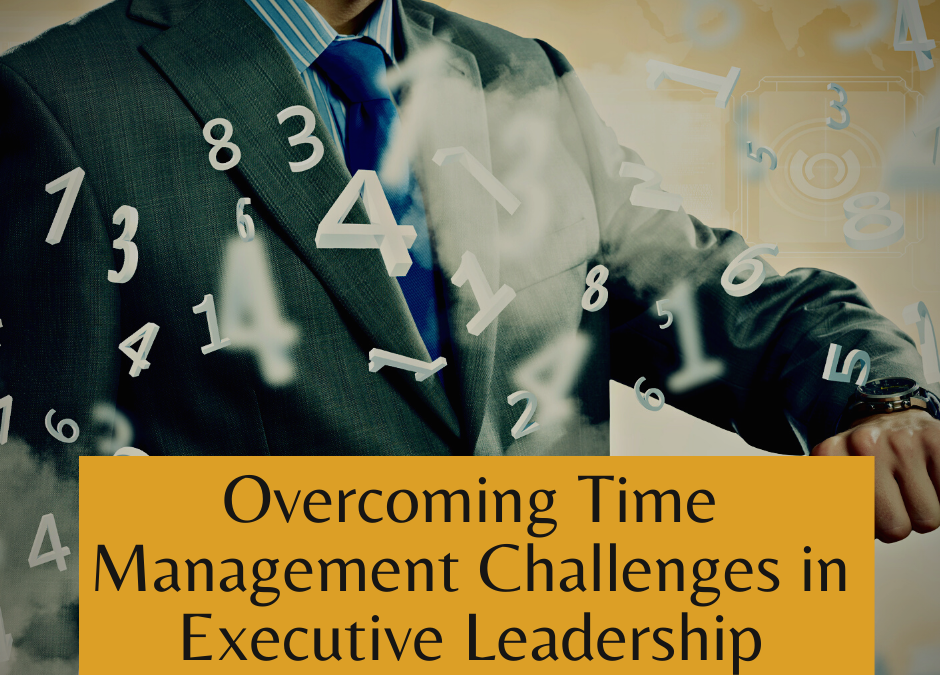
For executives, efficient time management is critical in achieving professional success, given the broad spectrum of responsibilities and limited time. From overseeing projects to attending meetings and responding to emails, executives face an extensive list of tasks that can be overwhelming. This post delves into the most pressing time management challenges faced by executives and presents a promising solution – the engagement of an executive virtual assistant (EVA).
The Overwhelming To-Do List: Prioritize and Conquer
Executives find themselves at the epicenter of ceaseless responsibilities, from steering high-priority initiatives to navigating everyday administrative tasks. The challenge lies not only in the volume of tasks but also in the critical decisions about time allocation, each carrying profound implications for the organization. Balancing this dense to-do list becomes a constant juggling act, demanding intentional thinking and a keen awareness of priorities.
Meetings Galore: Navigating the Time-Consuming Terrain
Meetings, a cornerstone of effective communication and collaboration, also emerge as a formidable time-consuming aspect of an executive’s routine. The necessity of attending internal team meetings, client presentations, and board meetings creates a complex landscape to navigate. While these interactions are essential, they can easily become a double-edged sword, consuming a significant chunk of an executive’s schedule. The challenge is not merely attending these meetings but doing so in a way that allows for sufficient time and focus on the tasks that truly matter – those that contribute to the organization’s strategic goals and long-term success.
Email Overload: Taming the Inbox Avalanche
Executives also face an unrelenting deluge of emails, each demanding attention and action. Managing this constant influx of information becomes a substantial time-draining challenge. Their inbox transforms into a battlefield where the war against email overload is fought daily. The struggle is not only to respond promptly but also to sift through the sea of messages, ensuring that crucial correspondence doesn’t get lost in the shuffle. Effectively managing emails is not just a matter of productivity but a fundamental aspect of maintaining a well-organized and responsive leadership style.
The Project Juggle: Orchestrating Success Amid Complexity
Executives shoulder the responsibility of overseeing ongoing projects while simultaneously initiating and planning new ones. This complex dance of project management demands careful planning and execution. Balancing multiple projects requires more than time management; it necessitates a tactical approach to resource allocation, risk mitigation, and team coordination. The consequences of failure in project management are severe – missed deadlines, cost overruns, and a potential negative impact on the organization’s overall success. Effectively managing these projects requires a delicate balance between leadership vision and hands-on execution.
In conclusion, executives face innumerable challenges in managing their time effectively. Whether it’s the overwhelming to-do list, the time-consuming nature of meetings, the constant battle against email overload, or the elements of project management, the demands are relentless. Navigating these challenges requires a combination of strategic thinking, delegation, and, increasingly, the adoption of new solutions to enhance efficiency. As executives strive to excel in their roles, finding the right balance becomes not just a personal challenge but a critical factor in shaping the success of the organizations they lead.
The Solution: The Executive Virtual Assistant
A game-changing, transformative option that more and more executives are using to deal with the excessive demands of their jobs is partnering with an executive virtual assistant (EVA). An inventive approach to time management is necessary as they confront the daunting obstacles presented by an endless to-do list, many meetings, email overload, and intricate project management.
The EVA is a skilled ally, ready to alleviate the burdens of routine administrative tasks. Delegating to a virtual assistant empowers executives to reclaim their valuable time. This shift not only optimizes the use of their unique skill set but also enhances overall productivity, allowing executives to focus on critical aspects that contribute significantly to the success of their roles and the organization.
Benefits:
Task Prioritization:
An executive virtual assistant excels in the art of task prioritization. By understanding the intricacies of an executive’s responsibilities, they efficiently organize and categorize tasks, ensuring that the most critical ones are given the attention they deserve. This ensures that executives can focus their energy on what matters most for the success of the organization.
Efficient Schedule Management:
The virtual assistant becomes a master conductor in the symphony of schedules. From coordinating meetings to managing appointments, the EVA navigates the densities of an executive’s calendar, optimizing time utilization. This not only prevents scheduling conflicts but also allows for the seamless integration of purposeful activities into the daily agenda.
Streamlining Administrative Duties:
Routine administrative duties, often a source of time drainage, are handled efficiently and precisely by the virtual assistant. From filtering and responding to emails to managing routine paperwork, an EVA ensures that the day-to-day operations of an executive’s office run smoothly. This streamlined approach allows executives to maintain focus on critical decision-making and leadership responsibilities.
Leveraging Efficiency for Success
Proficient time management is a vital element in the success of executives who face multifaceted responsibilities. In this context, the incorporation of the executive virtual assistant represents a significant breakthrough in addressing this challenge. By partnering with an EVA, executives can enhance their productivity and proactively lead their organizations to success in an increasingly competitive business landscape. The executive virtual assistant is not merely a tool, but a catalyst for transforming time management challenges into opportunities for growth and excellence.

by Ace Concierge | Virtual Assistant | Apr 15, 2021 | Productivity, Time Management

Time is not an infinite resource. If you waste even one hour, you cannot recover it. You cannot replace it. Time is perishable.
It is simply gone forever.
Take time to practice being conscious of how you ‘invest’ your time. Consider the actual number of minutes you spend engaging on your work and activities throughout the day.
Ask yourself:
- Am I fulfilled?
- Did my activities serve my goals and me?
- Did I invest in myself?
- Was my time on task meaningful?
- Did it deliver a daily impact?
- Was I able to drive my business forward?
- What was the ROI of my time?
If your ‘self’ is lagging, and not delivering measurable outcomes, perhaps it is time to evaluate:
- Priorities
- Focus
- Goals
- Time Blocking Strategies
- Desired Results
It can be uncomfortable to sit with yourself to examine your processes and achievements but as you begin to reveal your ‘soft spots’, you have the opportunity to create pivotal growth. This assessment initiates a deeper dive beyond the concept of time management. There is more than just the time in your life. In “It’s Not About Time”, David Allen called it self-management.
“The savvy know self-management is really an issue of what we do with ourselves during the time we have. Self-management is about knowing what to do at any given moment. It’s dealing effectively with the things we have to do to achieve our goals and fulfill our purpose.
Key Insights:
Managing oneself may offer greater insight than simply thinking about managing your time.
What we value is what we spend more time doing. You will always pay more attention to, and spend time on, what you value most, whether it is your family, career, health, social life, sports or social media and technology.
It is only by looking at how you spend your time that you will know what is important to you.
Weigh the return on investment of the time you are spending on an activity or project. Is it the best value of your time? Is it a diversion tactic to avoid a difficult project? What are you getting out of it?
Self-discipline accompanied by self-management help to drive your time more effectively and efficiently.
A moment lost, is gone to the ether.
Be mindful.
In an article by Anthony Iannarino, “Return On Time Invested,” he suggested measuring each activity, the time you spent, and the return. If there was no return on your time, then you must realize that that task or activity is not worth doing. A better use of your valuable time is to focus on those activities that produce a desired, profitable and rewarding outcome.
Leveraging your time and effort is a fundamental strategy for success. You can:
- Eliminate unnecessary activities
- Prioritize so you focus your energy on those tasks that provide the highest rate of return
- Set long and short term goals with action steps, motivating you and keeping you on target
- Learn how to effectively delegate
- Outsource non-core tasks/projects
Let’s close with a quote from Jack Canfield,
Most entrepreneurs spend less than 30% of their time focusing on their core genius and unique abilities. In fact, by the time they’ve launched a business, it often seems entrepreneurs are doing everything but the one thing they went into business for in the first place.

by Ace Concierge | Virtual Assistant | Mar 9, 2021 | Entrepreneur, Productivity, Time Management

Getting down to business is more than being busy. Busy focuses on getting things done and checking off items on a To Do List. It is easy to confuse being busy with being productive. As an entrepreneur, you’ve got an organization to manage, a product or service to market, and a team to lead but if you’re tied up dowsing fires, and making checkmarks, then your productivity level is probably waning. Put the fire chief hat on the shelf and consider results-oriented actions to produce measurable outcomes.
Busy is transactional behavior, a quick fix, not a long-term solution for success. Think in terms of transformation.
Transformational thought processes generate a foundation for infinite strength and durable business achievement. Productive people establish viable systems and processes to direct their attention to single tasks, minimizing diversions and distractions.
Busy people touch everything that comes across their desk, check email at every ping, lend an ear for text messages, maintain a side-eye on social media posts, fiddle here and there, and at the end of the day, have managed to spread themselves so thin, wondering where did the time go.
Choose to reach peak productivity levels on any given workday by forgetting about looking and feeling like a busy donkey and transform yourself into a productive unicorn today. Larry Kim
Busy people tend to ask, ‘What else can I do?’ Filling their day with a whirlwind of activities that can fuel the ego and make for great conversation at the (virtual) watercooler. The busy bees are intent on doing more, perhaps in a chaotic and unfocused fashion, accomplishing a myriad of micro-tasks to fill their day. Maintaining the busyness is also another tactic for avoidance and possibly not eating the frog.
In How Being Busy Makes You Unproductive, Travis Bradberry stated, The truth is, busyness makes you less productive.
Productive people ask, ‘What else can I remove?’ Productive people hone in on their talents, top priorities and core genius to drive their results. Fueled by purpose, they often check in with themselves, thinking about what they can do, dump or delegate.
I received an email from an exceptionally valued long-time client who shared her To Do list with me. She stated: “These are just a few of the things I need to grow my business – and I am failing at doing them, but when I do, it totally pulls me away from the work I NEED to do that is billable.”
Determining the greatest value of your time requires a little taste of honesty. While you may enjoy many of the daily business operations and social media fun, they aren’t your ticket to paradise. They are required fillers to help fortify your business structure but are hardly the top dollar shakers.
Everything we do is an investment of our time. In many ways, time is more valuable than money, as you always have the opportunity to make more money, but you cannot recreate lost or wasted time. It is gone forever. If you think of time as a commodity and all of your actions/choices as an investment, it may change the manner in which you approach your business operations and your life.
Stop doing stuff that isn’t valuable. So much of what people do in attempting to be productive involves just trying to fit more low-value tasks into the same amount of time. Being productive means accomplishing more with the same or less effort. Mark Shead, Productivity 501.
Transform your life and your business by not being busy. Be productive.
by Ace Concierge | Virtual Assistant | Dec 15, 2020 | Productivity, Small Business
If you find that you’re not crushing your productivity and things just aren’t getting done, then you may want to keep reading.
Organizing is one key component to your productivity and time management to bring you back to a central focus, keeping you on task and driven for success.
There are some simple straightforward, no-brainer things you can do every day. They don’t cost anything and they will only help you invest more in yourself, your business, and your time.
Maximize your time to work smarter, not harder. Let’s get started,
Productivity Simplicity
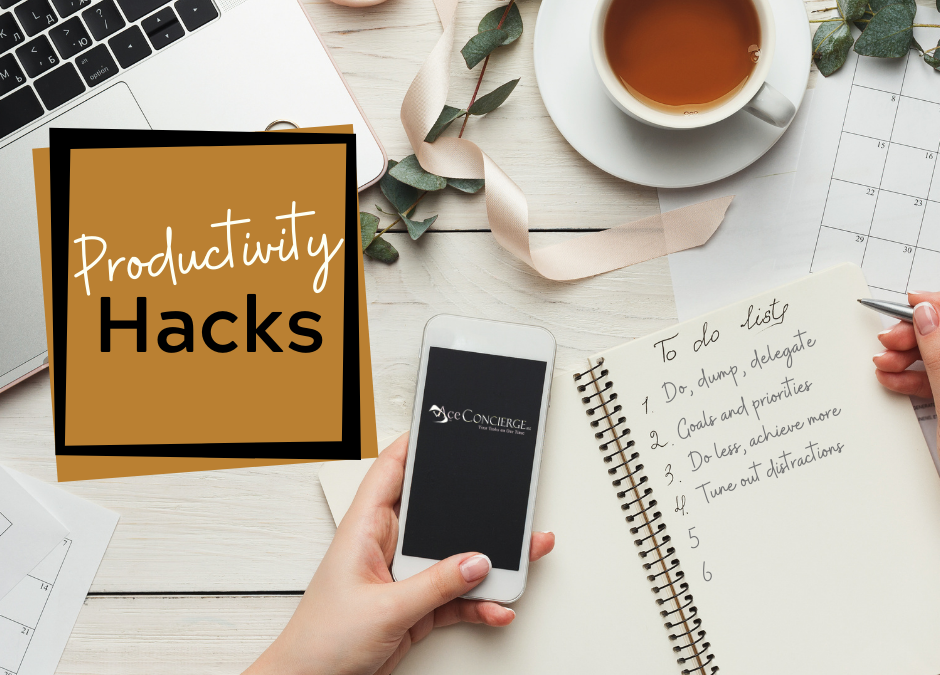
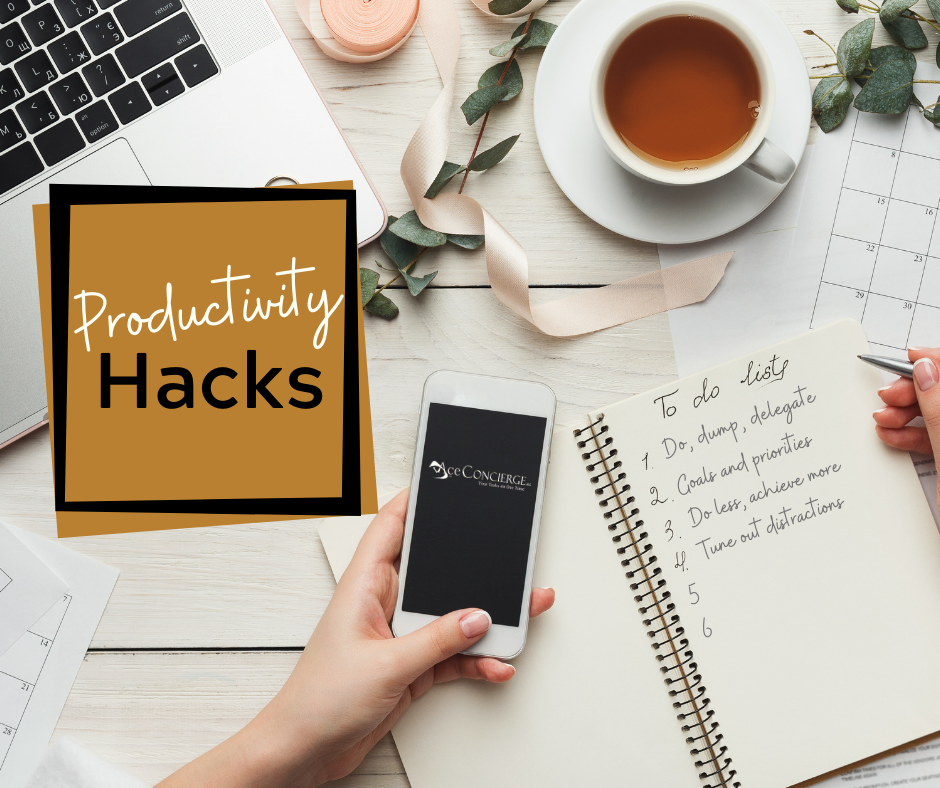
- Priorities: have them. Understand them. Commit to them. Determine what is most important in your day, life, and business. That’s what you need to be doing
- Make a plan: merely thinking about doing something isn’t enough to achieve important tasks and milestones. List out action steps
- Prepare for deviations: they happen. You will be sidetracked but with proper planning, you can quickly redirect
- Move your body. Exercise is a chief factor in your vitality and daily energy levels
- Do less, but do it more strategically by delegating, dumping, or deleting, leaving time for what’s essential for you to accomplish
- Set realistic timelines: deadlines keep you from scrambling and only half finishing your lists or not putting in 100%. If you can’t give it your all, then it is half-ass. Do you want that?
- Tick tock: don’t be ruled by the clock. It does not tell you if you are being more efficient and productive. Your output does. 9-5 does not mean anything if you are just “busy”
- Set goals: this helps to keep you on target daily, weekly, and monthly. Revisit your list and revise it as needed
- Eliminate your distractions: there is nothing worse than the ping of a notification, social media, TV, phone, etc that will detract your focus. Tune out and turn off. It is okay. You will not lose anything but you have everything to gain. Be in the moment and nowhere else
- Don’t multi-task: it does impede your productivity, decrease your brainpower, and limits your true attention to getting one thing right. Emphasize one project, one task at a time.
- Ask yourself, “How or does, this serve my goals?” If something doesn’t serve you, then STOP!
- Be accountable: yes, how you manage your day and your time is up to you and only you. Own it. Do it. Be the best boss of yourself
- Focus on results and outcomes, not busy time
- Timers: they work! Set a timer for 30 minutes that you will devote to the time on task. Do not stop. Don’t stray. Just do it. At the end of those 30, take a 5-minute break and then hit it again.
- Break the e-chains: don’t be held hostage to your email. Set a reminder from your timer in tip #14, to check your email 4X/day
- Review/Revisit/Revise: every night, review your day to set your goals/action steps for the following day. This is a key component to your successful productivity planning
- Shout, ME ME: yes, you must self-invest and establish a healthy work-life balance. Schedule in a time that is away from work; away from must-do’s and have some fun. Refresh and refocus your brain and your body
These action steps may seem like simple, common sense activities, but how many do you faithfully implement and maintain as daily habits?
Daily healthy productivity habits are the key to enhanced, quality output and measurable results. Nothing will change until you develop a consistent routine with firm systems, processes, and an understanding of your triggers that may set you off on a wanderlust of to-do list mismanagement. For example, eating 12 apples on a Saturday certainly won’t improve your health. Willy nilly organization won’t improve your results.
Get started TODAY. Forget about procrastinating, waiting for a better day, the right time, or perhaps, a New Year’s Resolution. RESOLVE to make daily changes for 365 days, every year. Consistency delivers results. Master your productivity with your commitment.

by Ace Concierge | Virtual Assistant | Dec 20, 2016 | Delegation, Entrepreneur, Time Management, Virtual Assistant

Let’s get real about time management. Sure, scrolling through social media and completing daily to-dos are satisfying, but will they translate to success? Likely not! These activities are like sidekicks, important to keep the business chugging along, but they won’t be the superhero bringing in the major cash.
What is the best use of your time and expertise?
Your core genius: something you love to do, is effortless, creates a sense of joy and contentment, generates a fire within and time disappears. It could be coaching, writing, graphic design, speaking, leading, selling, training, motivating, marketing or whatever your passion is. When you are focused on your CG, you are alive, vibrant, and producing outcomes.
As an entrepreneur, when you can maximize your potential by focusing on your core genius, you not only follow your passion but can devote your time ON your business rather than IN it. You become more productive and efficient. While many daily business tasks require attention, it doesn’t necessarily have to be on your time. Delegating the lower return projects and tasks gives you back your time to build your business, develop strategy, nurture relationships, foster loyalty, seek partnerships, and focus on your bottom line.
Compare the individuals, the business owners, who dedicate their time to every task, every project, even those that they don’t like, don’t truly have time to do, or the ones that are more menial “time robbers.” These people are taken away from their core genius and focused on the back end, admin-type projects instead of building their companies and concentrating on income-generating projects.
“Most entrepreneurs spend less than 30% of their time focusing on their core genius and unique abilities. In fact, by the time they’ve launched a business, it often seems entrepreneurs are doing everything but the one thing they went into business for in the first place.” Jack Canfield
Everything we do is an investment of our time. When you choose to watch television or engage on Facebook that is an investment of your time. In many ways, time is more valuable than money, as you always have the opportunity to make more money, but you cannot recreate lost or wasted time. It is gone forever. If you think of time as a commodity and all of your actions/choices as an investment, it may change how you approach your daily activities.
Think about the return on your time invested. In a recent article by Anthony Iannarino, “Return On Time Invested,” he suggests measuring each activity, the time you spent, and the return. If there was no return on your time, then you must realize that that task or activity is not worth doing. A better use of your valuable time is to focus on those activities that produce a desired, profitable, and rewarding outcome.
Leveraging your time and effort is a fundamental strategy for success. There are only so many hours in the day that you can work and by only using your time, you can only accomplish so much. When you choose to utilize other people’s time via delegation, you intensify your productivity and efficiency to an extraordinary magnitude. It feels great to do more in less time.
- Eliminate unnecessary activities
- Prioritize so you focus your energy on those tasks that provide the highest rate of return
- Set long and short-term goals with action steps, motivating you and keeping you on target
- Learn how to effectively delegate
- Outsource non-core tasks/projects
Action Step:
- Identify the daily activities that are devouring your time by keeping a journal: logging activities, projects, and time spent
- Build a plan to delegate the time robbers that are taking you away from your CG
- Call Ace Concierge to discuss your delegation strategy and project timeline