by Ace Concierge | Virtual Assistant | Nov 12, 2012 | Guest Blogger
For those of you who don’t know me, I own a tiny Canadian food manufacturing company. We make all natural and organic as well as fair trade certified food products for general consumption, specializing in Fresh Pepper Sauces.
So, when Suzie asked for something that would be useful information for business people to improve their business skills, etc. I thought, what better way to improve one’s business than to improve their lives. So, I sat down to write such an article.
Here’s what I wrote…
How to Increase your Bottom Line and in so doing Rescue the Economy by Changing your Eating Habits
A loud refrain during the latest Presidential election was all about creating jobs in order to help the economy. Both sides trumpeted how it was going to happen. But nobody really presented a solution that seemed workable at the John Q Public level.
As an outsider looking in, it seems pretty obvious to me that the easiest way to fix the economy is to improve the productivity of those employers who are already feeding the economy, lower their bottom lines and they’ll quite naturally invest further in their company feeding the coming economic boom.
Follow my train of thinking here.
75% of business owners are single proprietorships. That means that you as a single business owner, really are the economy. The better your business does, the better you do.
So, how do you do better?
Well, for starters, if you aren’t already there, get healthy. And I don’t mean go out there and start an exercise regime, although, exercise is a very valuable part of it, I mean start eating right.
According to the most naturally holistic meal programs going, the best thing you can do for your body is to eat the best quality food you can afford. That means, eliminating all chemicals whose traces may be left in your food and eating a balanced meal, eliminating GMO ingredients and irradiation by eating foods you’ve grown yourself or which are monitored such as organic certified food in balanced meals.
What’s a balanced meal? well, according to Livestrong.com Five servings of fruits and vegetables, 2 proteins and 50% of what you eat should be carbohydrates. Ideally you’d want to turn as many of your red meat dishes a week into another protein; fish, chicken, pork, eggs, cheese, beans, nuts, etc. So you’d take a bowl/plate about the size of what you’d eat. 50% of should be rice or pasta or bread. 1/4 of it should be fruits and vegetables and 1/4 of it should be proteins.
Figuring out how much to eat is going to depend on each person, if you really want to go to the extreme, you can hire a dietician to help you create a specific diet or you can go all loosey goosey and just eat when hungry, as I do.
Avoid fat, high fructose corn syrup and salt, and eat chilli peppers; as hot as you can stand.
Why chilli peppers? Well, in 2000, the University of Laval published findings that 200 calories were burned per day through the simple practice of ingesting chili peppers. These studies have since been replicated by an American University and a Japanese one. Eating chillies lowers your caloric load. Seems a no-brainer to me.
However you do it, know, that the healthier you eat, the less you will weigh. And personally eliminating the obesity epidemic will go a long way to contributing to your financial bottom line.
Here’s how.
 |
|
| Peppermaster Hummus Dip |
It is a proven fact that the more overweight, or obese a person, the less productive they are and the more medical intervention they require. The numbers of chronic diseases increase with excess weight; Type II Diabetes, heart disease, cancers, and other problems. Interestingly, obesity has also been implicated in creating a higher risk for accident in the workplace. All of these things combine to create a financially detrimental atmosphere. Insurance premiums are higher, direct health costs are higher since chronic conditions tend to cost the patient not their insurance plans and overall productivity is lower through lower output as well as higher use of sick leave. So, it behooves the small business owner to get healthier and improve their bottom line.
Interestingly, though, you can actually improve your bottom line by instigating a company-wide health and diet plan, as a business expense. Since the larger your workforce, the higher your insurance premiums — and I mean that in the size of the waistlines. You can shrink your waistlines and shrink your insurance premiums. You can also lower the direct costs related to the health problems as well; because as you get healthier, you require fewer prescriptions or direct health care costs.
So you see, if you get healthier, lose a little weight, the whole economy benefits.
———————————————
Tina Brooks, VP Marketing, co-owner Brooks Pepperfire Foods
Tina is a retired Financial Advisor, currently working in sales and marketing with her husband and Peppermaster, Greg Brooks. When not working with their food manufacturing company, Tina runs a successful private Tarot reading practice from a tiny specialty food shop in Rigaud, Quebec, Canada.
You can find Tina posting as @Pepperfire on Twitter and on Facebook.

by Ace Concierge | Virtual Assistant | Nov 8, 2012 | Virtual Assistant
 I am so glad you asked.
The life and times of a Virtual Assistant (VA) offers a very diverse day of managing numerous tasks and projects. While some VAs have chosen to work with only one specific niche market, I prefer to partner with different types of entrepreneurs, ensuring a sundry of daily operations: keeping it fresh, challenging and exciting.
The Holiday Inn Express ad campaign, “Stay Smart” depicts people doing extraordinary feats after being a hotel guest. While I haven’t averted a nuclear disaster or wrestled with a great white shark, I have been given the great opportunity to enrich my mind on a myriad of topics and industries that I never would have otherwise stopped to read or study.
I am sincerely grateful and honored for each and every client that has partnered with Ace Concierge. As noted in a prior post, I am living my passion of giving back to others – this isn’t just a job or paycheck. I thrive on helping my client base with their time management, productivity, work life balance and stress reduction, all in the form of remotely managing their projects and daily business operations.
Whether creating a document, searching for social media content or proofreading blog posts and websites, I have had the great fortune to improve or enhance my knowledge on many subjects and honestly some are absolutely fascinating!! Some of the topics I have read/researched are:
- Tissue engineering
- Biotechnology
- Regenerative medicine
- Organizational development
- Intellectual property rights
- Personal Injury Insurance
- Graphic illustration
- Leadership
- IV therapies
- Juicing
- Raw foods
- Start-up planning
- Business growth planning
- Venture capital
- Angel investing
- Cosmetic surgery
- Social media
The list continues to expand on a daily basis and I love every second that I am asked to read, write, report, post or edit. Being a Virtual Assistant IS like staying at the Holiday Inn Express. Never stop reading and expanding your mind – I know I won’t.
What have you learned lately?

by Ace Concierge | Virtual Assistant | Sep 11, 2012 | Delegation, Time Management, Virtual Assistant
 As an entrepreneur, your success depends on you, your time and your efforts. Yes, you have heard me say this before, but when we choose to manage every task or project that comes across our desk, we become less efficient, effective as well as stressed out because things are not getting done. Our high priority tasks fall by the way side while we end up doing busy work or more mundane tasks that are essentially a waste of our valuable time.
The actions you take today determine the outcomes of tomorrow.
Delegating the non-income producers is a sure fire way to strike up your productivity and output, generating a spark in your bottom-line. Your virtual assistant can be a tremendous asset to you and your company. Starting with a strong foundation and understanding is key your mutual success.
When partnering with a virtual assistant:
- Know your core genius and delegate other low payoff activities, leveraging your valuable time on essential business functions
- Share your long term and short term company goals as well as those for your VA partnership
- Provide a clear outline of project details, expectations and deadlines
- Define your most desired and effective means of communication
- Utilize your virtual assistant as a brainstorming partner, your own personal sounding board
- Understand that a virtual assistant is not an employee but a business colleague, a collaborator, helping to ensure your business goals are met
- Don’t be afraid to ask about other service solutions just because your need is not listed on their website
- Be prepared to use a variety of web-based tools that will help streamline your communications, social media and project management
- Develop a rapport and positive working relationship with open communications and accountability
- Provide feedback on all projects
Your turn!! What do you feel is most important when working with a virtual assistant?
by Ace Concierge | Virtual Assistant | Aug 28, 2012 | Entrepreneur, Life Thoughts
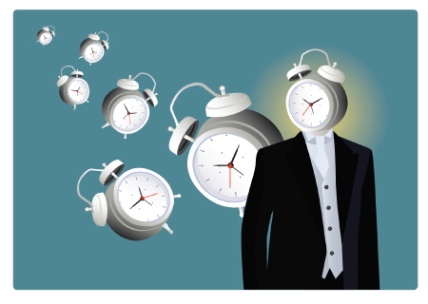
 Timely commitments speak volumes about your intentions. If you are consistently missing time limits or deadlines, delaying outcomes or otherwise just holding off on completing promised projects, what message are you giving to the recipient?
“When you find someone who you think is an ‘A’ player and effective, you should go back and see if they were an A player and effective previously. And if you can see that he or she was accountable, collaborative and inspiring in his or her previous work, you can expect the same kind of performance going forward.” Jim Schleckser
As business owners, we are inundated with unlimited requests for our time and expertise but when you overcommit or plainly don’t back up your word with actions, you are shortchanging yourself, your clients, partners or colleagues. Consider the nonverbal communication you are sending when you don’t deliver the promised results in the appropriate timeline.
Meeting your demands in timely manner is good service on deliverables. It demonstrates your committed resolve to get the job done; a dedication to responsibility. If you can remember a time of disappointment or frustration when you were waiting for a response, final product, contract or any other form of collateral and you perceived an extensive delay, what thoughts consumed you about the contributor?
“Do unto others as you would have them do to you.”
As said in the Freelance Switch article 14 Essential Tips for Meeting a Deadline, “Your reputation as a freelancer is pretty much the only thing you have to go on — your bread and butter.” As we continue to build and foster relationships, both online and off, your reputation will become a predictor of future business and partnerships.”
While we may hit a few roadblocks in the process: technical issues, data requirements, brain-cramp, logistics, team members faltering, with proper planning, insight and time padding, you should meet or beat every deadline, whether explicitly implied or merely an unspoken exchange of expectations.
When you evaluate your “proficiency” for meeting deadlines, you must also review your level or reasons for procrastination. Putting something off only perpetuates additional anxiety and stress. We all may procrastinate on occasion. It could be a chronic issue for some while for others; it’s only a problem in certain areas of their life. Procrastination is continuously frustrating because it creates a domino effect in wasted time, lost opportunities, disappointing work performance, and generally a bad perceived feeling of self.
Procrastinating allows less important tasks to usurp your time and space when you should be more focused on projects that take a higher precedence. Most people don’t have a problem finding time for the things they want to do, but once a task is presumed challenging, time consuming, or boring, procrastination takes over.
If procrastination produces negative results, then why do we allow this behavior? Procrastinating actually reinforces itself in two ways. 1. It is difficult for most to institute change or accept that a real change is required. We tend to divert our attention away from a task to do something we want to do, something that is more desirable. 2. Procrastination can help to feed ego when the deadlines are met at the very last minute and you or others pat yourself on the back for getting it done. If the project isn’t as acceptable as you had wanted, you blame it on time restraints. Either way, you are reinforcing the habit of putting things off.
University of Cambridge states: “Often we try to disguise our avoidance by being very busy doing things that may be interesting, and even useful, but don’t contribute towards the main goal – even doing something we normally hate – rather than writing, for example, just before an essay deadline!”
Recognizing your behaviors and tuning into the purposes will guide your future actions and reactions. Learn what drives you and if change is needed, then start with simple steps. Persevere, knowing that change is a positive tool affecting your personal and professional relationships.
- Honor your words, unspoken guarantees and anticipated recipient results
- Plan your time and projects with dated action steps
- If required, seek assistance early on, don’t wait until the last hour
- Over deliver
- Don’t keep someone waiting or wondering
- Correspond and update as needed
Harvey Mckay: “Deadlines aren’t bad. They help you organize your time. They help you set priorities. They make you get going when you might not feel like it. And meeting deadlines successfully is one of the best motivating factors out there.”

by Ace Concierge | Virtual Assistant | Aug 8, 2012 | Entrepreneur, Guest Blogger

And One More Thing… Be In 2 Places At Once by Clemens Rettich
Every small business owner, regardless of what goals they are dreaming of must do two seemingly contradictory things: focus on the future, and be completely in the present.
You cannot be successful in growing a small business if you do not keep your eyes on the future. You know where you are going, or go nowhere. You must create your own future as much as you can, or live a future created by others.
You must also be fully present or miss everything that matters right now. You will run off a cliff because you were too busy looking at the sky. Each moment you are not present for, you will not live at all.
So how do you focus on the future and live in the present? How do you plan and execute simultaneously? How do you remain grounded and fly at the same time?
The answer lies in the concept of the Great Performance. A Great Performance in sports or the performing arts is based on 3 fundamentals that business owners could learn a lot from.
Practice for 10,000 hours.
Being really good at planning for the future and at acting with intelligence in each moment is the product of one thing: experience.
10,000 hours of experience.
This has implications for growing a small business.
You must have the resources to be patient. If you create a financial plan that has you hitting maximum net income in 24 months, and you are betting the existence of your business on that timeline, you could be in trouble. Make sure you have the resources to go the distance.
Master The Script
Great performers spend the time between performances practicing the fundamentals of their discipline over and over and over again. They rehearse the script or score or choreography until they have absorbed what matters on a cellular level.
In growing a small business this means:
- Write a simple story. Create a simple and compelling vision for what next year, or the next decade looks like. If it is longer than a page, shorten it.
- Master the five fundamentals: finances, human resources, marketing, operations, and management. Read, attend seminars, and take courses. When you come across a gap in your understanding make a note of it and look it up.
- Build a team. We talk about the team in business a lot. Drive it deeper by thinking ensemble or band. A band is incomplete without a drummer. An orchestra is incomplete without a brass section. In your business focus on developing specialists each with a set of skills required for a whole Great Performance.
- Embed everything. Commit to the two fundamentals of great operations: publishing and training. Write everything that matters down. Then train, meet, talk, rehearse, practice, and train some more. Recording what matters embeds it into the documents of your business. Training and practice embed it in the people of your business.
Let Go
When your 10,000 hours are up, and if you have spent them in learning, recording, and practicing, it is time to let go. Letting go involves trusting yourself and your team enough not to over-think the details, to micro-manage, or study threats and opportunities to death. Act.
Trust and be present. Show up clear and rooted in the present, not weighted or distracted by the past, or fearful of the future.
There are 4 components of letting go a business owner must tend to.
- The never-ending conversation. Great business owners don’t ever stop learning through conversation. They talk to everyone and listen to everything. The experienced business owner connects those thousands of points of information or the energies of thousands of relationships to her decisions in subtle and nuanced ways.
- The never-ending dues. You are never too good or too old to acknowledge your debts, to invest in more learning, to continue your practice, or plan your next step. At the letting go stage the practice focuses on deeper skills of leadership and communication; the planning is more strategic than tactical.
- The conductor’s baton. Put down your violin and pick up the baton. The orchestral conductor is concerned with the success of the performance. Her job is to be present to the largest picture possible: the performance of the entire piece, the experience of the audience, and the energies and dynamics of a 2-hour performance. I tell my clients that if they are spending more than 30% of their time focusing on operational concerns, we have not yet reached the stage of letting go and must continue to work towards that.
- The continuous present. This is the heart of mastering the Great Performance in business: the ability to see the whole performance, the past, present and future of your business as one single point. That is the true resolution of the question “How do you live in the moment and plan for the future?”
Business leaders who have earned this position see the details on the shop floor and the strategic objectives for the year as the same thing. Both are the product of one vision and a consistent culture. They don’t see yesterday’s economic news and tomorrow’s plans to enter a new market as isolated points. They deeply understand their intimate relationship.
The future is the natural extension of things done right in the present. The present is the only place where real decisions can be made and real action taken. It is in the present that the vision for the future is created. The future is the present anticipated.
The greatest performances come from a place of understanding you cannot control everything. The weather happens. Period. You trust you have the foundations to make the best of whatever happens. And if you don’t, that is not a problem for the future; it is a problem for right now.
Guest Author: Clemens Rettich
Business Coach, Writer & Workshop Leader
Twitter: @ClemensRettich
Clemens Rettich Business Consulting Ltd.
Designing for Great Management & Business Growth
Follow his blog: Small Business Fundamentals