
by Ace Concierge | Virtual Assistant | Aug 28, 2012 | Entrepreneur, Life Thoughts
 Timely commitments speak volumes about your intentions. If you are consistently missing time limits or deadlines, delaying outcomes or otherwise just holding off on completing promised projects, what message are you giving to the recipient?
“When you find someone who you think is an ‘A’ player and effective, you should go back and see if they were an A player and effective previously. And if you can see that he or she was accountable, collaborative and inspiring in his or her previous work, you can expect the same kind of performance going forward.” Jim Schleckser
As business owners, we are inundated with unlimited requests for our time and expertise but when you overcommit or plainly don’t back up your word with actions, you are shortchanging yourself, your clients, partners or colleagues. Consider the nonverbal communication you are sending when you don’t deliver the promised results in the appropriate timeline.
Meeting your demands in timely manner is good service on deliverables. It demonstrates your committed resolve to get the job done; a dedication to responsibility. If you can remember a time of disappointment or frustration when you were waiting for a response, final product, contract or any other form of collateral and you perceived an extensive delay, what thoughts consumed you about the contributor?
“Do unto others as you would have them do to you.”
As said in the Freelance Switch article 14 Essential Tips for Meeting a Deadline, “Your reputation as a freelancer is pretty much the only thing you have to go on — your bread and butter.” As we continue to build and foster relationships, both online and off, your reputation will become a predictor of future business and partnerships.”
While we may hit a few roadblocks in the process: technical issues, data requirements, brain-cramp, logistics, team members faltering, with proper planning, insight and time padding, you should meet or beat every deadline, whether explicitly implied or merely an unspoken exchange of expectations.
When you evaluate your “proficiency” for meeting deadlines, you must also review your level or reasons for procrastination. Putting something off only perpetuates additional anxiety and stress. We all may procrastinate on occasion. It could be a chronic issue for some while for others; it’s only a problem in certain areas of their life. Procrastination is continuously frustrating because it creates a domino effect in wasted time, lost opportunities, disappointing work performance, and generally a bad perceived feeling of self.
Procrastinating allows less important tasks to usurp your time and space when you should be more focused on projects that take a higher precedence. Most people don’t have a problem finding time for the things they want to do, but once a task is presumed challenging, time consuming, or boring, procrastination takes over.
If procrastination produces negative results, then why do we allow this behavior? Procrastinating actually reinforces itself in two ways. 1. It is difficult for most to institute change or accept that a real change is required. We tend to divert our attention away from a task to do something we want to do, something that is more desirable. 2. Procrastination can help to feed ego when the deadlines are met at the very last minute and you or others pat yourself on the back for getting it done. If the project isn’t as acceptable as you had wanted, you blame it on time restraints. Either way, you are reinforcing the habit of putting things off.
University of Cambridge states: “Often we try to disguise our avoidance by being very busy doing things that may be interesting, and even useful, but don’t contribute towards the main goal – even doing something we normally hate – rather than writing, for example, just before an essay deadline!”
Recognizing your behaviors and tuning into the purposes will guide your future actions and reactions. Learn what drives you and if change is needed, then start with simple steps. Persevere, knowing that change is a positive tool affecting your personal and professional relationships.
- Honor your words, unspoken guarantees and anticipated recipient results
- Plan your time and projects with dated action steps
- If required, seek assistance early on, don’t wait until the last hour
- Over deliver
- Don’t keep someone waiting or wondering
- Correspond and update as needed
Harvey Mckay: “Deadlines aren’t bad. They help you organize your time. They help you set priorities. They make you get going when you might not feel like it. And meeting deadlines successfully is one of the best motivating factors out there.”

by Ace Concierge | Virtual Assistant | Aug 8, 2012 | Entrepreneur, Guest Blogger

And One More Thing… Be In 2 Places At Once by Clemens Rettich
Every small business owner, regardless of what goals they are dreaming of must do two seemingly contradictory things: focus on the future, and be completely in the present.
You cannot be successful in growing a small business if you do not keep your eyes on the future. You know where you are going, or go nowhere. You must create your own future as much as you can, or live a future created by others.
You must also be fully present or miss everything that matters right now. You will run off a cliff because you were too busy looking at the sky. Each moment you are not present for, you will not live at all.
So how do you focus on the future and live in the present? How do you plan and execute simultaneously? How do you remain grounded and fly at the same time?
The answer lies in the concept of the Great Performance. A Great Performance in sports or the performing arts is based on 3 fundamentals that business owners could learn a lot from.
Practice for 10,000 hours.
Being really good at planning for the future and at acting with intelligence in each moment is the product of one thing: experience.
10,000 hours of experience.
This has implications for growing a small business.
You must have the resources to be patient. If you create a financial plan that has you hitting maximum net income in 24 months, and you are betting the existence of your business on that timeline, you could be in trouble. Make sure you have the resources to go the distance.
Master The Script
Great performers spend the time between performances practicing the fundamentals of their discipline over and over and over again. They rehearse the script or score or choreography until they have absorbed what matters on a cellular level.
In growing a small business this means:
- Write a simple story. Create a simple and compelling vision for what next year, or the next decade looks like. If it is longer than a page, shorten it.
- Master the five fundamentals: finances, human resources, marketing, operations, and management. Read, attend seminars, and take courses. When you come across a gap in your understanding make a note of it and look it up.
- Build a team. We talk about the team in business a lot. Drive it deeper by thinking ensemble or band. A band is incomplete without a drummer. An orchestra is incomplete without a brass section. In your business focus on developing specialists each with a set of skills required for a whole Great Performance.
- Embed everything. Commit to the two fundamentals of great operations: publishing and training. Write everything that matters down. Then train, meet, talk, rehearse, practice, and train some more. Recording what matters embeds it into the documents of your business. Training and practice embed it in the people of your business.
Let Go
When your 10,000 hours are up, and if you have spent them in learning, recording, and practicing, it is time to let go. Letting go involves trusting yourself and your team enough not to over-think the details, to micro-manage, or study threats and opportunities to death. Act.
Trust and be present. Show up clear and rooted in the present, not weighted or distracted by the past, or fearful of the future.
There are 4 components of letting go a business owner must tend to.
- The never-ending conversation. Great business owners don’t ever stop learning through conversation. They talk to everyone and listen to everything. The experienced business owner connects those thousands of points of information or the energies of thousands of relationships to her decisions in subtle and nuanced ways.
- The never-ending dues. You are never too good or too old to acknowledge your debts, to invest in more learning, to continue your practice, or plan your next step. At the letting go stage the practice focuses on deeper skills of leadership and communication; the planning is more strategic than tactical.
- The conductor’s baton. Put down your violin and pick up the baton. The orchestral conductor is concerned with the success of the performance. Her job is to be present to the largest picture possible: the performance of the entire piece, the experience of the audience, and the energies and dynamics of a 2-hour performance. I tell my clients that if they are spending more than 30% of their time focusing on operational concerns, we have not yet reached the stage of letting go and must continue to work towards that.
- The continuous present. This is the heart of mastering the Great Performance in business: the ability to see the whole performance, the past, present and future of your business as one single point. That is the true resolution of the question “How do you live in the moment and plan for the future?”
Business leaders who have earned this position see the details on the shop floor and the strategic objectives for the year as the same thing. Both are the product of one vision and a consistent culture. They don’t see yesterday’s economic news and tomorrow’s plans to enter a new market as isolated points. They deeply understand their intimate relationship.
The future is the natural extension of things done right in the present. The present is the only place where real decisions can be made and real action taken. It is in the present that the vision for the future is created. The future is the present anticipated.
The greatest performances come from a place of understanding you cannot control everything. The weather happens. Period. You trust you have the foundations to make the best of whatever happens. And if you don’t, that is not a problem for the future; it is a problem for right now.
Guest Author: Clemens Rettich
Business Coach, Writer & Workshop Leader
Twitter: @ClemensRettich
Clemens Rettich Business Consulting Ltd.
Designing for Great Management & Business Growth
Follow his blog: Small Business Fundamentals

by Ace Concierge | Virtual Assistant | Jul 10, 2012 | Life Thoughts
 In our day to day encounters we sometimes are aligned with individuals we believe to be like minded and on the same playing field. Engaging in conversation, camaraderie and laughter, we are led to assume a prospective forth coming partnership is built upon mutuality and common ground. We know we are genuine.
We deliver on our word. Our promise. Based upon this premise, knowing that we say what we mean and mean what we say, we would expect the same from others. Human nature desires honesty and trust. When we know who we are, we presume the others we choose to invite into our circles will mirror our own value system.
No legacy is so rich as honesty. – Shakespeare
Occasionally however, we meet others whom operate on a different agenda, both personally and professionally. Think about it: how many times have you met someone, enjoyed a great discussion, discovered similar interests, talked about a business partnership and so forth, yet when it came time for the follow-up, there was no response on their part?
I personally always find this curious as they may have declared a desire to connect, introduce, partner or otherwise further engage on the next level, yet their conversations may not have had any true validity.
Why do people go out of their way to make conversation based upon empty assurances?
Are they not genuine?
Do they not come from a culture of authenticity and strong moral compass?
While I can only speak for myself, I strongly value my word and commitment; never offering an empty gesture for the sake of conversation or social value. I am passionate and back up every word or promise with timely action. It is an intrinsic characteristic that would seem to be a natural trait based upon integrity and honesty.
Personal authenticity delivers many internal benefits, enabling you to live a life free of stress, full of possibilities and great promise as you are live your life from real principles and heart.
- Being honest with yourself and others imparts the fortitude, courage and directness to cope with problems swiftly, instead of procrastinating, or disregarding them altogether.
- When you are truly authentic, you also preserve your integrity. You persistently do the right thing, so you never have to second-guess your choices or actions.
- When you are true to yourself, you not only trust the decisions and evaluations that you generate, but also create a level of trust from others.
- Authenticity delivers a lesser degree of stress when you stay true to yourself, say what you mean and mean what you say.
- In trusting yourself and knowing what is morally right, you are able to recognize your maximum life potential. You control your own life versus allowing others to make decisions for you.
- Being genuine and doing the right thing leads to achieving greater self-confidence and self-worth, enhanced positivity and further internal fulfillment because you are able to trust yourself to make the right decisions.
Honest communications create not only a strong foundation but show great respect for the other party. Think about how you interact with others; the verbal commitments you make and how you intend to follow through. Ensure your words are given with reliability and sincerity.
Have the courage to say No. Have the courage to face the Truth. Do the right thing because it is right. These are the magic keys to living your life with integrity. W. Clement Stone
Being genuine is not a tool for success, but an admirable characteristic for living an authentic life. It is so cliché but say what you mean and mean what you say, as others have faith in your word.
by Ace Concierge | Virtual Assistant | Jul 8, 2012 | Guest Blogger
 The individual who wants to reach the top in business must appreciate the might and force of habit.
He must be quick to break those habits that can break him – and hasten to adopt those practices that will become the habits that help him achieve the success he desires. – J. Paul Getty ::
I found this quote as I was reading Jack Canfield‘s book The Success Principles. . . It was interesting to learn that 90% of our behavior is habitual. 90 percent!
“What ever habits you currently have established are producing your current level of results.”
This is such a simple idea. How many of us have areas in our lives that could use more productive habits? I think the most intimidating thing when recognizing something needs changing is knowing what to do next. There is no manual for our specific needs, wants or dreams and how to achieve them . . . or is there?
If you want to be a chef – where do you start? In the kitchen right? You buy recipe books and spend your free time buying the tools. You start baking, cooking and learning how to become a gourmet chef until you can produce a 5 course meal for 6 people in your sleep.
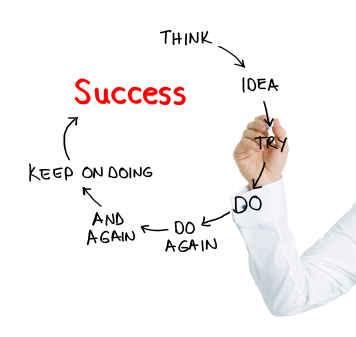
Regardless of where you need more productive habits – I think the success habits you are searching for can be found when you have a clear idea of what you want to achieve, from short term to larger long term goals, and consistently performing the actions necessary to reach them.
“Success is a matter of understanding and religiously practicing specific, simple habits that always lead to success.” – Robert J. Ringer, Author of Million Dollar Habits
One great take away from my reading of Principle 34 . . . “Good or bad, habits always deliver results.” How true!
Below are 7 ways I have helped myself reach my goals. I sure hope they help inspire you!
Success Habits : 7 Ways to Reach Your Goals

- Start with identifying the most important specific things you are doing that need improvement.
- Go through your list and come up with at least 3 alternative actions for each item that could help you change the bad habits.
- On note cards (or on the note pad on your phone), write out each specific thing that needs improvement with the alternative actions. Each day review these actions – over breakfast, waiting in line at the grocer, Lunch . . . when ever you have time to review them. Knowing where you can improve and learning an alternative response that then becomes a success habit takes time.
- Have 100% commitment to your goals. Stand firm and don’t give in. . . you are the most persuasive person when you don’t want to do something, are too tired, or don’t have enough time. Stick with it. Results take time.
- Stay motivated. Read books & blogs by people that inspire you. Subscribe to magazines, take classes, reach out to and find a mentor. Go through your social networks and create the environment you need to achieve your goals. That means unfriending or friending, unfollowing or following until you have the right balance for each social network you use on a daily basis. Each network is a unique environment. Because so many use social sites on a daily basis – making your online experience one that will help you stay motivated, positive and on task is up to you!
- Drink plenty of water. I know some of you are asking – “What the hell does this have to do with success habits?” Well, let me tell you. Water plays a vital role in healthy brain function. So put down that soda, tea or coffee and make a commitment to drink half your body weight in ounces daily. How can you develop your new success habits if you can’t focus?
- Review your results regularly. If you start to see that your new success habits are producing the results you had hoped for *woo hoo! Congratulations! It’s time for you to add a new goal to your list. If not, it’s time to review your alternate actions that you came up with (# 2) and hit reset. Just because you didn’t see the results you wanted with one action – it doesn’t mean that the situation is hopeless and success can’t be yours.
 In an article published in the European Journal of Social Psychology in July of 2009, researchers stated that “The time it took participants to reach 95% of their asymptote of automaticity ranged from 18 to 254 days; indicating considerable variation in how long it takes people to reach their limit of automaticity and highlighting that it can take a very long time.” So if you want to banish bad habits – be patient and stay committed!
I have to say that Jack Canfield has some amazing FREE resources over at The Success Principles to get you started on your new success habits!
—
Share the success habits you have developed!
How do you stay motivated to reach your goals on a daily basis?
Thank you to Danielle Hatfield for submitting this post. Danielle is proud to be the Chief Dirt Digger at Experience Farm, the Community Manager and Editor of Linking Triad, Managing Partner of Linking Greensboro, and that chick who is responsible for hatching @gsotweetup. You can also follow the wonderfully incredible Danielle on Twitter @dhatfield.
by Ace Concierge | Virtual Assistant | Jun 27, 2012 | Life Thoughts
 No, it isn’t today nor should it be any other day.
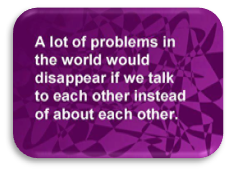
When we judge others, it is based upon our preconceived notions of what is right, proper or otherwise fits into our narrow mold of the perfect human being or situation, as we perceive it. While we are so caught up in our own misconceived perception, we risk stagnation. We actually find ourselves caught living in a world of hate and criticism, which only propagates to fill our lives with the same.
For those who believe in karma, focusing on the judgmental and hate filled thoughts opens the door to ‘bad karma’. People can find themselves wallowing in negativity every day, often not realizing they’re creating their own mess. On top of this, complaining that life didn’t turn out the way someone wanted is moot; it gets them nowhere. Taking a step back and evaluating past choices, decisions and lifestyle can do a lot to offer clarity. Thought process leaning toward beauty, opportunity and love can be considered ‘good karma’. You get back what you give out.
“By judging others we blind ourselves to our own evil and to the grace which others are just as entitled to as we are.” Dietrich Bonhoeffer
 Why, on occasion do we find ourselves so righteously perfect that we cast such a negative biases on someone else? Does race, creed, sexual preference, color, religion, clothing style, weight, body type, height, living arrangements, or even family skeletons determine the heart and spirit of a person? Are others any less deserving of kindness and respect than us?
“It is just as cowardly to judge an absent person as it is wicked to strike a defenseless one. Only the ignorant and narrow-minded gossip, for they speak of persons instead of things.” Lawrence Lovasik
Unfortunately, we’re not mind readers and aren’t privy to the personal and internal trials and tribulations of the passerby. Without getting to know them, without asking for more information, how can we make an informed assumption? What a different world this would be if we based opinions on fact or action, not on appearances or other superficial stereotypes.
 What if we all tried to view someone using our heart versus our eyes?
When we judge and ridicule others, we speak volumes about our own flaws.
Shush our inner critic for a while, dig deep for compassion and understanding and open our hearts to the possibility there is more beauty within others than we can see.