by Ace Concierge | Virtual Assistant | Jan 10, 2024 | Business Transformation, Business Values, Work Life Balance
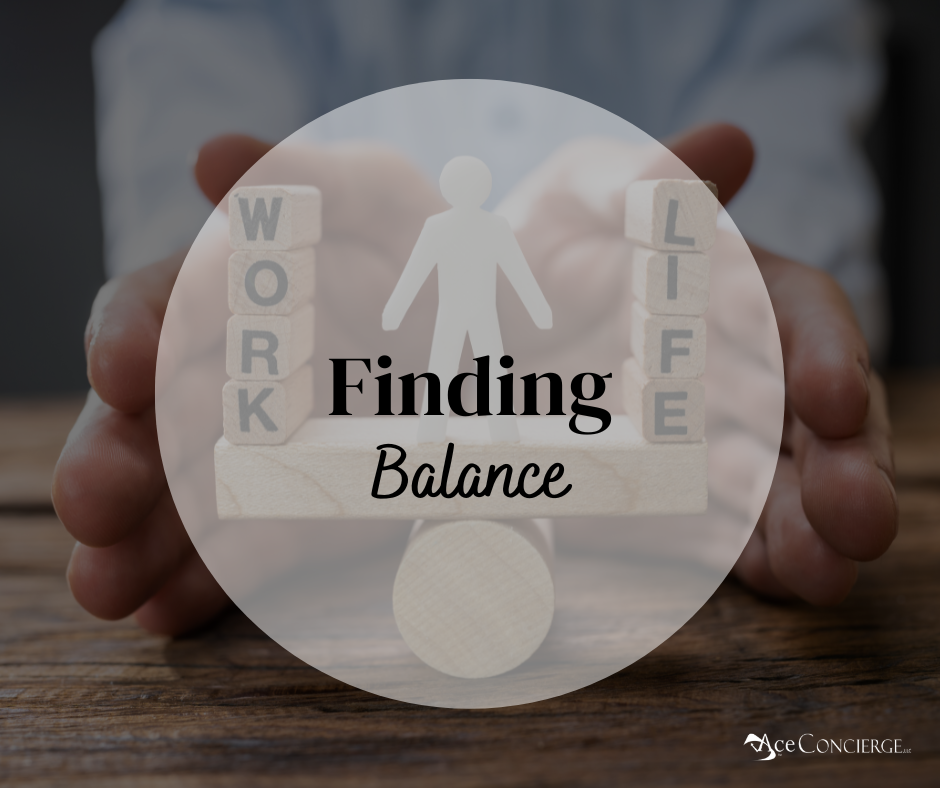
CEOs, often regarded as the superheroes of the business world, must keep their kryptonite in check to achieve work-life balance. The demands of the job have blurred the lines between work and personal life, leaving CEOs to feel like they are on call 24/7.
Despite the superhuman expectations, they are only human, and finding that sweet spot between work and personal life can be as tricky as navigating a minefield. The modern world’s constant barrage of emails, phone calls, and urgent matters can make it feel like the workday never ends, ultimately leading to burnout and stress, taking a toll on CEOs’ well-being.
The Work-Life Balance Myth:
The concept of work-life balance can often feel like an unattainable dream. The boundaries between work and home are blurred because of technology, leading to immense pressure for CEOs to be available round-the-clock. The instant accessibility makes it challenging for CEOs to disconnect from their work responsibilities.
The 24/7 Nature of Leadership:
CEOs are entrusted with the overall success and growth of their organizations. This responsibility comes with a 24/7 commitment, as crises can occur at any time, and critical decisions may need to be taken outside regular working hours. The demanding nature of the role often leaves CEOs with limited opportunities to switch off and enjoy personal time, impacting their overall well-being.
Strategic Planning vs. Personal Time:
CEOs must develop and implement long-term strategies to ensure the sustainability and success of their companies. This requires significant time and dedication, often cutting into personal or family time. Balancing the need for strategic planning with personal commitments becomes a delicate dance that many CEOs find challenging to master.
Family and Social Sacrifices:
One of the most significant sacrifices CEOs make in their pursuit of professional success is often felt in their personal lives. Long working hours, frequent travel, and the constant pressure to perform at a high level can strain relationships with family and friends. Important life events may be missed, and the emotional toll of such sacrifices can lead to feelings of isolation and loneliness.
The Weight of Decision-Making:
CEOs are faced with a multitude of decisions daily, each carrying its own set of consequences. The weight of these decisions can be emotionally draining, impacting the mental well-being of CEOs. The constant need to make tough choices and navigate through uncertainties takes a toll, making it crucial for CEOs to find effective ways to recharge and decompress.
The Role of Self-Care:
CEOs must recognize the paramount importance of self-care in their pursuit of work-life balance. While the demands of the role undeniably intensify, neglecting personal well-being can have severe repercussions. Engaging in regular exercise, ensuring adequate sleep, and practicing moments of mindfulness provide CEOs with the necessary resilience to navigate daily challenges.
Implementing Boundaries:
Establishing clear boundaries between work and personal life is essential for CEOs. Setting specific timeframes for work-related activities and creating dedicated periods for personal commitments help to maintain a healthier balance. Communicating these boundaries to colleagues, subordinates, and even family members is crucial for ensuring everyone is on the same page and respects the CEO’s need for personal time.
Delegating and Empowering:
CEOs often believe they must handle everything themselves. Delegating tasks and empowering capable team members is not a sign of weakness but a strategic move to ensure the sustainable growth of the organization and the well-being of the CEO. Trusting the team to handle certain responsibilities allows the CEO to focus on high-impact tasks and find pockets of time for personal pursuits.
Juggling work and life can feel like a circus act for CEOs. While there’s no magic formula, prioritizing self-care, implementing effective time management strategies, and finding that personal sweet spot can lead to a healthier and more fulfilling CEO journey.

by Ace Concierge | Virtual Assistant | Mar 9, 2021 | Entrepreneur, Productivity, Time Management

Getting down to business is more than being busy. Busy focuses on getting things done and checking off items on a To Do List. It is easy to confuse being busy with being productive. As an entrepreneur, you’ve got an organization to manage, a product or service to market, and a team to lead but if you’re tied up dowsing fires, and making checkmarks, then your productivity level is probably waning. Put the fire chief hat on the shelf and consider results-oriented actions to produce measurable outcomes.
Busy is transactional behavior, a quick fix, not a long-term solution for success. Think in terms of transformation.
Transformational thought processes generate a foundation for infinite strength and durable business achievement. Productive people establish viable systems and processes to direct their attention to single tasks, minimizing diversions and distractions.
Busy people touch everything that comes across their desk, check email at every ping, lend an ear for text messages, maintain a side-eye on social media posts, fiddle here and there, and at the end of the day, have managed to spread themselves so thin, wondering where did the time go.
Choose to reach peak productivity levels on any given workday by forgetting about looking and feeling like a busy donkey and transform yourself into a productive unicorn today. Larry Kim
Busy people tend to ask, ‘What else can I do?’ Filling their day with a whirlwind of activities that can fuel the ego and make for great conversation at the (virtual) watercooler. The busy bees are intent on doing more, perhaps in a chaotic and unfocused fashion, accomplishing a myriad of micro-tasks to fill their day. Maintaining the busyness is also another tactic for avoidance and possibly not eating the frog.
In How Being Busy Makes You Unproductive, Travis Bradberry stated, The truth is, busyness makes you less productive.
Productive people ask, ‘What else can I remove?’ Productive people hone in on their talents, top priorities and core genius to drive their results. Fueled by purpose, they often check in with themselves, thinking about what they can do, dump or delegate.
I received an email from an exceptionally valued long-time client who shared her To Do list with me. She stated: “These are just a few of the things I need to grow my business – and I am failing at doing them, but when I do, it totally pulls me away from the work I NEED to do that is billable.”
Determining the greatest value of your time requires a little taste of honesty. While you may enjoy many of the daily business operations and social media fun, they aren’t your ticket to paradise. They are required fillers to help fortify your business structure but are hardly the top dollar shakers.
Everything we do is an investment of our time. In many ways, time is more valuable than money, as you always have the opportunity to make more money, but you cannot recreate lost or wasted time. It is gone forever. If you think of time as a commodity and all of your actions/choices as an investment, it may change the manner in which you approach your business operations and your life.
Stop doing stuff that isn’t valuable. So much of what people do in attempting to be productive involves just trying to fit more low-value tasks into the same amount of time. Being productive means accomplishing more with the same or less effort. Mark Shead, Productivity 501.
Transform your life and your business by not being busy. Be productive.

by Ace Concierge | Virtual Assistant | Nov 16, 2017 | Guest Blogger, Productivity, Time Management

We read about what will make us more productive in life and at work. We know what to do but sometimes we can’t get ourselves going.
Know the true value of time; snatch, seize, and enjoy every moment of it. No idleness, no laziness, no procrastination: never put off till tomorrow what you can do today. Philip Stanhope, 4th Earl of Chesterfield
Here are 6 different and I hope unique ways to experiment with to get you powered up each morning.
- Make your calendar reminders more specific so they grab your attention. Example: Instead of “Morning routine,” list the specific things which you know make you more productive, more focused, organized or have a positive attitude. What works for you? This is useful for getting into a new habit, reminding yourself of one if you’re feeling as if you’re falling off track, or after sickness, vacation, or any break.
- Give yourself a deadline. Remember SMART goals? They work for many people, because they are specific and set a deadline. I’ve been trying to get back to riding my exercise bike, so my goal [finally] became: by the time the U.S. Thanksgiving month begins, I’ll be biking three times a week at 6:30 a.m.
- Get yourself a motivational or accountability partner. Short term or permanently. For example, if for trouble getting out of bed, ask your spouse or one of your kids to get you going. Or if you need support starting a new morning routines, work with a coach. That task you’re procrastinating on …. How about working at the time your kids are doing their homework. Or ask Suzie to call you each day and check in on how you’re doing!
- Are you a numbers person? Use your interest in numbers as your momentum or motivation. For example, use Excel or an app to keep track of how you’re doing with the healthy habits you find important, i.e., breakfast, water, protein, walking, meditation. If you feel you spend too much time on your devices, then use a paper notepad or an index card to track. Or choose a favorite number and meditate, journal or walk for that number of minutes. If it’s short enough, do it twice a day.
- What’s your purpose? Some people get their motivation or momentum from tying a routine to a bigger, meaningful goal. For example, by meditating every day, which you know makes you calmer, you can be the kind of parent you dream of being. Or by walking each day, your mind is clearer at work, so you’re more productive and therefore lead your team more effectively.
- Write down what happens if you consistently do not follow through on your morning routine. If you don’t feel like doing it, and this has lasted more than a week, answer this … and write it out because it will make a greater impression in black and white, staring back at you: How will I feel about myself in another week if this continues? What happens if do not do this for a month, when I know how good it has been for me in the past? And what about in a year? How will you feel about not following through on commitments to yourself?
Guest Author
Sue West

Productivity & ADHD Coach
Certified Organizer Coach®
Certified Professional Organizer®
In Chronic Disorganization
Connect with Sue
Facebook
Twitter
LinkedIn
Website & Blog: www.CoachSueWest.com
Phone: 603.554.1948
Email: Sue@OrganizeNH.com
Think you may have ADHD or similar symptoms? Try Sue’s coaching services or self-paced, ADHD workbook to focus and get started on managing your distractibility or follow through, before they manage you.

by Ace Concierge | Virtual Assistant | Jul 9, 2014 | Delegation, Small Business, Social Media, Virtual Assistant
 Do you feel as though your day flies by without a minute to spare? Maybe you even missed lunch, got home late, or forgot to pick up something at the store? Gosh, I am sure you know the feeling. You are constantly on the go and doing something BUT is that “something” productive and getting you closer to your goals? Simply being busy isn’t results oriented.
Being productive means getting things done. As in you’ve actually accomplished something, not just filled out a fake status report marked “complete.” Learn how the work you do makes it to the finish line and how it adds to the bottom line of your company. Craig Golightly
At the end of the day have you reviewed your long laundry list and found that you still have a lot of washing to do? Well, you are not alone. Your entrepreneurial spirit is driving you to do it all and be it all, no matter what the cost. No matter what the activity.
You should seriously consider the busyness and the low payoff tasks versus the real core drivers of your business that produce the income. The tasks and projects that ONLY you can and should do.
If you are entrenched with 10, 20+ hours a week on social media management, curating content, writing, editing, proofing and scheduling blog posts, calendar management, writing newsletters, creating documents and templates or acting as the project manager, then WHO is operating your business?
Value your time!
Honor your skills!
As I mentioned in: “Leveraging Time and Your Core Genius,” when you are able to maximize your potential by focusing on your core genius, you become more productive and effective. While there are many daily business tasks that require attention, it doesn’t necessarily have to be on your time. Delegating the lower return projects and tasks gives you back your time to build your business, develop strategy, nurture relationships, foster loyalty, seek partnerships, and focus on your bottom line.
I received an email from an exceptionally valued long-time client who shared her To Do list with me. She stated: “These are just a few of the things I need to grow my business – and I am failing at doing them, but when I do, it totally pulls me away from the work I NEED to do that is billable.”
Her statement firmly relates back to leveraging time and focusing on what you do best to build and cultivate your company.
The following are some of the tasks and projects that she must faithfully devote her time doing in order to continue to expand her business. What an expansive undertaking! Remember: Time is money! Invest wisely.
Are all of these her core genius? Certainly not, however; they are must do activities for business development and progress.
- Keep my Social Media up to date for all these areas:
- Links, research, updates
- Linking to all other things I do – I.E.: when I write a blog post, making sure it is pushed out to every single place.
- Doing key word searches in Google to make sure key wording is in every article for the most relevant search terms.
- Document management systems – keep all my documents on the shared drive (in the cloud) up to date and in order by first cleaning up the mess I have going now… – including but not limited to:
- Client files
- Website files
- Corporate files
- Marketing materials
- Research documents etc.
- Source potential clients in my geographical location who are in start-up to med-sized businesses, active in Social media and who may or may not need idea sessions to get their business further along
- Requesting a meeting for me
- Setting it up
- Reviewing and updating my calendar so I keep better track because I always fail to put things in calendars
- Meet with me via Skype once a week to see what needs to be done and doing it
- Use my contract template documents for me and update them for each new client as it takes me days to get to these.
- Review and edit all files sent to all clients or outgoing parties
- Do all my research for the topics I write about so they can be backed by data
- All invoicing and receipts for clients
- All sourcing of industry related expert themes
- Managing my LinkedIn polls
- Creating my surveys for clients
- Creating templates for all my follow-up reports for each facilitated session
- Taking all of my current documentation and finding ways of repurposing it
- Taking all of my product development efforts and interviewing vendors
- Responding to and dealing with all incoming email from all websites with initial contact to let them know I am here and I did get their email, and when I will respond
- Setting up of appointments with clients, prospective clients, peers
- Researching all speaker opportunities and sending out my speaker packages and filling out the applications
- Researching all clients who have recently undergone a merger or acquisition and sending the change management brochures out to them
- Develop templates for my processes so I am not reinventing the wheel every time I work with a new client
- Updating my BIO on every single software site I have it listed (and tracking where that is) so I can ensure it is always consistent every time I change it
- Updating the company project software for me at the drop of an email – because I cannot always log in
- Managing the company project software and following up with deadlines of contractors
- Using your network to get them to post my quotes on quote sites so I continue to build credibility
- Sourcing the least expensive book editors to edit my writing of each chapter of the book I never have time to edit.
- Kicking my butt and making sure everything I say I “want to do” becomes an actionable item in the company product software and is due to YOU to review for me – rather than my leaving it in there without a date and just “wishing” it would happen
So, after reading this list, how many of these tasks do you hold on to that keep you working IN your business rather than ON it? We sometimes don’t realize all of the day to day activities that go into growing our companies, as they have become second nature while we are on autopilot.
All of these tasks and projects are NECESSARY but divert your attention from the most important facets of your company which ONLY you can do. These are the low payoff, non-income generators that aren’t the best value of your time.
ACTION ITEM: Record every single task, project or activity for one week, noting which line items are income producers, core genius or something that was a time robber and should have been outsourced.
Come back to me in one week and share your list. Let’s talk strategy and outcomes.
“One of the most critical was the ability to learn how to effectively delegate. It is a skill that every upstart entrepreneur must master if they wish to grow their business. Without delegation your business will be limited by your own time and energy.” Matthew Swyers

by Ace Concierge | Virtual Assistant | Apr 24, 2014 | Organization, Productivity, Time Management
 How many times have you thought that you need more hours in your day or an extra pair of hands? You know the feeling, looking at your desk, your calendar, your Smartphone, your inbox…. Ugh, it is overflowing with things that need your attention. You can’t torch it. You can’t ignore it, but you can implement a few systems and processes to help you better manage the overwhelm and chaos, moving you to increase your productivity.
For every minute spent organizing, an hour is earned. – Anonymous
The Notorious To Do list
The first step toward success is to be cognizant of the level of disturbances which you allow into your day. It could revolve around the daily notifications you receive regarding text messages, emails, news alerts, phone calls or any other immediate interruption that diverts your focus from the task at hand.
- Are you able to turn off or lower the volume of the notifications?
- Can you schedule 3-4 times throughout the day to review/respond to emails?
- Do you need to respond immediately to each byte of data that crosses your desk or your Smartphone?
Tips
- Prioritize and set deadlines.
- Know which projects require the most time and your undivided attention.
- Create your boundaries for working hours and “publicize” them.
- Tune out distractions.
- Stay on task.
Is Your Inbox Abundant with Clutter?
In 2011, it is estimated that there were 3.146 billion email accounts and 2.8 million emails sent and received every day. Wow!
Email has become the most predominant mode of office communications whether it is a quick hello or dissemination of corporate materials, contracts, projects and data. It is a necessity that we cannot live without.
Some inboxes can look like a nightmare of messages and To Dos if not properly maintained or left unchecked for an extended period of time. We are all busy working and managing the flow of information and business operations that it can just become an inconvenience to take the time to delete, file, schedule or otherwise take some form of action with each email. If you continually shy away from inbox management, it not only becomes unruly like a bad hair day, but it fosters a lack of productivity and organization. Who can afford that?
Have you ever spent wasted minutes or hours feverishly searching for an email that contains an important document? It becomes a frustrating unproductive endeavor that is a gross misuse of your valuable time AND time is money.
PING!! A new email is awaiting your attention.
- Schedule time to check your email at various intervals
- Make sure you have appropriate folders and filters for filing.
- Is it urgent?
- Can it be completed in 2-3 mins?
- Can you flag it to read later?
- Have you set up rules/alerts
- Delete it if it isn’t necessary and won’t add any value.
- If there is an attachment, download it and save it in the appropriate document folder
- Forward it with instructions to your virtual assistant
- If it is an appointment, drag it to your calendar
- Have separate email addresses for personal and business use
My Documents
You are inundated with digital paper that requires action and filing. Creating folders is a simple task to ensure your documents are organized and easily found. It can prove very time consuming if you have to scroll through one larger receptacle looking for a needed document. Sure, you can do a broad search but when proper file management is established, you can save a great deal of time and aggravation. Let your digital filing system mirror a physical filing system.
Tips:
- Create folders and sub-folders
- Use short names
- Be diligent about filing
- Separate current and completed works
- Archive older, unneeded documents – store in a separate folder, USB or cloud storage
- Create shortcuts or links to documents you use more consistently. Maintaining a single copy ensures you are always using the most current version.
- Delete unnecessary files
- Create shortcuts of your most used documents and save them on your desktop.
- If you routinely share documents with a group, consider using Google Docs, Teambox, Dropbox or another online sharing tool for collaborating.
- Save your data and make sure you always back up your computer
Taking the time to organize and streamline your office operations, even if it is just your email and documents, will help to increase your efficiency and productivity – which saves you time and money. The less time you must spend rummaging through folders and emails, the more time you have to devote to the your vital business operations and daily procedures.
Have a time and place for everything, and do everything in its time and place, and you will not only accomplish more, but have far more leisure than those who are always hurrying. – Tryon Edwards
Make organization a habit, not a one hit wonder. Get into a rhythm everyday and stick with it, just like you would with any lifestyle habit.