by Ace Concierge | Virtual Assistant | Sep 4, 2018 | Entrepreneur, Guest Blogger, Marketing, Small Business, Social Media
If you want to successfully promote your business, you need to know how to create effective landing pages. Distraction free landing pages can help you generate more leads and sales. If set up properly they can achieve conversion rates as high as 60% or more.
Therefore, today I am going to show you how to create landing pages that convert…
Find a landing page software:
The first thing you must do is get yourself a landing page software. Of course, you can always hire a designer to create the landing page for you. But using a tool will save you time and work out cheaper.
Most of the top ones provide access to several templates with which you can design your landing pages quickly. You also won’t need to hire a designer every time you need an edit. A couple of good landing page design tools you can try are Leadpages and Unbounce.
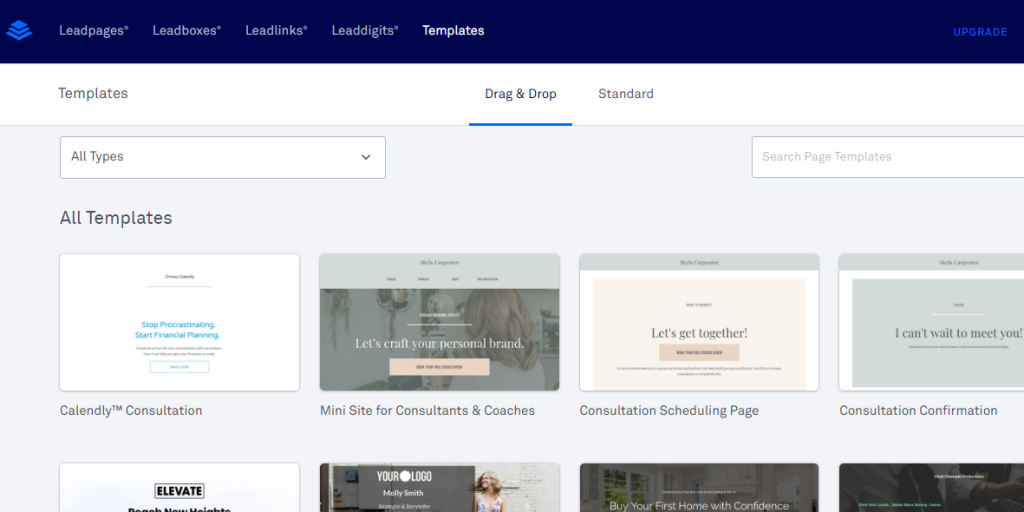
They have templates that will make it easy for you to design webinar landing pages, product landing pages and more.
Design the landing page:
After you choose your landing page software choose a template that will suit your project best. Then you can begin designing your landing page. Start by writing a headline. It should be both attention grabbing and enticing as it needs to convince people to read the rest of the landing page.
You should also optimize it for social media so that the headlines will drive more clicks and shares.
Next, write the body copy. The goal of the body copy should be to convince people that signing up for the content in exchange for their details or buying the product is worth it. The best way to do this is by discussing the benefits of the content or product.
Start with a short paragraph and then continue with bullet points that quickly state the benefits.
After that you can end with a call to action that asks people to ‘Sign Up’ or ‘Buy Now’ to gain access.
Here’s a good example of a landing page from Hubspot that promotes a free marketing assessment…
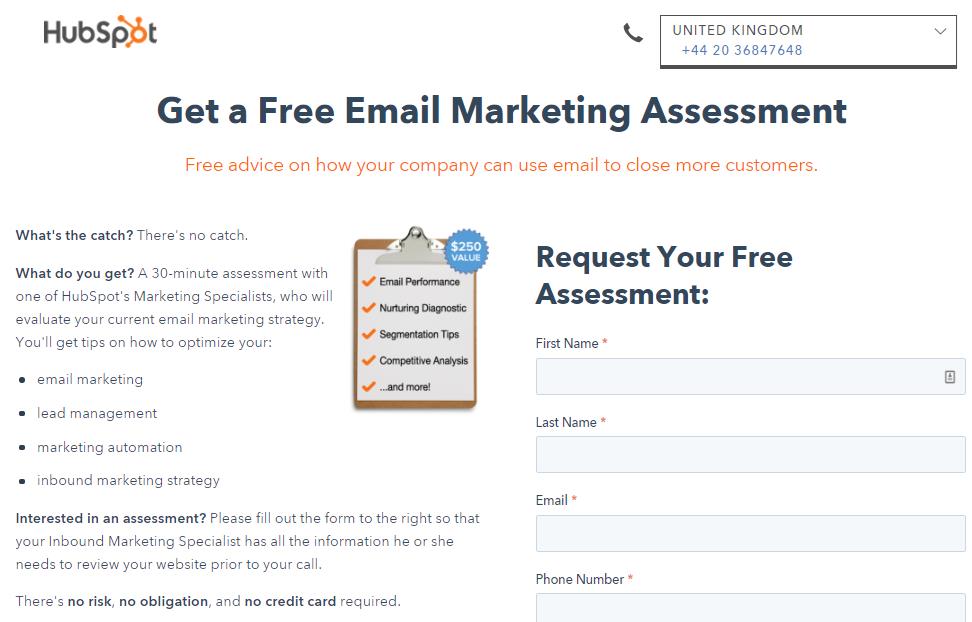
As you can see it starts with an attractive headline followed by a sub headline. After that you have a couple of short paragraphs which are followed by bullet points that state the benefits of the assessment.
Finally, it ends with a call to action that asks people to fill up the form.
Another important step they have taken here is adding their logo at the top. When people see this they will instantly know that this is a promotion from Hubspot. If you don’t have a logo, you should at least add your company name at the top.
Attach it to a domain:
The aforementioned landing page design tools can host your landing page. So, you can set them up there. But if you want them to have an extra layer of credibility you should host it on your own domain. When people see that the name on the logo matches with the one in your URL they will trust you more.
So, attach it to your website.
If you are a startup and haven’t got a website, you can purchase one using a domain name finding tool.
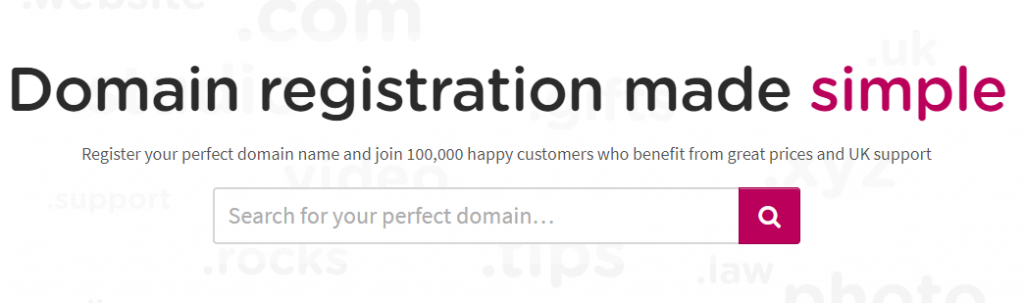
When you type in the name of your company in the search field it will find all the domain names available and you can buy the one you like most.
Once you have a domain you can attach the landing page to it and it will look very credible. Some landing page design tools have their own WordPress plugins. So, if your website runs on WordPress, adding the landing page to it should be much easier.
Send traffic and test results:
The next thing you must do is send traffic to this landing page. This should be done through both organic and paid methods.
While you do this watch out for the conversion rates to see if they meet the industry standards. If it is not converting well enough you should make some modifications to see if it improves.
Split test different versions:
Another thing you can try is to split test your landing pages right from the start. This is where you create different versions of your landing page and then simultaneously send the same amount of traffic to all of them to see which converts the best. To help with split testing you can use a free tool like Google Optimize.
Now create your landing pages…
This is how you create landing pages that convert. Start by getting a landing page design tool. Next, choose a template and add your copy to it. After that you can attach it to a domain and send traffic.
While you do this you should regularly monitor your page to make sure it is converting well enough.
How do you create your landing pages? Do you use any tools or do you design them from scratch? Please leave your comments below.
Guest Author
 Mitt Ray is the founder of Social Marketing Writing, where you can download 100 free social media background images.
Connect with Mitt
Twitter: https://twitter.com/mittray
Linkedin: https://uk.linkedin.com/in/mittray
Facebook: https://www.facebook.com/socialmarketingwriting

by Ace Concierge | Virtual Assistant | Mar 28, 2017 | Entrepreneur, Goals, Productivity

If you’re like me, you probably start your day with a morning routine. Routines help build positive habits, support priorities, create structure, amplify your time, and increase your productivity. Plus, you have the opportunity to set the mojo for the day.
Probably the most important period of your day is when you first wake up. Your morning routine can set you up for massive success the whole day. Matthew Toren
These are essential productivity components whether you operate your own business, support others with theirs, have a career, a family, or even a guinea pig. A morning routine will help you kick ass all day long. Stuff needs to get done. Put away. Managed. Started. Finished. There’s plenty of verbs for all of this but you get the idea!! That being said, do all of your typical morning routines strengthen daily positive productive habits? Sometimes, not so much. You may hit snooze (several hundred times), get sucked into social media, the abyss of checking your inbox, the dreaded remote control, or perhaps even a tempting starchy bagel. Truthfully, I’m not sure which is worse but either way, most are not only a distracting waste of time but studies say these types of morning activities are not the most prolific, thought-provoking methods to ACTIVATE your day. First off, set your intentions. Goals. Priorities. If you don’t have any direction, how will you direct your day? A plan is key to reducing chaos, eliminating overwhelm, being on time, and getting more done. It’s that simple. It doesn’t matter whether you go old school with a pen and paper or more digital with a Google Doc, an app, or some other online tool/platform that you will COMMIT to. This is nothing new. You’ve read it before but maybe now you’d like to SPRING into action. It is March. So March on to the new you.
Break it down and simplify your priorities:
Personal & Business
- Think about what you value most
- What will your morning routine look like to you?
- How do you best start your day?
- What invigorates you – inspires you to be your best/do your best?
- What NEW habits should you bring into your life?
- What old habits should you kiss goodbye?
- What/who should you make more time for?
Healthy routines impart a healthy mind, body, and spirit. A whole healthy you generates a more vibrant and industrious day. [GREAT GOAL] Think of your morning routine as the tool to achieve optimal workday performance. Fuel and nourish your race car if, and only if, you want to win.
Morning Routine Key Principles
- Prepare: design your motivational morning routine
- Time block: actually block off time for specific tasks and HOLD to it. Example: 5-6:30 am gym
- Boycott technology: tune out and turn off distractions and notifications. Facebook, Twitter, and other social posts will still be there after your “self-deposits”
- TIP: Leave your Smartphone on the other side of the room. Don’t grab for it unless you’re turning off the alarm to jump out of bed. [DIGITAL DETOX]
- Be present – in THIS moment Multi-tasking is not allowed
- Self-nourishment: If you sacrifice your health and wellness, there is no business. YOU are a priority. Do it for yourself, friends, family, loved ones, and your company
- Food: science-based evidence clearly demonstrates that foods are medicine. Give your body what it needs to support and power your day
- Meditation: focus, quiet the mind, practice being present and mind FULL
- Exercise: being fit isn’t a fad. It keeps you healthier, reduces or eliminates pain, enhances your life, keeps you younger, strengthens your heart and lungs, battles disease and helps to sustain mobility….. just to name a few benefits
- Goals: write them down!! Keep your goals/plan visible. Be accountable and share it with your friends and family. Your dog might have an interest too
- Action: take daily actions to get you closer to your goals
- Ask yourself: does “this” support my vision?
- Will it help me be better or do better?
- Is it growth-oriented?
Sound off: How does your morning routine IGNITE your day?

by Ace Concierge | Virtual Assistant | Jan 31, 2017 | Delegation, Entrepreneur, Guest Blogger, Productivity, Small Business

“Delegate, but don’t abdicate.” “Delegating takes more time than doing it myself. ”
Delegating – or outsourcing if you are self-employed: yes, it’s difficult and yes, it is so worth your time to learn how to do it well. It is a skill, not something any one of us is innately good at, so I suggest you begin with low risk practice first.
What do you get in return?
- Attention to your bigger goals you’re wanting to spend time but just can’t seem to create.
- A team. Better, clearer communications.
- Accountability practice. And practice at leaning into difficult conversations when you need to have them.
With nearly 20 years of corporate experience, in addition to being a small business owner, I can confidently suggest the following exercise to begin your road to successful delegation and growth. Especially if you’ve never delegated before and are feeling a little apprehensive, this is a fascinating skill because of how much you learn about other people and yourself.
#1 Start Small. Low Risk. Get Some Practice.
Choose a low risk, small task and delegate or outsource it. I hired a company to work with me on one edition of my newsletter. Eventually, I outsourced my website and more because their work, flexibility and ability to hold me accountable worked well for me. Had the newsletter not been successful I could have returned to doing it myself.
Look at your “big goals” list. What do you not have time for that’s really pulling at you?
And then look at your day-to-day work: What project is: not getting done, needs skills you don’t have/aren’t great at, needs a partner to hold you accountable, is low risk (not financials) or is frustrating you and you’re stuck? There will be at least one, guaranteed.
Now back to the goals list: If you invested some time explaining what’s needed for your low risk project and if you could think of the delegating or outsourcing as an experiment, wouldn’t it be great to have time to work on that goal? What’s the risk? Keep it small enough that it’s hard for you not to do it.
 #2 Invest Time.
Create time on your calendar to explain and educate the person who will be handling this for you. If you don’t meet and create time to explain and educate, delegation will fail and it won’t be the other person’s fault. You’ll have done it to yourself. Get it right on the calendar, at least one to educate and one short time to check in. More if needed.
Pay attention to how well you two work together. If you’re being heard. Are solutions and proactive suggestions made? Is understanding present? Ask the person to explain back to you what he/she thinks you want.
And rather than framing this as “asking for help,” do this instead. Since “help” implies you don’t know how to do the task, yet you likely you do know, think “leverage.” What you are doing is even smarter: you are building a team so you can leverage your skills and time as well as your team’s. And that gets you closer to your goals, whether it is to work fewer days a week, have more travel money or time or anything else important to you.
Leverage, not help. Completely different mindset and way of operating here.
#3 Expectations. Get Clear. 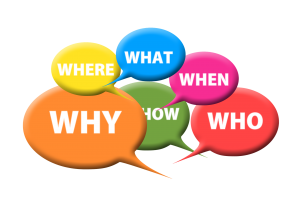
Start by discussing and being super clear in your expectations of WHAT needs to get done.
The goal, the end game, the results. Not the HOW, but the WHAT. [And if you’re working with people who need to know the context or the WHY, give them that, too. Can’t hurt.]
If you have any preferences which add value to the project, mention them, but be prepared to let them go if they are not critical. Double checking quality is critical. The process or tool may not be so much.
Let go of HOW the task is done. That’s what you’re delegating.
If something comes back to you and it’s quite wrong …. first look at or ask about the expectations you think you set.
I did say: this is not simple.
#4 Set Limits.
Consider ahead of time what your limits are and communicate these.
Examples:
- Please don’t spend over ‘x’ amount.
- Let me know how much you get done in 1 hour & let’s go from there.
- It’s important to me that you feel comfortable holding me accountable. Here is what would be great to have … and not.
- Let’s try this one piece. Come back to me and let’s check that together so I’m sure I’ve been clear. And you’re on the right track. If so, we can get lots more done like those.
If you don’t educate on what’s a deal breaker, then when someone spends too much, that’s on you.
Delegate = Leverage.
Delegation is a muscle that needs an attentive workout. The first few times you try delegating may not be as perfect as you envisioned because this does take practice. You didn’t learn to drive, or program, or market in one try. You practiced and got better as you did.
Delegating and outsourcing allow you to do what you know are so incredibly good at. And the work you delegate or outsource? It allows another person to do what he or she is really awesome at, so you both contribute. How good is that?

Guest Author

Sue West
Certified Organizer Coach®
Productivity & ADHD Coach
Certified Professional Organizer®
In Chronic Disorganization
Connect with Sue
Facebook
Twitter
LinkedIn
Website & Blog: www.CoachSueWest.com
Phone: 603.554.1948
Email: Sue@OrganizeNH.com

by Ace Concierge | Virtual Assistant | Jan 12, 2017 | Entrepreneur, Executive Administration, Small Business, Time Management, Virtual Assistant

Greeting the day as an overwhelmed entrepreneur has become part of the norm for many first-time business owners. The hats we wear are numerous and can present unexpected challenges in our day-to-day operations. It can be suffocating trying to figure out where to turn or what to do next.
Becoming more productive and being able to free up more time and leveraging your existing time, is one of the most skills that can literally multiply your success. Tor Refsland
You are an executive who worked hard, paid your dues and now you are sitting in the seat of responsibility. With responsibility comes an increased need to manage your time effectively. You cannot spend hours of your time formatting documents, writing business letters, building forms, writing and responding to emails, and editing or proofreading marketing material. Your decision-making, client relationships, and management of the company’s fiscal responsibilities take precedence. Hiring someone full-time is just not in the books yet.
What can you do? Is there a simple solution to help you achieve more by doing less?
Delegating
The purpose of delegating is to enable you to focus on your core genius, the tasks and projects that ONLY you can do; the revenue generators.
If you are being busy with many of the back end, admin tasks, you not using your expertise to the best of your ability; thereby further impairing your business advancement and opportunities. You’re potentially hindering your own growth which is counterproductive to starting your business. Let go to grow.
Tracking Hours
How much valuable time is used for follow up emails, searching/scheduling social media posts, writing/editing content, travel planning, document reviews, calendar reminders, project management, or presentation prep, just to name a few?
Track your time for the rest of the week, including the project, time on task, distractions, task completion, new additions to your list, items that were dropped to a lower priority or simply forgotten and how you felt at the end. In your review, what tasks clearly represented your core genius? What tasks were a low value?
Infinite list of responsibilities
All of the above are just a few of the basic yet necessary components to your business operations. It can be exhausting and frustrating to manage all of these tasks on your own. Unless you’re a super hero, it’s nearly impossible to be all things, to all people, all of the time.
In his blog post “The Way To Measure Your Productivity As An Entrepreneur”, Dan Martell suggests you:
- Create 4 buckets of activities: Admin, Work, Mgmt, Strategy
- Measure each with a monetary value: $10, $100, $500, $5000
- Focus on moving your way up the value chain (working ON vs. IN)
Measure each activity for what it is, then tally up your time for the day to get your daily value creation score.
The goal of these activities is to nudge you to work ON your business, rather than IN it. Typically, the IN does not generate revenue but keeps you busy. Busy isn’t necessarily productive. Busy can be frittering time. You don’t have time to waste.
When you love what you do, you want to do more of it!
Delegating gives you the flexibility you need to keep the company momentum going. Unburden yourself of these time consuming, the low payoff tasks/projects that keep you from the core of your business.
Stop doing stuff that isn’t valuable. So much of what people do in attempting to be productive involves just trying to fit more low value tasks into the same amount of time. Being productive means accomplishing more with the same or less effort. Mark Shead, Productivity 501
ACTION STEP
What’s on your To Do list right now that you’re ready to outsource? Do it and discover for yourself why so many other entrepreneurs embrace the power of delegating. What do they know that you don’t?

by Ace Concierge | Virtual Assistant | Dec 20, 2016 | Delegation, Entrepreneur, Time Management, Virtual Assistant
Let’s get real about time management. Sure, scrolling through social media and completing daily to-dos are satisfying, but will they translate to success? Likely not! These activities are like sidekicks, important to keep the business chugging along, but they won’t be the superhero bringing in the major cash.
What is the best use of your time and expertise?
Your core genius: something you love to do, is effortless, creates a sense of joy and contentment, generates a fire within and time disappears. It could be coaching, writing, graphic design, speaking, leading, selling, training, motivating, marketing or whatever your passion is. When you are focused on your CG, you are alive, vibrant, and producing outcomes.
As an entrepreneur, when you can maximize your potential by focusing on your core genius, you not only follow your passion but can devote your time ON your business rather than IN it. You become more productive and efficient. While many daily business tasks require attention, it doesn’t necessarily have to be on your time. Delegating the lower return projects and tasks gives you back your time to build your business, develop strategy, nurture relationships, foster loyalty, seek partnerships, and focus on your bottom line.
Compare the individuals, the business owners, who dedicate their time to every task, every project, even those that they don’t like, don’t truly have time to do, or the ones that are more menial “time robbers.” These people are taken away from their core genius and focused on the back end, admin-type projects instead of building their companies and concentrating on income-generating projects.
“Most entrepreneurs spend less than 30% of their time focusing on their core genius and unique abilities. In fact, by the time they’ve launched a business, it often seems entrepreneurs are doing everything but the one thing they went into business for in the first place.” Jack Canfield
Everything we do is an investment of our time. When you choose to watch television or engage on Facebook that is an investment of your time. In many ways, time is more valuable than money, as you always have the opportunity to make more money, but you cannot recreate lost or wasted time. It is gone forever. If you think of time as a commodity and all of your actions/choices as an investment, it may change how you approach your daily activities.
Think about the return on your time invested. In a recent article by Anthony Iannarino, “Return On Time Invested,” he suggests measuring each activity, the time you spent, and the return. If there was no return on your time, then you must realize that that task or activity is not worth doing. A better use of your valuable time is to focus on those activities that produce a desired, profitable, and rewarding outcome.
Leveraging your time and effort is a fundamental strategy for success. There are only so many hours in the day that you can work and by only using your time, you can only accomplish so much. When you choose to utilize other people’s time via delegation, you intensify your productivity and efficiency to an extraordinary magnitude. It feels great to do more in less time.
- Eliminate unnecessary activities
- Prioritize so you focus your energy on those tasks that provide the highest rate of return
- Set long and short-term goals with action steps, motivating you and keeping you on target
- Learn how to effectively delegate
- Outsource non-core tasks/projects
Action Step:
- Identify the daily activities that are devouring your time by keeping a journal: logging activities, projects, and time spent
- Build a plan to delegate the time robbers that are taking you away from your CG
- Call Ace Concierge to discuss your delegation strategy and project timeline
by Ace Concierge | Virtual Assistant | Aug 23, 2016 | Entrepreneur, Freelance Economy, Productivity, Small Business, Toolbox
If you want to talk about an explosion of proportions not seen since the Industrial Revolution, simply take a peek at the freelance economy.
Expansion of the freelance economy is growing at exponential rates evidenced by 53 million freelancers representing more than 33% of America’s labor force today. By the year 2020, this number is expected to grow by 50%. That is a significant amount of the workforce in a work-for-hire demographic poised to change business as we know it. While not all freelancers will be full-time independent contractors, they will be part of the fast gig group providing on-demand services from remote offices. These remote warriors may be found behind a desk, at a coffee shop, in a tree top or at the beach because the location simply doesn’t matter. The lifestyle does. Where else can you choose to wear pajamas, sweat pants or a power suit?
The draw here is that freelancers have the opportunity to maintain independence, generate income and enjoy a better work-life balance – all from the comfort of their own “office”. I’ve been in the business since 2002 and have never looked back.
Who Benefits from the Freelance Economy?
The rise of a freelance nation provides a multitude of lifestyle benefits, but it isn’t just advantageous for the worker. The employer and other business owners who “hire” the qualified contractors REDUCE overhead and expenses by NOT paying for benefits, office space, supplies, health/workers insurance, paid vacation/sick time, or training. It is an excellent opportunity to source high-level expertise, leverage costs, and hire for work on a project basis. Since most freelancers work on an hourly or fixed-rate billing system, employers eliminate the need to carry full-time employees through non-project time slots.
The real-time freelance statistics speak for themselves – a way of life has emerged that is changing the landscape of how business gets done.
Hiring independent professionals, virtual assistants included, of course, offers employers a workforce with an increased knowledge base, deep experience, and refined skill sets. Much like a veritable shopping cart full of tools, the mobile assets available and varied technological advances have set the stage for enhanced productivity without the confines of an office. Anyone can provide needed services without being hindered by geographical boundaries or by a lack of equipment. It’s pretty incredible to think about how far we’ve advanced over the last few decades, no longer being tethered to an office and a time clock.
The Freelance Economy: Business Tools for Success
Being fortunate to work remotely does require you to learn or become familiar with a variety of tools, platforms, and apps to maintain your autonomy and earn a living. It may seem like a challenge at first, but without them, business as usual can be incredibly difficult. I for one, am not ready to trade in my mobility for a desk because the lifestyle win over-rides the investment in personal development.
Let’s jump into some of the key tools that have contributed to my success, connected me with remote organizations, and given me the freedom I crave.
Project Management (PM): Operating a business takes dedication and organization. As a freelancer, you are building your personal business and the tools are the face of your brand.
Redbooth is my go-to program for PM. It streamlines all communications, tasks, projects, accountability, files, and timelines. Here’s an overview of their features. It is very user-friendly and simple to set up. Give it a try. I was NOT partial to Basecamp or Trello.
Communications: In my experience, I find it best to have some fallbacks to bring to the table, but more importantly, what technology is your client most comfortable using? Additional features of some of the tools below include secure SSL encryption, file transfers, group and private chats, easy screen sharing, and sync’d mobile capabilities.
I don’t have a preferred platform but I use Slack, Zoom, and of course good old-fashioned text, email, and phone.
Organization: Get your ducks in a row or you will be shaking those tail feathers pretty quickly. Showing the client how organized you are will build confidence and trust.
In addition to using Redbooth, I also like to employ the good graces of Google Drive and Dropbox for cloud storage and sharing documents with clients. Another extremely helpful tip (which came from a client) is to create Chrome user profiles with individual tabs and bookmarks. I cannot say enough about this Chrome feature. The separate profiles enable me to have each clients’ social accounts, Chrome extensions, industry-specific bookmarks, and profiles in their own browser space. This is one of my all time organizational favorites.
This last tool, If This Than That, is a free service of 347 channels with “recipes” to help optimize your business, your life, and your content. You create triggers “if this” happens “than that”, the action, pushes the data to your desired channel. For example, you can create recipes to:
- Push RSS feeds to Twitter, Facebook, LinkedIn or Buffer
- Receive a text message, email or phone call when a particular hashtag is posted
- Have Facebook or Instagram images sent to Dropbox
- Receive a text message if there is a forecast for rain
- Star a Gmail and have it delivered to Evernote
Being organized is a key tune-up for your productivity. If you are willy-nilly about filing, social media strategy, scheduling, or daily business operations, you waste valuable time and energy and you risk appearing unprofessional. Make it a habit to not only create your systems and processes but to use them consistently.
Every digital hero drives their business with a variety of tested tools to help ensure their entrepreneurial success and support of your business. I reached out to some well-respected pros in my network to help give you a broader scope of what they use, how and why.
 Cori Ramos, of Not Now Mom’s Busy, a multi-niche blog for women who wants to make money from home, blog like a boss and achieve work-life balance, uses three main tools on a daily basis: Hootsuite, Microsoft Outlook and Dropbox.
I’ve been using Hootsuite Pro for about three years now and I love it. I can access all my social media pages and I get suggested content to share with followers. Not only that but we can schedule posts in advance. This comes in handy when you want to promote your business or product. Sometimes I get caught up in other daily tasks that I forget to promote my blog and product. Now I take time one day (usually on Sunday) out of the week to schedule the days/times I want to promote my blog or eBook.
What can I say about Microsoft Outlook. I’ve had a love affair with it since 2000. Besides accessing my email, I use the calendar religiously to keep up with appointments and deadlines. And I can access other email accounts like Gmail on there as well.
I love the easy access I get with Dropbox. Since I’m on a laptop, desktop and mobile, Dropbox allows me to access files, docs and images from all three places.
And what’s even better is I can access these tools on my mobile phone. So even when I’m out and about, I can still receive emails, check my social media pages and access any document I need.
 Jacqui Barrett-Poindexter, Chief Career Writer, Master Resume Writer & Storyteller of CareerTrend.net shares her 3 most favorite tools/program.
1. Desktop Task Timer: A free download that I use on my MacBook that I use daily to track ‘everything I do!
It’s simple, really. A tiny little tool in the corner of my screen where I track client projects, administrative, operational – including sales conversations – and other initiatives every single day, down to the minute.
This gives me a sense of how much of my energy is going to which ‘tasks.’ It also helps me to focus in. For example, if I am writing, and I want to ensure at least XX amount of hours on a certain project for the day – or for the week – I refer to this tool. I can also download results into Excel to calculate time spent over a period of months/year or more and use this for future planning.
2. Droid Turbo with Google/Gmail Interface. It allows me to keep in touch on-the-go without having my MacBook open or even with me (for shorter trips). I can email, review Word documents (where most of my projects are housed), check in on social media and so forth.
3. Evernote. I track blog post and other content development ideas here, as well as a plethora of other random ideas and insights and links, organizing them by topic.
 Michael Trow, President of Alderbest Solutions shares his insight, stating:
Although I run a business offering services related to technology, I’m not biased when I say that I don’t know how people can run businesses without embracing the powerful, and affordable, technology at our disposal today. What’s even more important is that technology is becoming interoperable, meaning that one tool is likely to be able to integrate with another providing many benefits to you, and the people associated to your business.
We wouldn’t be able to run on a daily basis without:
- A true Customer Relationship Management solution (Salesforce, Zoho CRM, Microsoft Dynamics etc.)
- A Landing Page Solution (Optimize Press, Lead Pages etc)
- An Email Marketing Service (MailChimp, Constant Contact, Zoho Campaigns)
- An Invoice/Accounting Solution (Zoho Books, QuickBooks, FreshBooks etc.)
- An Online Meeting Tool (Join.me, UberConference etc.)
We use Landing Pages to promote our content pieces, push the data of the people that ‘download’ to our Email Marketing Service which sends a series of automated emails and the email solution simultaneously pushes the data through to our CRM solution so that the prospect and opportunity can be managed from a sales perspective. For all sales we use the Account Solution to manage the Invoice and Payments.
The two biggest benefits of an ecosystem like this are that 1) we have visibility of all customer interactions and actions in one place (the CRM) 2) most actions are automated saving time and meaning we can manually interact with more people on daily basis.
 John Lusher, President of John Lusher Consulting and is Team Member and Partner in The Social Buzz Lab says:
One of the main reasons I made the decision to go into business for myself was the freedom and flexibility to work how I wanted, and at the location that worked for me and my lifestyle. Working in marketing consulting and social media management has expanded the ability to accomplish this in my home office, while on the road or even in the middle of the ocean during a vacation cruise.
Some of my favorite tools include tools that help me to manage my schedule, team workflow and managing content distribution and tracking for my own social platforms as well as those for my clients.
Buffer provides a platform to curate and schedule content for multiple social platforms, including Facebook, Twitter, LinkedIn, Google +, Pinterest and Instagram. Buffer also provides the ability to bulk schedule posts as well as provides analytics on the performance of the posts on your social platforms.
Sprout Social offers the ability to schedule content as well as a streamlined method to replying to Tweets and Facebook comments or messages. For my use, Sprout Social is one of the best tools that provides valuable insights on the performance of my content and various social networks.
Google Drive is key for working with multiple team members, especially if those colleagues are working in various geographic locations. With Google Drive we can share photos, files and work on documents together while reviewing with a client or during a planning call.
Dropbox For my business, I use Dropbox to store, share and transfer large files such as videos or photos, but it can also be used to share documents or other types of content. The ease of sharing a single file, folder or my entire Dropbox Drive with someone makes it a key asset in working remotely.
Flipboard is a news gathering content app that provides the ability to follow content from multiple users and content publishers such as magazines or new sites while also providing an avenue to publish client’s content.
Each of these tools provide free versions and paid versions, based on the number of social networks, users or features that you require. While these tools are instrumental to my business, I encourage you to try a variety of tools to see which ones work best for you or your clients.
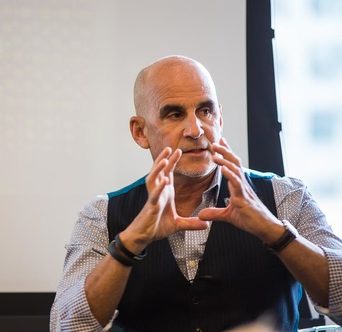 Ted Rubin, Social Marketing Strategist, Keynote Speaker, Brand Evangelist and Acting CMO of Brand Innovator, Return On Relationships (#RonR) sums it up quite succinctly because it isn’t simply the what you use to perform your job. It’s the person, the impassioned entrepreneur, behind the tools that brings your business to life.
My Most Important Social Media Tools…
1 – My personality
2 – My passion
and…
3 – My obsessiveness with being connected
Each of these colleagues and members of the freelance economy exploit the accessibility of the latest mobile tools and technological advances to effectively operate their business and deliver their expertise to your door.
Where else can you find like-minded driven professionals to support your dream while at the same time, reducing your overall costs?
If you’re still yearning for more freelance tips and tools, check out the list below. You’re sure to find some valuable resources to help support your business, gain some new knowledge and better assist your clients. Self-education keeps you ahead of the curve.
Over to you: What tools or services help make you successful and support your business operations? Please post in the comment section below.