
by Ace Concierge | Virtual Assistant | May 21, 2025 | Delegation, Time Management
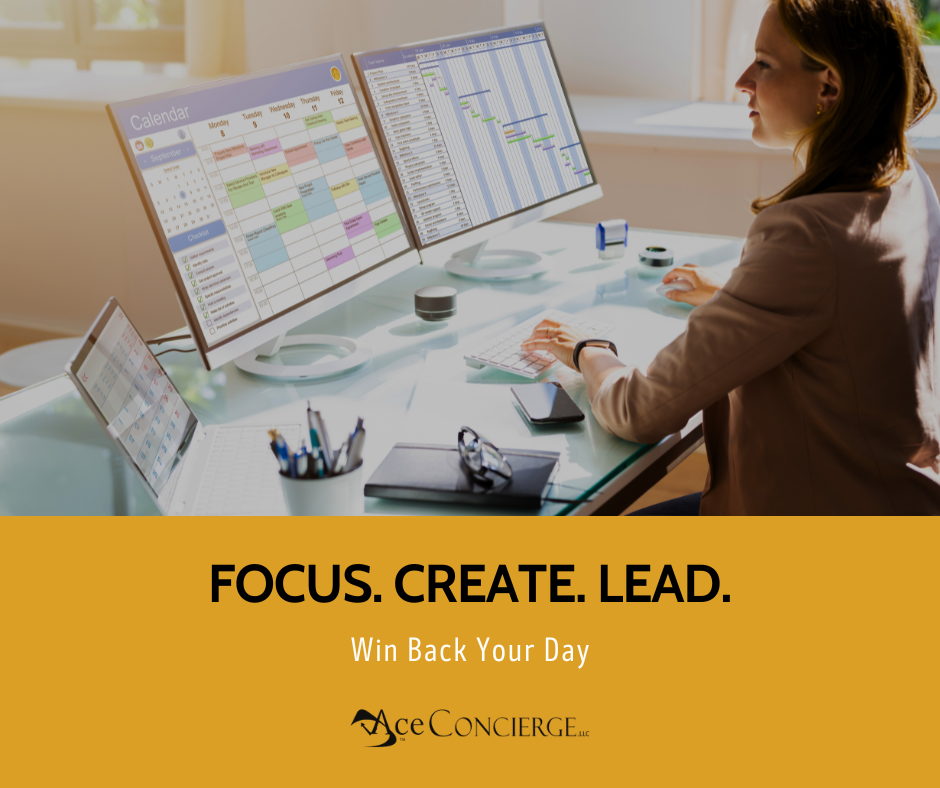
Winning back your day is the ultimate advantage for visionaries, entrepreneurs, and business leaders who want to create space for innovation and strategic thinking. When you focus on winning back your day, you move beyond the cycle of constant busyness and reclaim time, energy, and clarity for what matters most.
Imagine stepping into your morning with a sense of calm purpose. Your calendar is not a wall of obligations but a carefully designed blueprint. There is white space for thinking, room for creativity, and protected time for the work that truly drives results. This is not just a dream for high achievers but a deliberate choice.
Why Winning Back Your Day Matters
Most professionals spend their time on coordination and communication, not the strategic work that moves the needle. In 2025, the average office worker is productive for just two hours and 23 minutes daily, leaving over five hours lost to distractions and low-value tasks. Over half of employees report being relatively unproductive at work, and nearly 90% get distracted at least once daily. After checking email or Slack, it takes more than 23 minutes to regain focus, yet most knowledge workers check these channels every six minutes.
A recent survey found that entrepreneurs spend 36% of their workweek on routine administrative tasks such as invoicing and ordering office supplies. This tendency to hold onto low-impact activities not only slows company growth but also contributes to increased stress and diminished well-being.
Meetings are another drain: the average employee spends 31 hours each month in unproductive meetings, and 71% of that time is considered wasted. Knowledge workers now spend 88% of their workweek communicating, managing emails, attending meetings, and using chat apps.
The Value of Blank Space
What if the most valuable part of your day is the space that is not yet filled? Blank space is where strategy is born. It is where you connect the dots, see around corners, and imagine new possibilities. Without it, even the most talented leaders find themselves reacting instead of creating.
Building Your Ideal Day
Think of your day as a structure you design, not a container you simply fill. Here are a few principles for building a day that serves your highest priorities:
- Protect Your Peak Hours: Identify when your energy and focus are at their best. Reserve this time for your most important work, not for routine tasks or meetings.
- Audit Your Commitments: Look at your calendar critically. Which activities truly require your attention, and which could be streamlined or eliminated?
- Embrace White Space: Block time for thinking, planning, and simply being unavailable. This is not wasted time—it is the foundation for clarity and innovation.
- Limit Digital Clutter: Every notification, message, or unscheduled call is a withdrawal from your attention bank. Take control of your digital environment to protect your focus.
- Prioritize Recovery: High performance is not a sprint. Workers who regularly take breaks have 13% higher productivity.
The Competitive Advantage
Leaders who design their days with intention not only get more done but also make space for the kind of thinking that leads to breakthroughs. In a world that rewards busyness, the true advantage belongs to those who protect their time and energy.
The Invitation
- What would your results look like if your days were built for depth, not just activity?
- What could you accomplish if you reclaimed just one hour of true focus each day?
The blueprint for your ideal day is within reach. Start by claiming your blank space. The rest is yours to create.

by Ace Concierge | Virtual Assistant | Dec 23, 2024 | Delegation, Small Business, Work Life Balance

Every day begins with a rush; a barrage of emails, urgent requests, and endless tasks demanding your attention. Your mind is bombarded with responsibilities. Each task feels like a drop in a never-ending stream, filling your day with a sense of urgency and a constant need to react. There’s no room to breathe, no space to think beyond the next immediate crisis. It’s a cycle of perpetual motion with no clear destination in sight.
The demands are relentless. Meetings, emails, and client calls pull you in multiple directions, fragmenting your focus. Every interruption feels like an emergency, adding to the overwhelm. Each new task pulls you further away from what truly matters: your vision, long-term goals, and core genius. The more you try to keep up, the more you find yourself treading water, constantly struggling to stay afloat.
The urgent consumes your day, with little room for the important.
This isn’t just about managing tasks; it’s about managing your entire experience. The constant mental load of these demands can be exhausting, leaving you feeling disconnected and depleted. The pressure to stay on top of everything drains your energy, leaving you unable to find the clarity needed to make meaningful decisions. The more you juggle, the harder it becomes to see the wood for the trees.
You’re stuck in a reaction cycle, unable to break free.
Finding Clarity Amidst the Chaos
Overcoming this overwhelm starts with gaining clarity. It’s about understanding where your time is going and recognizing what truly matters to you and your business.
- What if you could identify and eliminate tasks that are merely distractions?
- What if you could automate routine activities?
- What if you could use systems to manage your workload and protect your mental space?
These changes free up significant time, allowing you to focus on what truly moves the needle for your business.
This shift isn’t about doing more; it’s about doing the right things. By letting go of unnecessary tasks and distractions, you can transform your experience from constant reaction to purposeful action. It’s about reclaiming control over your time and energy, making each day an opportunity to achieve meaningful progress.
Instead of just surviving each day, you can thrive, seeing each challenge as an opportunity to grow and innovate.
Embracing a New Approach
To break free from the daily rush, you need a different mindset.
- Stop reacting to every demand and start protecting your focus.
- Set boundaries and learn to say no to distractions.
- Focus on what truly matters—not just the urgent.
You create space to think, plan, and grow by shifting your mindset.
By reclaiming your focus, you can transform overwhelm into empowerment. You move from merely surviving to actively shaping your day. Each task becomes a step toward achieving your goals. The more precise your path, the more control you have, moving from scattered chaos to purposeful clarity.
The key takeaway is that effectively managing time involves prioritizing essential tasks and eliminating distractions, leading to a more focused and intentional work life. By focusing on what truly matters, individuals can turn daily chaos into personal and professional growth opportunities.
Achieve more by doing less!

by Ace Concierge | Virtual Assistant | Dec 16, 2024 | Delegation, Executive Assistant, Virtual Assistant

Every CEO and entrepreneur knows the feeling: too many tasks, too little time. Days that stretch into nights, calendars jammed with back-to-back meetings, and a constant stream of emails demanding attention. The weight of it all is overwhelming. Yet, amidst this chaos, the most pressing question often goes unasked: Am I spending my time where it truly matters?
The hard truth is that most leaders aren’t.
In their drive to build, lead, and innovate, many executives fall into a dangerous trap of trying to do too much. Whether it’s a belief that no one else can do it better or the inertia of “I’ve always done it this way,” these habits prevent leaders from focusing on their core genius: the unique skills and vision that propel their businesses forward.
The High Cost of Low-Value Tasks
Consider this: how many hours of your day are consumed by tasks that could easily be handled by someone else? Reviewing reports, coordinating schedules, and responding to routine inquiries are essential, but are they the best use of your time? The answer is almost always no.
For high-performing leaders, every hour spent on low-value activities is stolen from strategic thinking, innovation, and growth. Worse, these tasks often erode energy and creativity, leaving little room for the kind of deep work that drives meaningful progress.
The opportunity cost is staggering. A 2020 Harvard Business Review study revealed that senior executives spend, on average, 23 hours per week in meetings, which doesn’t include email or administrative duties. Imagine redirecting just a fraction of that time toward high-impact initiatives. What could you achieve?
The Myth of “Doing It All”
Many leaders pride themselves on their work ethic and capacity to manage multiple responsibilities. But the idea of “doing it all” is not only unsustainable, it’s counterproductive.
Here’s why:
- Burnout: Chronic stress and overwork diminish decision-making ability, creativity, and emotional intelligence.
- Bottlenecking: When everything flows through you, progress slows. Teams wait for approvals, decisions, and input that could be handled elsewhere.
- Missed Opportunities: Time spent on routine, low-value tasks means less time for making critical decisions that drive growth and innovation.
Delegation isn’t a luxury; it’s a necessity. The most successful leaders understand this. They know that their value lies not in managing the minutiae but in driving the vision and strategy that move their organizations forward.
Delegation Is a Superpower
Shifting from a “do-it-all” mindset to one of strategic delegation can be transformative. Delegation isn’t about offloading tasks but empowering others to take ownership, freeing you to focus on what you do best.
Here’s how to start:
- Audit Your Time: Spend a week tracking your activities. Identify tasks that are repetitive, administrative, or outside your core strengths. These are prime candidates for delegation.
- Prioritize by Impact: Separate your to-do list into high-payoff and low-payoff activities. High-payoff tasks align with your unique skills and organizational goals. Low-payoff tasks like scheduling, social media, and admin tasks are best handled by others.
- Build the Right Team: Effective delegation requires trust. Invest in team members or external support (such as virtual assistants) who excel in your delegating areas.
- Communicate Clearly: When delegating, be specific about expectations, deadlines, and desired outcomes. Clarity reduces the risk of miscommunication and ensures alignment.
- Let Go: This may be the most challenging part for many leaders. Delegation only works if you resist the urge to micromanage. Trust your team to deliver and focus on the bigger picture.
Unlocking the Multiplier Effect
When leaders delegate effectively, something remarkable happens: their impact multiplies. Here’s why:
- Enhanced Focus: By eliminating distractions, you gain the mental clarity to tackle complex challenges and seize opportunities.
- Empowered Teams: Delegation isn’t just about you; it’s about building a culture of trust and accountability.
- Accelerated Growth: With more time to devote to strategic priorities, you can drive faster, more sustainable growth.
A client shared how they revolutionized their workweek by delegating scheduling and operational tasks to Ace Concierge. “I realized that the hours I spent coordinating meetings or handling routine emails were hours I wasn’t spending brainstorming new ideas or connecting with clients. Delegating these responsibilities wasn’t just freeing; it made me a better leader.”
The Delegation Mindset Shift
Delegation isn’t about admitting weakness or relinquishing control but maximizing impact. It’s about recognizing that your value as a leader isn’t measured by how much you do but by how much you enable.
The next time you find yourself drowning in low-payoff activities, pause and ask:
- Is this the best use of my time?
- Could someone else do this just as well (or better)?
- What would happen if I let go?
These questions are a compass guiding you back to what matters most.
Take the Leap
Time is your most precious resource. You can’t create more, but you can reclaim it by delegating strategically. Doing so isn’t just a practical choice; it’s a profound act of leadership.
Imagine what’s possible when your time is fully aligned with your genius. Picture a workweek where you’re energized, focused, and driving meaningful impact. That vision isn’t a distant dream; it’s a choice that begins with delegation.
“The first rule of management is delegation. Don’t try and do everything yourself because you can’t.” Anthea Turner
by Ace Concierge | Virtual Assistant | Mar 27, 2024 | Business Transformation, Delegation
Greetings fellow entrepreneurs,
I’m here to share my transformative journey – a shift from being a one-person powerhouse to embracing strategic delegation. It’s a story of efficiency, sanity, and achieving sustainable success in business.
The DIY Dilemma: A Prelude to Change
Many years ago, I found myself burning the midnight oil, surrounded by stacks of tasks, and constantly feeling the weight of running every aspect of my business single-handedly. I took pride in being a one-person army, juggling tasks from marketing to admin. The belief that doing it all would equate to more success was my guiding principle. Little did I know, I was unknowingly boarding the express train to Burnout City.
Pain Point 1: The Myth of Multitasking
In the quiet hours of the night, accompanied by never-ending to-do lists, I attempted to wear every hat in my business. The seductive appeal of multitasking, the notion that managing everything equated to success, ensnared me in its intricate web. It didn’t take long for me to recognize that, amidst the juggling act, I was merely managing rather than genuinely excelling.
Pain Point 2: The Illusion of Control
While I once prided myself on absolute control, the growing workload prompted a shift in perspective. Embracing a growth mentality, I chose to let go to grow. This strategic decision is a decisive move toward scalability and long-term success.
Pain Point 3: The Toll on Well-being
Success at the expense of my well-being wasn’t success at all. The pressure of managing it all was taking a toll on both my physical and mental health. It was time to reassess my approach, reevaluate my priorities, and consider a more sustainable path.
The Turning Point: Recognizing the Need for Strategic Change
Amid this chaos, a realization hit me like a breath of fresh air. I came across a Richard Branson quote: “If you really want to grow as an entrepreneur, you’ve got to learn to delegate.” It was a lightbulb moment – a revelation that pointed towards a more strategic and sustainable way of managing my business.
Solution 1: Delegating for Sustainable Success
Enter strategic delegation – my newfound ally. I decided to bring an executive virtual assistant on board, not as a lifeline, but as a partner in my journey. Delegating tasks allowed me to reclaim valuable time and redirect my focus toward areas where my skills truly shined.
Solution 2: Precision Through Specialization
Delegating tasks didn’t mean relinquishing control; it meant gaining precision. I enhanced my business’s overall efficiency by bringing in individuals with expertise in specific areas. This strategic move elevated the quality of my business solutions and operations.
Solution 3: Balancing Act – Reducing Stress and Enhancing Well-being
The critical outcome of strategic delegation is a significant reduction in stress levels. Suddenly, the pressure lifted, and I had the time and mental space to focus on what truly mattered. My work-life balance was restored, and my business survived and thrived.
The Numbers Don’t Lie: Delegation’s Impact on Efficiency
Let’s look at some statistics. According to a Forbes article, CEOs who demonstrate exceptional delegation skills can achieve a remarkable 33% increase in revenue. In entrepreneurship, where time is the ultimate currency, strategic delegation emerges as the key to enhanced productivity.
Walking the Talk: Leading by Example
I’m not just singing the praises of delegation; I’m living it. My virtual assistant is not merely a support team member; she’s an integral part of my business’s success. I delegate to her, not as a means to cope but to ensure sustainable growth, provide exceptional customer experiences, reduce stress, and foster a healthier work-life balance.
The Final Verdict: A Strategic Shift for Sustainable Success
In a world that often glorifies the hustle, it’s crucial to recognize that sustainable success is the accurate marker of achievement. It’s not about doing it all; it’s about doing what matters most and well. Delegating isn’t a sign of disorganization; it’s a strategic move toward lasting success.
So, if you find yourself overwhelmed and yearning for a more sustainable approach, consider the power of strategic delegation. It works!!
Here’s to efficiency, balance, and the journey from DIY to a sustainable and successful business!
Cheers!!
by Ace Concierge | Virtual Assistant | Jan 3, 2024 | Delegation, Executive Assistant, Virtual Assistant

For executives, efficient time management is critical in achieving professional success, given the broad spectrum of responsibilities and limited time. From overseeing projects to attending meetings and responding to emails, executives face an extensive list of tasks that can be overwhelming. This post delves into the most pressing time management challenges faced by executives and presents a promising solution – the engagement of an executive virtual assistant (EVA).
The Overwhelming To-Do List: Prioritize and Conquer
Executives find themselves at the epicenter of ceaseless responsibilities, from steering high-priority initiatives to navigating everyday administrative tasks. The challenge lies not only in the volume of tasks but also in the critical decisions about time allocation, each carrying profound implications for the organization. Balancing this dense to-do list becomes a constant juggling act, demanding intentional thinking and a keen awareness of priorities.
Meetings Galore: Navigating the Time-Consuming Terrain
Meetings, a cornerstone of effective communication and collaboration, also emerge as a formidable time-consuming aspect of an executive’s routine. The necessity of attending internal team meetings, client presentations, and board meetings creates a complex landscape to navigate. While these interactions are essential, they can easily become a double-edged sword, consuming a significant chunk of an executive’s schedule. The challenge is not merely attending these meetings but doing so in a way that allows for sufficient time and focus on the tasks that truly matter – those that contribute to the organization’s strategic goals and long-term success.
Email Overload: Taming the Inbox Avalanche
Executives also face an unrelenting deluge of emails, each demanding attention and action. Managing this constant influx of information becomes a substantial time-draining challenge. Their inbox transforms into a battlefield where the war against email overload is fought daily. The struggle is not only to respond promptly but also to sift through the sea of messages, ensuring that crucial correspondence doesn’t get lost in the shuffle. Effectively managing emails is not just a matter of productivity but a fundamental aspect of maintaining a well-organized and responsive leadership style.
The Project Juggle: Orchestrating Success Amid Complexity
Executives shoulder the responsibility of overseeing ongoing projects while simultaneously initiating and planning new ones. This complex dance of project management demands careful planning and execution. Balancing multiple projects requires more than time management; it necessitates a tactical approach to resource allocation, risk mitigation, and team coordination. The consequences of failure in project management are severe – missed deadlines, cost overruns, and a potential negative impact on the organization’s overall success. Effectively managing these projects requires a delicate balance between leadership vision and hands-on execution.
In conclusion, executives face innumerable challenges in managing their time effectively. Whether it’s the overwhelming to-do list, the time-consuming nature of meetings, the constant battle against email overload, or the elements of project management, the demands are relentless. Navigating these challenges requires a combination of strategic thinking, delegation, and, increasingly, the adoption of new solutions to enhance efficiency. As executives strive to excel in their roles, finding the right balance becomes not just a personal challenge but a critical factor in shaping the success of the organizations they lead.
The Solution: The Executive Virtual Assistant
A game-changing, transformative option that more and more executives are using to deal with the excessive demands of their jobs is partnering with an executive virtual assistant (EVA). An inventive approach to time management is necessary as they confront the daunting obstacles presented by an endless to-do list, many meetings, email overload, and intricate project management.
The EVA is a skilled ally, ready to alleviate the burdens of routine administrative tasks. Delegating to a virtual assistant empowers executives to reclaim their valuable time. This shift not only optimizes the use of their unique skill set but also enhances overall productivity, allowing executives to focus on critical aspects that contribute significantly to the success of their roles and the organization.
Benefits:
Task Prioritization:
An executive virtual assistant excels in the art of task prioritization. By understanding the intricacies of an executive’s responsibilities, they efficiently organize and categorize tasks, ensuring that the most critical ones are given the attention they deserve. This ensures that executives can focus their energy on what matters most for the success of the organization.
Efficient Schedule Management:
The virtual assistant becomes a master conductor in the symphony of schedules. From coordinating meetings to managing appointments, the EVA navigates the densities of an executive’s calendar, optimizing time utilization. This not only prevents scheduling conflicts but also allows for the seamless integration of purposeful activities into the daily agenda.
Streamlining Administrative Duties:
Routine administrative duties, often a source of time drainage, are handled efficiently and precisely by the virtual assistant. From filtering and responding to emails to managing routine paperwork, an EVA ensures that the day-to-day operations of an executive’s office run smoothly. This streamlined approach allows executives to maintain focus on critical decision-making and leadership responsibilities.
Leveraging Efficiency for Success
Proficient time management is a vital element in the success of executives who face multifaceted responsibilities. In this context, the incorporation of the executive virtual assistant represents a significant breakthrough in addressing this challenge. By partnering with an EVA, executives can enhance their productivity and proactively lead their organizations to success in an increasingly competitive business landscape. The executive virtual assistant is not merely a tool, but a catalyst for transforming time management challenges into opportunities for growth and excellence.

by Ace Concierge | Virtual Assistant | Dec 1, 2020 | Delegation, Entrepreneur, Virtual Assistant
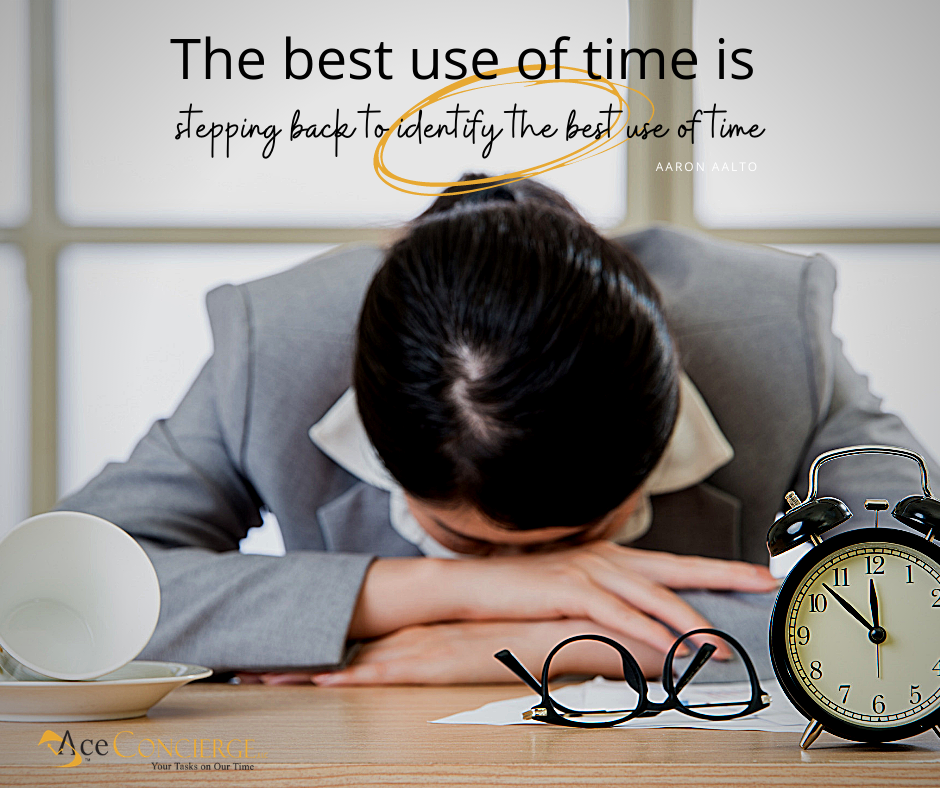
If your ToDo list is made up of:
- Administrative Duties: scheduling meetings, drafting and sending emails, filtering your inbox
- Managing your database of contacts and customers
- Proofreading office documents
- Sending greeting cards, invitations, and newsletters
- Storing and managing files in your cloud software
- Travel planning
- Creating forms
- Setting up project management software
- Editing and uploading blog posts
- Adding and updating WordPress plugins
- Managing social media postings
- Playing email tag
- Scheduling appointments
- Curating content
- Drafting e-newsletters
- Creating a blog and branded social graphics
- Managing your team and projects
Then who is operating your business?
Stop allowing your business to run you (around in circles). It’s time you stepped away from the low-payoff activities and put your value back on the playing field.
Remember WHY you started your company.
What skills did you bring to the table and what are you doing now?
This is crucial not just to your success but to how you spend your time.
If you are busy using your toolbox on all of the backend tasks, social media, and daily minutia, where and when are you able to apply your core genius before total burnout?
Train yourself to stop doing tasks that don’t add much value to your business – admin, repetitive, things you hate and things you aren’t good at. Ekaterina Ramirez
ToDo List Exercise
- Commit to 1 week
- Create a spreadsheet: date, task, time in, time out, started, completed, in process
- Track every task, project, distraction, interruption, time lost
- Note what wasn’t done
- Pay attention to time spent on social media (via all devices)
- What were the income-generating tasks?
- How many fires did you put out?
- How much time was wasted on email traffic?
- What items were top priority? Low priority?
- What was a total waste of your time?
- What did you hate doing?
- What else is noteworthy about your time-tracking exercise?
- Before you take on something new, STOP and ask yourself 1). Is this the best use of my time 2). Can someone else do it for me?
What IF you could free up as much as 20% of your time for responsibilities and core business needs that truly matter? Would you invest?
It all begins with the act of delegation.