by Ace Concierge | Virtual Assistant | May 14, 2024 | Leadership, Small Business, Time Management
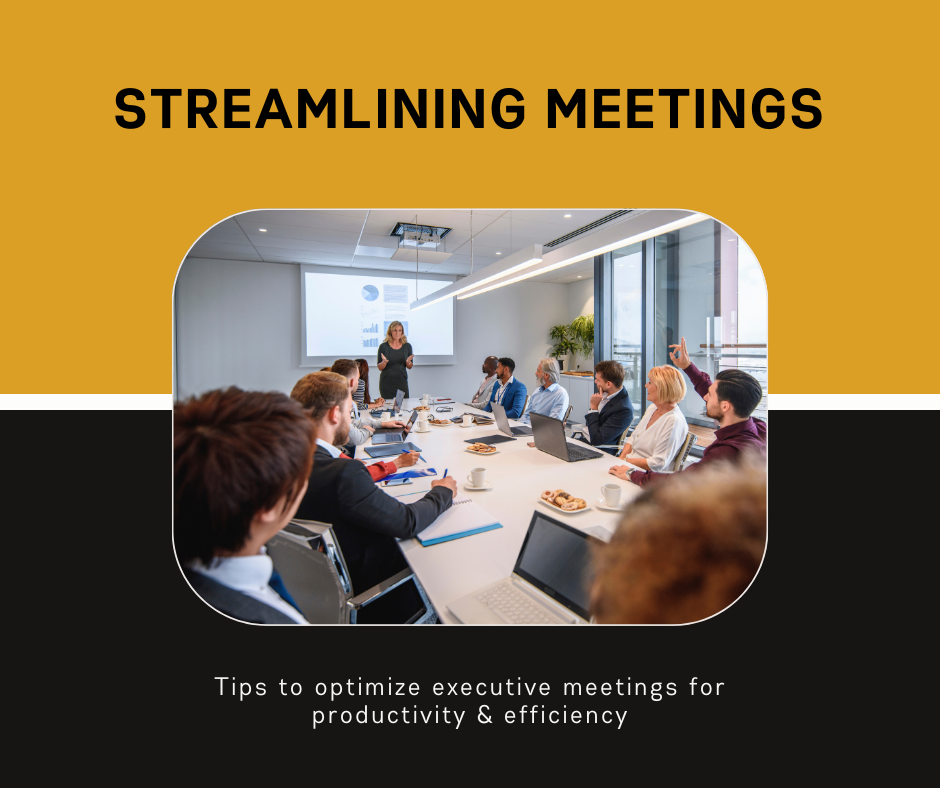
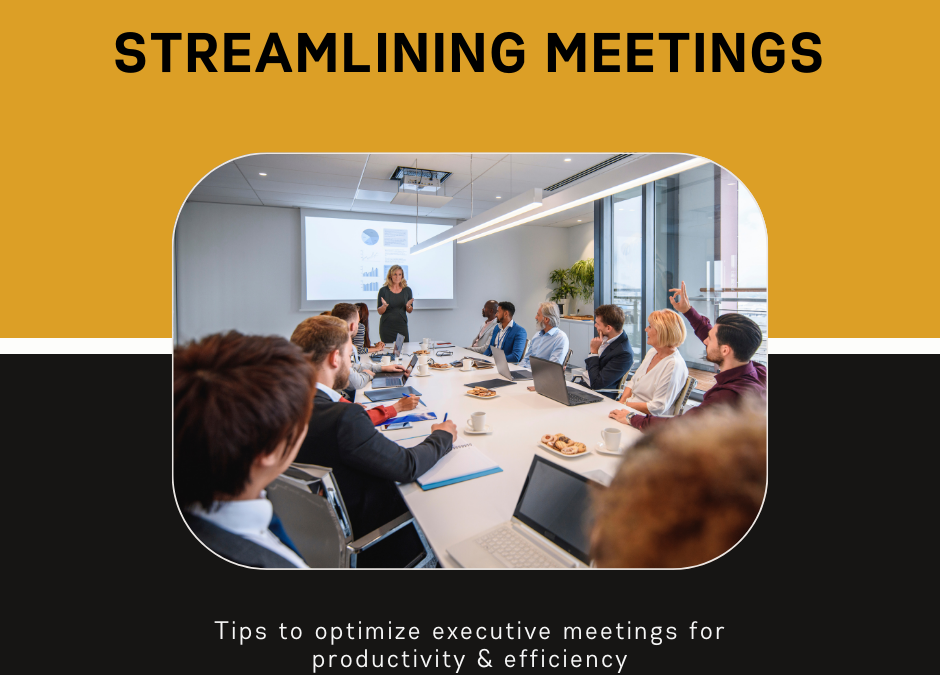
As a business owner or executive, you are likely familiar with the exhausting meeting marathon. It seems like every day is jam-packed with back-to-back gatherings, each promising to make progress on your most urgent priorities. However, more often than not, you come out of these meetings feeling dissatisfied, unproductive, and questioning where all the time has gone. You are not alone in this struggle. Research shows executives spend an average of nearly 23 hours weekly in meetings, with little to show. A significant 71% of senior managers view meetings as unproductive and inefficient.
So, what is the solution to streamline your meeting schedule and ensure that each gathering is a productive use of your precious time? Let’s dive in.
The Productivity Pitfalls of Inefficient Meetings
Enhancing meeting productivity requires addressing the common obstacles that impede their success. A primary concern is unclear objectives and agendas, which lead to unstructured discussions and distractions. Moreover, inadequate meeting management can result in disorganized debates and lengthy updates. The prevalence of multitasking and the overwhelming frequency of meetings also hinder productivity in the modern workplace.
Strategies for Efficient, Focused Meetings
Now that we’ve identified the common pitfalls, let’s explore some proven strategies for streamlining your meeting schedule and maximizing the productivity of each gathering.
1. Define Clear Objectives and Agendas
The old saying goes, “If you fail to plan, you plan to fail.” Before scheduling a meeting, clearly define the purpose, desired outcomes, and critical discussion points. Distribute a detailed agenda in advance so participants can come prepared and ready to contribute.
2. Designate a Facilitator
Appoint a meeting facilitator whose sole job is keeping the discussion on track, managing the time, and ensuring all attendees can voice their perspectives. This person should be empowered to politely redirect the conversation if it starts to veer off course.
3. Limit Attendees
Resist the temptation to invite everyone and their brother to your meetings. Only include the essential decision-makers and subject matter experts who need to be there. As leadership coach Cameron Herold advises, “If you have more than seven people in a meeting, you’re wasting time.”
4. Leverage Technology
Take advantage of the wealth of productivity-boosting tools at your fingertips. Virtual meeting platforms, collaboration tools, and productivity software can all boost meeting efficiency and engagement. Platforms like Zoom, Google Meet, Microsoft Teams, and Switchboard facilitate remote meetings with features like HD video, screen sharing, and real-time messaging. Project management and note-taking apps help track action items, decisions, and follow-ups. Meanwhile, virtual whiteboards and collaboration software enable more dynamic, interactive discussions.
5. Set Time Limits
Resist the urge to schedule hour-long meetings by default. Instead, aim for shorter, more focused gatherings of 30 minutes or less. If the agenda requires more time, break it into a series of back-to-back sessions with clear start and end times.
6. Follow Up Promptly
Don’t let the momentum of a productive meeting fizzle out. Immediately after the gathering, share a concise summary of key takeaways, action items, and next steps. This ensures everyone is on the same page and accountable for their responsibilities. Implementing these strategies can transform your meeting schedule from a time-sucking slog to a streamlined, high-impact part of your workday.
Maximize Meeting Productivity
Meeting optimization is a topic that can’t be overlooked without exploring the different tools and techniques that can enhance productivity. One effective method is the “stand-up” or “scrum” meeting format, where participants stand throughout the gathering. This promotes brevity, focus, and a sense of urgency. Research has shown that stand-up meetings can be up to 34% shorter than meetings where participants are seated.
Another helpful tactic is the “parking lot” technique, where topics that stray from the agenda are promptly noted and addressed separately rather than derailing the ongoing discussion.
Are you ready to revolutionize your meeting schedule from a dreaded obligation to a valuable productivity tool?
by Ace Concierge | Virtual Assistant | May 8, 2024 | Business Transformation, Communication, Leadership
As a business leader with a hectic schedule, your time is valuable and constantly sought after. Balancing client demands, team projects, and industry obligations can be overwhelming. Failing to establish boundaries and turning down opportunities can result in burnout, reduced efficiency, and a loss of focus on key objectives. Learning to say no is crucial for executives and entrepreneurs looking to regain control of their time and resources. This article will delve into the significance of setting limits, offer tips on politely declining requests, and highlight the advantages of saying no.
The Importance of Setting Boundaries
In today’s always-on, hyper-connected business landscape, it’s easy to feel you need to be available 24/7. The fear of missing out or letting someone down can make turning down opportunities or requests challenging. However, failing to set clear boundaries can severely affect your well-being and your ability to lead effectively.
When you say yes to everything, you spread yourself too thin, leaving little time and energy for the essential tasks and strategic priorities. This can lead to increased stress, diminished focus, and a sense of being overwhelmed and unfulfilled. Ultimately, your productivity, decision-making, and leadership capabilities suffer. According to a survey by the American Psychological Association, 75% of adults reported experiencing moderate to high levels of stress in the past month, with work being a significant contributor. By learning to say no, you can help mitigate the negative impacts of chronic stress and burnout.
Techniques for Politely Declining Requests
Saying no doesn’t have to be aggressive or damaging to your relationships. The right approach can strengthen your professional standing and demonstrate your leadership abilities. Here are some techniques for politely and professionally declining requests:
- Respond Promptly: Don’t leave requests hanging. Acknowledge the request and promptly respond, even if it’s a polite decline. This shows respect for the other person’s time and prevents the situation from dragging on.
- State Your Decision: When declining a request, respond directly and confidently. You do not need to provide a lengthy explanation. A simple statement like “I won’t be able to take this on, but thank you for thinking of me” is sufficient.
- Suggest Alternatives: If appropriate, offer an alternative solution or suggest someone else who may be better suited to the task. This demonstrates that you’re trying to be helpful, even if you can’t directly assist.
- Express Gratitude: Thank the person for the opportunity and let them know you appreciate being considered. This helps maintain a positive relationship, even if you decline the request.
The Benefits of Saying No
Mastering the art of saying no may initially feel uncomfortable, but the benefits far outweigh the short-term discomfort. Here are some of the ways that learning to decline requests can positively impact your business and your life:
- Increased Productivity: You free up time and mental energy to focus on your most critical strategic objectives by saying no to low-priority tasks and commitments. This allows you to be more productive and achieve more significant results.
- Reduced Stress and Burnout: Overcommitting yourself is a surefire path to burnout. According to a study by the World Health Organization, burnout is characterized by feelings of energy depletion, increased mental distance from one’s job, and reduced professional efficacy. Saying no helps you maintain a healthier work-life balance, reduce stress, and avoid the negative impacts of chronic overwhelm.
- Improved Decision-Making: When you’re not stretched thin, you can make better-informed, more thoughtful decisions. This leads to more effective leadership and better outcomes for your business.
By mastering the art of saying no, you can control your time and energy and align your commitments with your highest priorities. This, in turn, can boost your productivity, reduce stress, and make you a more focused, impactful leader.
You have to decide what your highest priorities are and have the courage pleasantly, smilingly, and non-apologetically – to say no to other things. And the way to do that is by having a bigger yes burning inside. Stephen Covey

by Ace Concierge | Virtual Assistant | May 1, 2024 | Business Transformation, Small Business

Small business owners deal with a lot daily—from managing customer inquiries and employee issues to handling supplier calls and operational tasks. It’s hard to stay on track and get things done when so many distractions exist. Feeling frazzled and stressed out is common when your plans are constantly disrupted. Many business owners feel like they’re always being pulled in multiple directions.
When they think they’ve carved out a few hours to work on a strategic initiative, an urgent order comes in, or an employee needs immediate attention. This cycle of bouncing from one fire to the next can leave small business owners wondering what they accomplished by the end of the day. The relentless nature of running a small business makes it incredibly challenging to protect your time and stay on track with essential priorities.
But with the right strategies and mindset, you can tame the chaos and reclaim your productivity.
Identify Your Productivity Pitfalls
The first step in mastering distractions and interruptions is understanding where they originated. Take a close look at your daily routine and identify the biggest culprits:
- Constant email and messaging notifications
- Unplanned drop-in visits from employees or customers
- Unexpected phone calls that derail your focus
- Multitasking between various projects and tasks
Small business owners often pride themselves on managing multiple tasks simultaneously. However, research shows that constant switching between activities can make us less efficient, as we spend more time trying to remember where we left off than actually getting work done. Once you’ve pinpointed your primary productivity pitfalls, you can start to implement targeted solutions.
Establish Boundaries and Protect Your Time
One of the most effective ways to minimize distractions and interruptions is to set clear boundaries around your time and attention. This might mean:
- Designating specific “focus hours” each day when you shut off notifications and avoid taking calls
- Implementing a system for screening and prioritizing incoming requests, whether it’s from customers, employees, or vendors
- Politely but firmly set expectations with your team about when you’re available and when you need uninterrupted time to work.
Some small business owners report feeling guilty about closing their doors or turning off their phones, worried they’re letting their team or customers down. But by protecting your focus time, you can be more present and productive when you are available—a true win-win.
Leverage Technology to Your Advantage
While technology can be a distraction source, it can also be a powerful tool for boosting productivity. Explore apps and software that can help you:
- Automate repetitive tasks and workflows
- Streamline communication and collaboration with your team
- Block distracting websites and apps during designated work periods
- Schedule and batch your most time-consuming activities
Many small business owners waste significant time toggling between different tabs and apps, trying to keep track of everything. Discovering a centralized project management tool or other productivity-enhancing technology can be a game-changer for focus and efficiency. I personally love Redbooth.
Foster a Focused Mindset
Mastering distractions and interruptions is as much a mental game as a practical one. Cultivate a mindset that prioritizes focus, discipline, and intentionality:
- Practice mindfulness and meditation to improve your ability to stay present
- Experiment with the Pomodoro Technique or other time-management strategies
- Celebrate your small wins and recognize the progress you’re making
Small business owners often find themselves in a never-ending game of catch-up. However, pausing and recognizing your achievements is essential, even on the busiest days. This can provide the motivation needed to keep moving forward.
By implementing practical strategies and maintaining a focused mindset, you can regain control of your time and become a force of productivity. Always remember, owning a small business is a marathon, not a sprint.
With the right tools and techniques, you’ll reach the finish line feeling energized and accomplished.
The successful warrior is the average man, with laser-like focus. Bruce Lee

by Ace Concierge | Virtual Assistant | Apr 24, 2024 | Business Transformation, Leadership

In today’s fast-paced, digitally driven world, it’s easy to feel overwhelmed by the constant barrage of information, notifications, and demands on our time. I’ve seen firsthand how a lack of focus and the inability to engage in deep work can hinder our ability to achieve our goals and reach our full potential. However, by embracing the power of focus and deep work, we can unlock a world of possibilities and transform our daily lives.
The Epidemic of Distraction
Recent studies have shown that the average person’s attention span has decreased significantly. The average person can now focus for 8 seconds, down from 12 seconds in 2000. This is due mainly to the proliferation of digital devices and the constant stream of information and stimuli we’re exposed to daily.
“The ability to focus is a superpower.” – Chris Bailey, author of “The Productivity Project”
This epidemic of distraction has far-reaching consequences, not only for our productivity but also for our overall well-being. Constant multitasking and the inability to focus can lead to increased stress, decreased cognitive function, and even a decline in mental health. This is where the concept of deep work becomes crucial.
In one year, the average knowledge worker allocates 103 hours to unnecessary meetings, 209 hours to duplicated work, and 352 hours to work-related discussions (Asana).
The Power of Mindfulness
One critical strategy for overcoming distraction challenges is the practice of mindfulness. Mindfulness is the art of being present in the moment, fully engaging with the task at hand, and tuning out the noise of the external world.
“Mindfulness is the ability to be fully present and aware in the current moment.” – Jon Kabat-Zinn, founder of Mindfulness-Based Stress Reduction
By cultivating a mindful mindset, we can train our brains to stay focused and attentive, even in the face of distractions. This boosts our productivity and enhances our overall sense of well-being and satisfaction. In addition to mindfulness, the concept of deep work, as popularized by Cal Newport, is a powerful tool for enhancing our focus and productivity. Deep work refers to the ability to engage in focused, uninterrupted work for extended periods without the distractions of email, social media, or other digital noise. By setting aside dedicated time each week, we can significantly increase our output and the quality of our work.
“Shallow work is what we do when we’re distracted. Deep work is what we do when we’re focused.” – Cal Newport
Optimizing Your Deep Work Sessions
Environment Optimization
Creating a dedicated workspace that’s free from distractions is key. Set up a quiet corner in your home or office with minimal visual and auditory interruptions. Use noise-cancelling headphones, ambient music, or white noise to block out external disturbances and cultivate a productive atmosphere.
Time Blocking
Implement a structured schedule with specific blocks of time dedicated solely to deep work tasks. By allocating focused time slots for intensive work, you can prioritize essential projects and minimize multitasking.
Digital Detox
Minimize digital distractions by turning off notifications on your electronic devices during deep work sessions. Utilize apps or browser extensions that block access to distracting websites and social media platforms.
Break Strategies
Incorporate short breaks between deep work intervals to prevent mental fatigue and maintain productivity. Use these breaks to stretch, hydrate, or engage in light physical activity to rejuvenate your focus.
Goal Setting
Define clear objectives and goals for each deep work session to maintain direction and motivation. Setting specific targets can help you stay on track and measure progress throughout your focused work periods.
Accountability Partners
Consider partnering with a colleague or friend who shares similar deep work goals. Holding each other accountable and providing mutual support can boost motivation and commitment to sustained focus.
Reflection and Iteration
Reflect on your deep work practices regularly to identify areas for improvement and adjustment. Experiment with different techniques, routines, and strategies to optimize your workflow and enhance the quality of your deep work sessions.
Overcoming Obstacles and Embracing the Journey
It takes real effort to break free from those ingrained habits and temptations that pull us in many different directions. But you can overcome those obstacles with patience, self-compassion, and a willingness to experiment.
Trust me, the payoff of cultivating that focused mindset is enormous – you’ll unlock a whole new level of productivity and achievement in your personal and professional life.
It’s all about finding and sticking with what works best for you. Sure, there may be ups and downs, but hang in there, and you’ll be reaping the rewards in no time.

by Ace Concierge | Virtual Assistant | Apr 17, 2024 | Work Life Balance

Work-life balance is a topic discussed to death, but for good reason.
Finding that elusive equilibrium between our professional and personal lives can feel impossible in our fast-paced, always-on world. I get it – I’ve been there.
There have been so many times when I’ve felt completely overwhelmed, like drowning in a sea of work deadlines, household chores, and family obligations. It’s enough to make anyone want to throw in the towel. However, the truth is that balance is not something you stumble upon by chance. It’s something you have to create and maintain through intentional effort and boundary-setting actively.
Be steady and well-ordered in your life so that you can be fierce and original in your work. Gustave Flaubert
The Importance of Work-Life Balance
In a recent survey, over half of workers reported feeling burned out, with the top contributing factors being an unmanageable workload and a lack of work-life balance. And it’s not just our mental health that suffers – poor work-life balance has also been linked to physical health issues like heart disease, obesity, and insomnia. Conversely, employees with a healthy work-life balance report higher job satisfaction, increased productivity, and better overall well-being. The bottom line is this: creating and maintaining a work-life balance isn’t just a nice-to-have – it’s essential for our professional and personal success. And it’s up to us as individuals to take the reins and make it happen.
Steps to Create Intentional Balance
So, how do we go about creating this elusive state of balance? It starts with being intentional and proactive. Here are some critical steps that have worked for me:
- Set Boundaries: One of the biggest challenges to work-life balance is the digital age’s constant connectivity. It’s all too easy for work to bleed into our time. That’s why setting clear boundaries around when you’re “on” and “off” the clock is crucial. This could mean turning off notifications after a certain time, avoiding checking email in the evenings, or even scheduling “no meeting” blocks in your calendar.
- Prioritize and Delegate: With endless to-do lists and competing priorities, it’s easy to feel overwhelmed. That’s why it’s important to get intentional about how you’re spending your time. Take a step back and identify your most important tasks and responsibilities. Then, look for opportunities to delegate or deprioritize less essential items. Don’t be afraid to say no to requests that don’t align with your priorities.
- Create a Schedule: A clear, structured schedule can be a game-changer regarding work-life balance. Block out time for work, exercise, family time, hobbies, and self-care. And be sure to build buffer time between activities to avoid feeling rushed. Experiment to find a rhythm that works for you.
- Unplug and Recharge: In our always-on world, making time to unplug and recharge is crucial. Whether it’s a weekly tech-free day, a monthly digital detox, or an annual vacation, fully permitting yourself to disconnect from work can do wonders for your mental and physical well-being.
- Cultivate Supportive Relationships: The people in our lives can significantly impact our work-life balance. Surround yourself with colleagues, friends, and family who understand the importance of balance and can help you maintain it. Don’t be afraid to lean on your support system when needed.
We respond to the environments we’re in. If you get the environment right, you get the right behavior. Simon Sinek
Putting it All Together
Creating and maintaining a work-life balance is an ongoing process, not a one-time fix. It requires constant self-awareness, boundary-setting, and course correction. But the payoff is well worth it. When we achieve that coveted equilibrium, we experience increased productivity, better physical and mental health, and greater fulfillment. And that’s a win-win for both our professional and personal lives.
So, the next time you feel overwhelmed or out of balance, take a step back and remember that balance is not something you find. It’s something you create. With intention, discipline, and some trial and error, you can craft a harmonious and sustainable life.
What are your tips and strategies for balance?