
by Ace Concierge | Virtual Assistant | Jul 10, 2018 | Social Media, Time Management, Virtual Assistant
Whether your business is real estate in Michigan or SEO services in Chicago, virtual assistants (VAs) can be major game-changers — at least if you know how to use them properly. Designed to support you remotely, a virtual assistant handles the same kinds of tasks that traditional assistants do: clerical work, marketing assistance, web design help, etc. But, as an added benefit, they handle those tasks in their own locations, saving you the costs of office space or equipment. What’s more, 91 percent of them can handle those tasks more efficiently when remote, according to a study from TINYpulse.
So, what’s the key to make the most of these assistants? The answer is strategy. Rather than hiring a VA and waiting for benefits, what you need is to think intentionally about the partnership. With that in mind, here are some key tips for knowing how to get the most out of your virtual assistant!
- Know what tasks to delegate. According to Natalie Sisson at The Suitcase Entrepreneur, one of the best ways to make use of a virtual assistant is by delegating several time-consuming tasks — and saving yourself at least two hours each day in the process. What tasks add up to big savings? Sisson suggests letting your VA manage your calendar, use social media, manage your emails, handle minor blogging tasks, take care of basic bookkeeping, manage your email marketing list, and take on customer support. Other resources suggest tasks such as researching data, updating membership sites, writing transcriptions, creating images for blog posts, moderating forums or creating quick redirects on your site.
- Always give thorough instructions. No matter what tasks you give your VA, aim to overcommunicate about their instructions. This is especially true upfront when you’re beginning to train your assistant. According to an article at EOFire, “you should set aside specific time each day during those first few weeks to train them on [the tasks you’re delegating].” In other words, rather than sending minimal information and hoping your VA figures out what you mean, provide clear, detailed information that answers potential questions before they arise. Think about this: The better you communicate with your VA, the less likely you are to deal with repetitive follow-ups and back-and-forth emails that waste time and lower business efficiency.
- Set deadlines when appropriate. If you give your VA tasks that need to be completed in a certain time frame, set deadlines. This helps set expectations for how quickly work needs to be done, keeping your assistant on track.
- Follow up in the early stages of a project. After giving your VA a larger project, follow up about 10 to 20 percent into the job. Ask how things are going, see if there are any questions, and adjust as needed. This small step can save you big headaches down the road if some part of the project didn’t get communicated.
- Share documents. Avoid miscommunications or lost work by using cloud storage for all documents. Whether you go with Google Drive, Dropbox or another solution, you’ll never have to worry that your VA’s latest work is hard to access.
- Respect their schedules. VAs are not employees. They often have more than one client. As such, you can’t expect them to be available round the clock or to respond right away whenever you contact them. Find out what their typical work hours are, and respect their schedules. This can help you make the most of your relationship over time.
- Consider time-keeping software. Just because someone works remotely doesn’t mean you shouldn’t monitor them the way you would any employee. Consider using time-keeping software to track hours and projects.
- Empower your VA with more involvement. To truly maximize the potential of a VA partnership, encourage proactive behavior. How? Instead of thinking of your VA as a contractor, think of him or her as a partner. So, rather than only delegating minor tasks, you can let your VA grow in responsibilities and the accompanying sense of ownership that comes with them. Instead of just having your assistant update spreadsheets, for example, have him or her follow up with prospects.
- Keep an open dialogue. Check in with your VA from time to time to see how things are going. Ask for questions, concerns, comments or other suggestions. You may be surprised what you learn through this kind of follow-up. Likewise, try to be available via email or Skype for quick questions that come up for your VA, especially in the beginning when he or she is still learning about your business.
As an entrepreneur or small business owner who wants to save money, scale your business, boost efficiency, and work smarter, you can’t afford to ignore the potential of virtual assistants. So, to make the most of your relationship with one, keep the nine tips above in mind! By thinking strategically about your VA, you can maximize the benefits of using one.
 Author bio: Shanna Mallon is a contributing writer for Straight North, one of Chicago’s top Internet marketing agencies providing SEO, web development and other online marketing services. Shanna has been writing professionally online since 2007.
by Ace Concierge | Virtual Assistant | Jan 10, 2018 | Guest Blogger, Small Business, Social Media
To successfully promote your business with social media, you need a strategy in place. A well-built strategy provides your business with a path that works. It also makes it easy to measure results and check if what you are doing is working or if you need to make changes.
Therefore, in this post I am going to show you how to create an effective social media strategy for 2018. Read my tips and implement them to ensure you get positive results from your social media marketing in the new year…
Choose goals:
A strategy only works if it is results oriented. Hence, before you create your strategy you need to choose goals. For example, if you are running a business the main goals of your social media strategy should be to generate more revenue or things that contribute to boosting revenue like traffic and leads.
Most people make the mistake of choosing apex goals like increasing engagement and followers. These goals are important too and should be part of your strategy, but they shouldn’t be your apex goals. Only have apex goals that have a direct impact on your revenue. After that begin choosing the secondary goals that can have an impact on your apex goals.
Research your audience, social networks and competitors:
Once you know your goals you need to conduct plenty of research to learn as much as you can about your audience. For this you should conduct interviews and surveys.
Conduct social media research

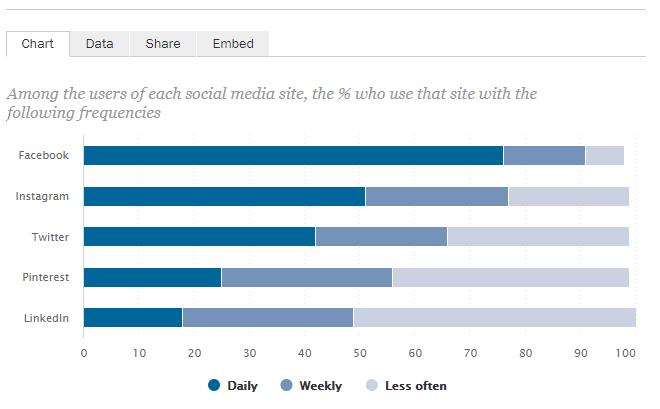
Also, checkout the latest social media demographics research put out by credible organisations like Pew.
Once you know your audience and the networks they use you should conduct research on the social networks they are most active on. Next figure out which ones you would like your business to be active on.
Once you know the social networks you want to use you can learn the best practices and use social media analytics tools to spy on your competitors. See what type of content they create and how it is working for them.
Practice visual content creation skills:
If you look at the fastest growing social networks right now (Pinterest, Instagram and Snapchat) you will realise that they are very visual centric (you can only post visuals on these networks). Also, if you checkout recent research on established networks like Facebook you will see that images drive the highest engagement here.
This is why you should invest plenty of your time to learn as much as you can about creating visual content. This should include understanding basic design principles and the types of images that fare well on different networks.
Once you understand this, creating great visual content shouldn’t be a problem as there plenty of online visual editors that make the process of design easy. They come with premade templates and design ideas too.
Create social media visuals

A company that certainly understand the importance of visual content is Whole Foods. Make sure you checkout their Pinterest and Instagram pages to gain some inspiration.
Incorporate blogging and other content:
Building a social presence with engaging content is an important step, but along with this you must share content from your blog. This lets you transfer some of the engagement onto your blog where you will have the opportunity to convert traffic to leads and sales.
Write longer posts
For best results you should step away from creating short blog posts as a study by Buzzsumo found that long posts between 3,000 and 10,000 words get the most shares. But make sure the entire post is filled with quality information. Just beefing up a blog post with filler content won’t do.
Write long top quality posts
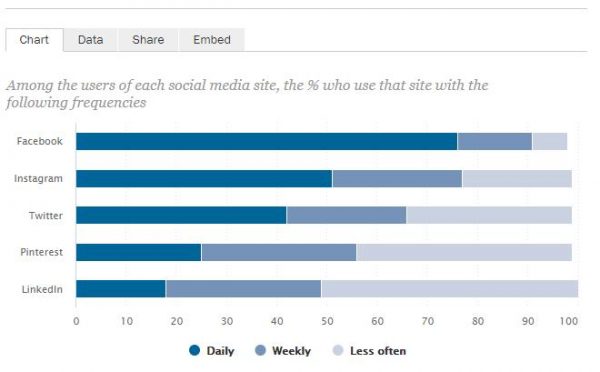
An example of a quality post is Social Media Marketing Made Simple by Neil Patel. It is over 3,000 words long, but every inch of it is filled with quality information.
You should publish long posts like this a few times a week. But if you are pressed for time try you can write them once a week or once every 2 weeks.
Along with the blog post create other forms of content like ebooks, white papers and webinars that can convert blog traffic into leads.
Regularly modify your strategy:
No matter how carful you are with the initial research, you won’t set up the perfect strategy in your first attempt. On top of that industry trends change and social networks are redesigned with the introduction of new features. Hence, you should use a good analytics tool to regularly analyse your strategy and make any modifications if necessary.
Gradually you will be able to build the perfect social media strategy. Of course, you will need to make modifications every few months as trends and features change.
Now go and set up your strategy for the new year…
These are all the steps you must follow while creating an effective social media strategy for 2018. Start by choosing your goals and gathering as much data as you can on your audience and the social network they frequent. Next spy on your competitors and see what’s working for them.
After that get active and begin creating visual content and blog content that will help you accomplish your business goals. And don’t forget to regularly analyse your results and determine if what you are doing is working.
Guest Author
 Mitt Ray is the founder of Social Marketing Writing, where you can download 100 free social media background images.
Connect with Mitt
Twitter: https://twitter.com/mittray
Linkedin: https://uk.linkedin.com/in/mittray
Facebook: https://www.facebook.com/socialmarketingwriting

by Ace Concierge | Virtual Assistant | Nov 16, 2017 | Guest Blogger, Productivity, Time Management

We read about what will make us more productive in life and at work. We know what to do but sometimes we can’t get ourselves going.
Know the true value of time; snatch, seize, and enjoy every moment of it. No idleness, no laziness, no procrastination: never put off till tomorrow what you can do today. Philip Stanhope, 4th Earl of Chesterfield
Here are 6 different and I hope unique ways to experiment with to get you powered up each morning.
- Make your calendar reminders more specific so they grab your attention. Example: Instead of “Morning routine,” list the specific things which you know make you more productive, more focused, organized or have a positive attitude. What works for you? This is useful for getting into a new habit, reminding yourself of one if you’re feeling as if you’re falling off track, or after sickness, vacation, or any break.
- Give yourself a deadline. Remember SMART goals? They work for many people, because they are specific and set a deadline. I’ve been trying to get back to riding my exercise bike, so my goal [finally] became: by the time the U.S. Thanksgiving month begins, I’ll be biking three times a week at 6:30 a.m.
- Get yourself a motivational or accountability partner. Short term or permanently. For example, if for trouble getting out of bed, ask your spouse or one of your kids to get you going. Or if you need support starting a new morning routines, work with a coach. That task you’re procrastinating on …. How about working at the time your kids are doing their homework. Or ask Suzie to call you each day and check in on how you’re doing!
- Are you a numbers person? Use your interest in numbers as your momentum or motivation. For example, use Excel or an app to keep track of how you’re doing with the healthy habits you find important, i.e., breakfast, water, protein, walking, meditation. If you feel you spend too much time on your devices, then use a paper notepad or an index card to track. Or choose a favorite number and meditate, journal or walk for that number of minutes. If it’s short enough, do it twice a day.
- What’s your purpose? Some people get their motivation or momentum from tying a routine to a bigger, meaningful goal. For example, by meditating every day, which you know makes you calmer, you can be the kind of parent you dream of being. Or by walking each day, your mind is clearer at work, so you’re more productive and therefore lead your team more effectively.
- Write down what happens if you consistently do not follow through on your morning routine. If you don’t feel like doing it, and this has lasted more than a week, answer this … and write it out because it will make a greater impression in black and white, staring back at you: How will I feel about myself in another week if this continues? What happens if do not do this for a month, when I know how good it has been for me in the past? And what about in a year? How will you feel about not following through on commitments to yourself?
Guest Author
Sue West

Productivity & ADHD Coach
Certified Organizer Coach®
Certified Professional Organizer®
In Chronic Disorganization
Connect with Sue
Facebook
Twitter
LinkedIn
Website & Blog: www.CoachSueWest.com
Phone: 603.554.1948
Email: Sue@OrganizeNH.com
Think you may have ADHD or similar symptoms? Try Sue’s coaching services or self-paced, ADHD workbook to focus and get started on managing your distractibility or follow through, before they manage you.

by Ace Concierge | Virtual Assistant | Mar 28, 2017 | Entrepreneur, Goals, Productivity

If you’re like me, you probably start your day with a morning routine. Routines help build positive habits, support priorities, create structure, amplify your time, and increase your productivity. Plus, you have the opportunity to set the mojo for the day.
Probably the most important period of your day is when you first wake up. Your morning routine can set you up for massive success the whole day. Matthew Toren
These are essential productivity components whether you operate your own business, support others with theirs, have a career, a family, or even a guinea pig. A morning routine will help you kick ass all day long. Stuff needs to get done. Put away. Managed. Started. Finished. There’s plenty of verbs for all of this but you get the idea!! That being said, do all of your typical morning routines strengthen daily positive productive habits? Sometimes, not so much. You may hit snooze (several hundred times), get sucked into social media, the abyss of checking your inbox, the dreaded remote control, or perhaps even a tempting starchy bagel. Truthfully, I’m not sure which is worse but either way, most are not only a distracting waste of time but studies say these types of morning activities are not the most prolific, thought-provoking methods to ACTIVATE your day. First off, set your intentions. Goals. Priorities. If you don’t have any direction, how will you direct your day? A plan is key to reducing chaos, eliminating overwhelm, being on time, and getting more done. It’s that simple. It doesn’t matter whether you go old school with a pen and paper or more digital with a Google Doc, an app, or some other online tool/platform that you will COMMIT to. This is nothing new. You’ve read it before but maybe now you’d like to SPRING into action. It is March. So March on to the new you.
Break it down and simplify your priorities:
Personal & Business
- Think about what you value most
- What will your morning routine look like to you?
- How do you best start your day?
- What invigorates you – inspires you to be your best/do your best?
- What NEW habits should you bring into your life?
- What old habits should you kiss goodbye?
- What/who should you make more time for?
Healthy routines impart a healthy mind, body, and spirit. A whole healthy you generates a more vibrant and industrious day. [GREAT GOAL] Think of your morning routine as the tool to achieve optimal workday performance. Fuel and nourish your race car if, and only if, you want to win.
Morning Routine Key Principles
- Prepare: design your motivational morning routine
- Time block: actually block off time for specific tasks and HOLD to it. Example: 5-6:30 am gym
- Boycott technology: tune out and turn off distractions and notifications. Facebook, Twitter, and other social posts will still be there after your “self-deposits”
- TIP: Leave your Smartphone on the other side of the room. Don’t grab for it unless you’re turning off the alarm to jump out of bed. [DIGITAL DETOX]
- Be present – in THIS moment Multi-tasking is not allowed
- Self-nourishment: If you sacrifice your health and wellness, there is no business. YOU are a priority. Do it for yourself, friends, family, loved ones, and your company
- Food: science-based evidence clearly demonstrates that foods are medicine. Give your body what it needs to support and power your day
- Meditation: focus, quiet the mind, practice being present and mind FULL
- Exercise: being fit isn’t a fad. It keeps you healthier, reduces or eliminates pain, enhances your life, keeps you younger, strengthens your heart and lungs, battles disease and helps to sustain mobility….. just to name a few benefits
- Goals: write them down!! Keep your goals/plan visible. Be accountable and share it with your friends and family. Your dog might have an interest too
- Action: take daily actions to get you closer to your goals
- Ask yourself: does “this” support my vision?
- Will it help me be better or do better?
- Is it growth-oriented?
Sound off: How does your morning routine IGNITE your day?

by Ace Concierge | Virtual Assistant | Jan 31, 2017 | Delegation, Entrepreneur, Guest Blogger, Productivity, Small Business

“Delegate, but don’t abdicate.” “Delegating takes more time than doing it myself. ”
Delegating – or outsourcing if you are self-employed: yes, it’s difficult and yes, it is so worth your time to learn how to do it well. It is a skill, not something any one of us is innately good at, so I suggest you begin with low risk practice first.
What do you get in return?
- Attention to your bigger goals you’re wanting to spend time but just can’t seem to create.
- A team. Better, clearer communications.
- Accountability practice. And practice at leaning into difficult conversations when you need to have them.
With nearly 20 years of corporate experience, in addition to being a small business owner, I can confidently suggest the following exercise to begin your road to successful delegation and growth. Especially if you’ve never delegated before and are feeling a little apprehensive, this is a fascinating skill because of how much you learn about other people and yourself.
#1 Start Small. Low Risk. Get Some Practice.
Choose a low risk, small task and delegate or outsource it. I hired a company to work with me on one edition of my newsletter. Eventually, I outsourced my website and more because their work, flexibility and ability to hold me accountable worked well for me. Had the newsletter not been successful I could have returned to doing it myself.
Look at your “big goals” list. What do you not have time for that’s really pulling at you?
And then look at your day-to-day work: What project is: not getting done, needs skills you don’t have/aren’t great at, needs a partner to hold you accountable, is low risk (not financials) or is frustrating you and you’re stuck? There will be at least one, guaranteed.
Now back to the goals list: If you invested some time explaining what’s needed for your low risk project and if you could think of the delegating or outsourcing as an experiment, wouldn’t it be great to have time to work on that goal? What’s the risk? Keep it small enough that it’s hard for you not to do it.
 #2 Invest Time.
Create time on your calendar to explain and educate the person who will be handling this for you. If you don’t meet and create time to explain and educate, delegation will fail and it won’t be the other person’s fault. You’ll have done it to yourself. Get it right on the calendar, at least one to educate and one short time to check in. More if needed.
Pay attention to how well you two work together. If you’re being heard. Are solutions and proactive suggestions made? Is understanding present? Ask the person to explain back to you what he/she thinks you want.
And rather than framing this as “asking for help,” do this instead. Since “help” implies you don’t know how to do the task, yet you likely you do know, think “leverage.” What you are doing is even smarter: you are building a team so you can leverage your skills and time as well as your team’s. And that gets you closer to your goals, whether it is to work fewer days a week, have more travel money or time or anything else important to you.
Leverage, not help. Completely different mindset and way of operating here.
#3 Expectations. Get Clear. 
Start by discussing and being super clear in your expectations of WHAT needs to get done.
The goal, the end game, the results. Not the HOW, but the WHAT. [And if you’re working with people who need to know the context or the WHY, give them that, too. Can’t hurt.]
If you have any preferences which add value to the project, mention them, but be prepared to let them go if they are not critical. Double checking quality is critical. The process or tool may not be so much.
Let go of HOW the task is done. That’s what you’re delegating.
If something comes back to you and it’s quite wrong …. first look at or ask about the expectations you think you set.
I did say: this is not simple.
#4 Set Limits.
Consider ahead of time what your limits are and communicate these.
Examples:
- Please don’t spend over ‘x’ amount.
- Let me know how much you get done in 1 hour & let’s go from there.
- It’s important to me that you feel comfortable holding me accountable. Here is what would be great to have … and not.
- Let’s try this one piece. Come back to me and let’s check that together so I’m sure I’ve been clear. And you’re on the right track. If so, we can get lots more done like those.
If you don’t educate on what’s a deal breaker, then when someone spends too much, that’s on you.
Delegate = Leverage.
Delegation is a muscle that needs an attentive workout. The first few times you try delegating may not be as perfect as you envisioned because this does take practice. You didn’t learn to drive, or program, or market in one try. You practiced and got better as you did.
Delegating and outsourcing allow you to do what you know are so incredibly good at. And the work you delegate or outsource? It allows another person to do what he or she is really awesome at, so you both contribute. How good is that?

Guest Author

Sue West
Certified Organizer Coach®
Productivity & ADHD Coach
Certified Professional Organizer®
In Chronic Disorganization
Connect with Sue
Facebook
Twitter
LinkedIn
Website & Blog: www.CoachSueWest.com
Phone: 603.554.1948
Email: Sue@OrganizeNH.com