by Ace Concierge | Virtual Assistant | Oct 21, 2025 | Business Transformation, Delegation, Leadership

Most people define “work” by what appears on their calendar or in project management tools. The reality is that the tasks that truly drain energy are invisible. They don’t appear in spreadsheets or meeting agendas. They are the remembering, the reminding, the checking, and the fixing; the mental labor that keeps the organization moving while remaining completely unseen.
This invisible workload is the glue holding everything together. It shows up as tracking progress, anticipating problems, nudging tasks forward, and fixing issues before they escalate. Each moment may seem small, but together, they consume hours of mental bandwidth every single day.
The problem is that this labor is rarely recognized as “real work.” Because it doesn’t produce tangible outputs, it’s often dismissed. Yet invisible workload determines whether projects move forward, teams communicate effectively, and priorities actually get done.
Understanding Invisible Workload
Invisible workload is the cognitive and emotional effort required to keep things running smoothly, even when no one assigns it formally. Examples include:
- Following up on forgotten tasks
- Ensuring team members have what they need to succeed
- Anticipating issues before they become problems
- Fixing small operational errors proactively
These tasks rarely appear in reports or dashboards, but they are essential for maintaining productivity, preventing crises, and keeping teams aligned.
The Hidden Cost
Carrying an invisible workload has real consequences:
Decision Fatigue
Small, constant decisions, who needs a reminder, what requires attention, slow mental processing, and reduced capacity for higher-level thinking.
Burnout
Unseen, chronic mental labor leads to emotional exhaustion and stress accumulation.
Reduced Strategic Capacity
When the brain is occupied with constant operational tasks, there’s less space for planning, problem-solving, and strategic thinking.
Team Inefficiency
Holding onto invisible tasks often leads to micromanagement. Team members miss opportunities to take ownership, and the workload multiplies unnecessarily.
How to Reclaim Mental Bandwidth
Addressing invisible workload starts with awareness. Track what occupies your mental energy but doesn’t appear formally. Then take action to reclaim focus:
- Document the Invisible
Log recurring mental tasks over a week. Recognize patterns and identify which tasks can be delegated, automated, or systematized.
- Delegate with Context
Hand off responsibilities with clarity. Share why the task matters, not just how to do it. Provide the tools and autonomy needed for success.
- Implement Systems
Checklists, templates, and digital tools remove the need to remember every detail manually, freeing cognitive space.
- Protect Time for Deep Work
Schedule blocks for strategic thinking, problem-solving, or high-impact tasks. Treat this time as untouchable.
- Seek Support
Consider staff, virtual assistants, or automation to handle routine tasks. Freeing your mental bandwidth allows focus on what truly drives results.
Why This Matters
Invisible workload is unpaid, unrecognized, and disguised as leadership. Ignoring it leads to stress, inefficiency, and missed opportunities. Recognizing it and building systems to manage it allows work to flow, teams to perform, and mental clarity to return.
Carrying invisible tasks keeps your mind tied up and slows everything else down. Documenting them, clearly passing responsibility, and building systems to manage them frees mental space for the work that drives real progress. The less you hold in your head, the more you can focus on moving things forward.

by Ace Concierge | Virtual Assistant | Sep 30, 2025 | Business Transformation, Delegation, Executive Administration, Leadership

Running a company often feels like trying to hold back a tide with a teaspoon. Every day, CEOs and small business owners are pulled in a hundred directions. Big decisions demand attention, yet countless small tasks, follow-ups, and operational fires constantly compete for focus.
Most of these challenges are invisible to the outside world, yet they silently sap mental energy, slow decision-making, and make it nearly impossible to lead with clarity. Understanding these hidden drains, the mental load, operational bottlenecks, and constant interruptions is the first step to regaining control and protecting the time that truly matters.
Here’s a look at the 10 biggest pain points CEOs face daily, and why executive support can make all the difference.
1. Decision Fatigue
A CEO makes an average of 200+ decisions per day (Harvard Business Review). Every small choice, such as approving a report or signing off on a minor expense, uses cognitive energy. Without support, leaders run out of mental bandwidth before the big decisions even land on their desks.
2. Operational Overload
Studies show that 72% of a CEO’s time is consumed by meetings, administrative work, and firefighting (McKinsey). High-level strategy often takes a back seat while day-to-day operations demand constant attention.
3. Time Scarcity
Even the most organized leaders struggle to find time for what matters most. Research from First Round Review finds that only 28% of a CEO’s time is spent on high-value strategic work. Every other hour is consumed by urgent but lower-impact tasks.
4. Information Chaos
The average executive receives over 120 emails per day and attends more than 60 meetings per month (McKinsey, Atlassian). Sifting through endless updates and notifications fragments attention, making it hard to focus on priorities.
5. Lack of Focus
Context switching comes at a cost. The American Psychological Association reports that frequent task-switching can eat up 40% of productive time. Leaders constantly pulled in multiple directions can’t perform at their highest level.
6. Project Bottlenecks
A survey from the Project Management Institute shows that 37% of projects fail due to misalignment and slow decision-making. Without timely approvals and oversight, even small operational delays compound into strategic bottlenecks.
7. Burnout Risk
Deloitte research finds that 60% of leaders report burnout, often linked to administrative and operational overload. Chronic stress reduces focus, creativity, and the ability to lead effectively.
8. Talent Management Strain
Small business CEOs spend up to 25% of their time on hiring, onboarding, and people management (SCORE). While critical, these tasks compete with strategy, growth initiatives, and customer focus.
9. Scaling Challenges
According to U.S. Bank research, 82% of businesses fail because systems and processes can’t keep up with growth. Without operational leverage, leaders get trapped in execution instead of steering the company forward.
10. Lost Opportunities
PwC reports that 45% of executives admit they’ve missed opportunities for growth or innovation because operational noise consumed their attention. Even the best ideas can fail to get traction without mental space and support.
Why This Matters
These pain points aren’t a reflection of poor leadership; they’re a reality of running a complex business. Recognizing them is critical because awareness is the first step toward reclaiming focus, energy, and strategic bandwidth.
A CEO who understands these hidden drains can start making deliberate choices: prioritize tasks, delegate operational work, and protect mental space. Even small shifts can free hours for thinking, innovating, and leading with clarity.
💡 Takeaway: Being a high-performing CEO isn’t just about working harder. It’s about identifying the invisible drains on focus and making space for the work that truly moves the business forward.

by Ace Concierge | Virtual Assistant | Dec 23, 2024 | Delegation, Small Business, Work Life Balance

Every day begins with a rush; a barrage of emails, urgent requests, and endless tasks demanding your attention. Your mind is bombarded with responsibilities. Each task feels like a drop in a never-ending stream, filling your day with a sense of urgency and a constant need to react. There’s no room to breathe, no space to think beyond the next immediate crisis. It’s a cycle of perpetual motion with no clear destination in sight.
The demands are relentless. Meetings, emails, and client calls pull you in multiple directions, fragmenting your focus. Every interruption feels like an emergency, adding to the overwhelm. Each new task pulls you further away from what truly matters: your vision, long-term goals, and core genius. The more you try to keep up, the more you find yourself treading water, constantly struggling to stay afloat.
The urgent consumes your day, with little room for the important.
This isn’t just about managing tasks; it’s about managing your entire experience. The constant mental load of these demands can be exhausting, leaving you feeling disconnected and depleted. The pressure to stay on top of everything drains your energy, leaving you unable to find the clarity needed to make meaningful decisions. The more you juggle, the harder it becomes to see the wood for the trees.
You’re stuck in a reaction cycle, unable to break free.
Finding Clarity Amidst the Chaos
Overcoming this overwhelm starts with gaining clarity. It’s about understanding where your time is going and recognizing what truly matters to you and your business.
- What if you could identify and eliminate tasks that are merely distractions?
- What if you could automate routine activities?
- What if you could use systems to manage your workload and protect your mental space?
These changes free up significant time, allowing you to focus on what truly moves the needle for your business.
This shift isn’t about doing more; it’s about doing the right things. By letting go of unnecessary tasks and distractions, you can transform your experience from constant reaction to purposeful action. It’s about reclaiming control over your time and energy, making each day an opportunity to achieve meaningful progress.
Instead of just surviving each day, you can thrive, seeing each challenge as an opportunity to grow and innovate.
Embracing a New Approach
To break free from the daily rush, you need a different mindset.
- Stop reacting to every demand and start protecting your focus.
- Set boundaries and learn to say no to distractions.
- Focus on what truly matters—not just the urgent.
You create space to think, plan, and grow by shifting your mindset.
By reclaiming your focus, you can transform overwhelm into empowerment. You move from merely surviving to actively shaping your day. Each task becomes a step toward achieving your goals. The more precise your path, the more control you have, moving from scattered chaos to purposeful clarity.
The key takeaway is that effectively managing time involves prioritizing essential tasks and eliminating distractions, leading to a more focused and intentional work life. By focusing on what truly matters, individuals can turn daily chaos into personal and professional growth opportunities.
Achieve more by doing less!
by Ace Concierge | Virtual Assistant | Aug 27, 2024 | Small Business, Technology, Toolbox, Uncategorized
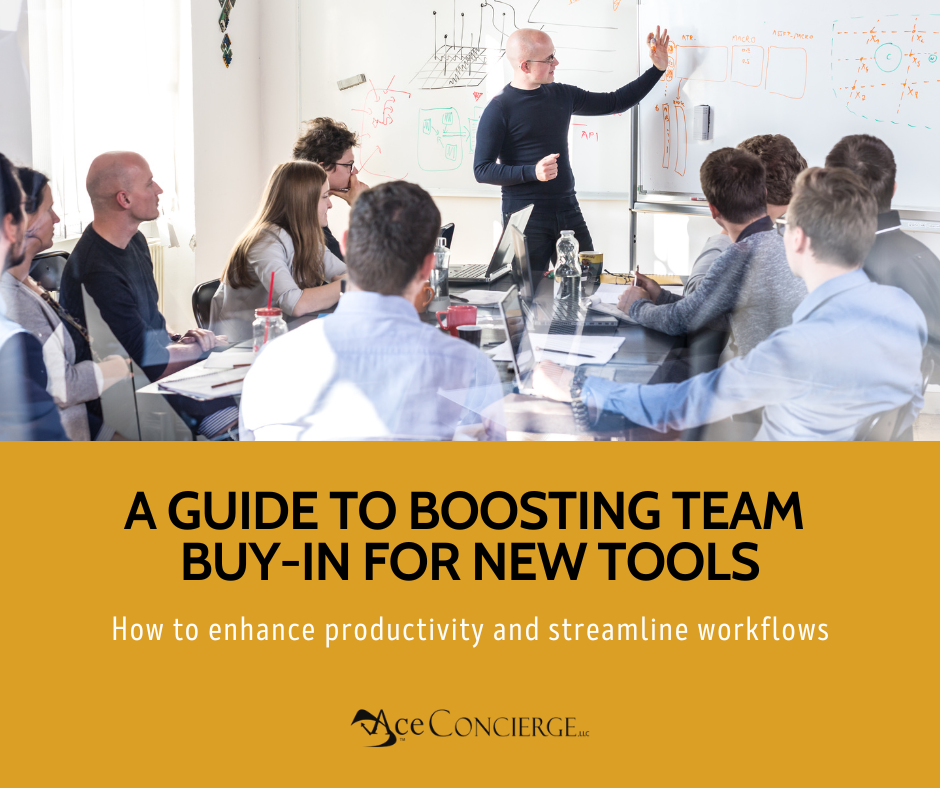
Introducing new tools and technologies is a constant in today’s workplace. However, successfully adopting these tools often depends on how well employees are educated, which is crucial for gaining team buy-in and boosting efficiency.
The Importance of Education for New Tools
The primary reason for introducing new technology is to enhance productivity and streamline workflows. However, employees who are not adequately trained may resist change, leading to decreased morale and productivity. Educating employees empowers them to use the tools effectively and fosters a culture of continuous improvement and adaptability.
- Boosts Confidence and Competence: Employees who are well-informed about new tools feel more confident and capable in their jobs. This newfound confidence leads to greater efficiency, allowing them to complete their tasks more quickly and accurately.
- Reduces Resistance to Change: Much resistance to change comes from a fear of the unknown. Thorough education, clear instructions, and demonstrations of the new tech stack, real benefits can alleviate these fears, making the transition smoother.
- Maximizes ROI: Companies put a lot of resources into acquiring new tools. Ensuring that employees are adequately educated on using these tools allows them to be utilized to their fullest potential, maximizing the return on investment.
Common Pain Points
Even with the best intentions, educating employees on new tools can face several challenges.
- Information Overload: Employees might feel inundated by the volume of new information they need to take in, which can lead to disengagement.
- Lack of Personalization: A generic approach to training can fall short. Different team members possess varying levels of technical skills and learning styles.
- Insufficient Follow-Up: Initial training sessions often aren’t enough. Employees may forget what they’ve learned without ongoing support and reinforcement and revert to old habits.
- Technical Difficulties: New tools can introduce their technical challenges. Without proper troubleshooting assistance, employees may encounter issues that disrupt their workflow.
- Resistance to Change: Employees might resist new tools due to fear of the unknown or prefer established processes. This resistance can significantly hinder successful tool adoption.
- Lack of Understanding: Without adequate training, employees may find it difficult to use new tools effectively, resulting in frustration and reduced productivity.
Strategies for Educating Employees
To tackle these challenges and ensure a smooth implementation, consider the following strategies:
- Conduct a Needs Assessment: Before introducing a new tool, it’s essential to assess the current challenges and determine how the new tool can help. This will allow you to customize the education process to address specific needs.
- Engage Leadership: It is essential to gain support from leadership. When leaders actively participate in the training and commit to the new tools, they set a positive example for the rest of the team.
- Develop Comprehensive Training Programs: Design detailed yet easy-to-understand training programs. Use various formats, such as workshops, webinars, video tutorials, and written guides, to accommodate different learning preferences.
- Incorporate Hands-On Practice: Provide employees with the opportunity to practice using the new tools in a safe environment. This practical experience can significantly improve their understanding and retention.
- Provide Ongoing Support: Create a support system for employees to seek assistance. This could involve a dedicated helpdesk, regular Q&A sessions, and access to a knowledge base.
- Gather Feedback and Iterate: Solicit employee feedback regarding the training process and the usability of the new tech platforms. Use this input to make necessary adjustments and enhancements.
- Celebrate Milestones and Successes: Recognize when teams adopt and use new tools. This not only boosts morale but also reinforces the importance of the new tools.
Teaching employees about new tools goes beyond simply sharing information; it’s about creating an environment that values learning and flexibility. By tackling common challenges and adopting effective training methods, companies can help their teams become skilled in using new tools and excited about what they can achieve. This approach boosts efficiency, enhances morale, and cultivates a more adaptable and resilient workforce. It’s important to remember that the foundation of successful tool adoption is ongoing education, support, and recognition of achievements.

by Ace Concierge | Virtual Assistant | Jan 24, 2024 | Time Management

Developing efficient executive and time management skills is an indispensable skill set for success in the professional world, regardless of your experience level. With a limited number of hours in a day and an increasing number of responsibilities, it’s easy to feel overwhelmed and struggle to accomplish everything on your to-do list.
To get you started on this journey, we’ve compiled a concise list of valuable insights and tips that you can implement today. Whether you’re a seasoned professional seeking to enhance efficiency or a newcomer to the workforce, these tips will assist you in managing your time more effectively, prioritizing tasks, and accomplishing your objectives.
1. Establish Clear Goals:
Kickstart your efforts by defining your destination. Develop SMART goals – Specific, Measurable, Achievable, Relevant, and Time-bound – providing a structured roadmap to focus your energy and guide your actions.
Friendly Tip: Think of your goals as friendly signposts on your professional journey. They guide you, keeping you on the right path with a clear sense of direction.
2. Prioritize Strategically:
With goals in sight, prioritize tasks based on importance and urgency. Employ tools like to-do lists, calendars, and schedules to maintain an organized approach, ensuring you stay on track.
Friendly Tip: Picture your to-do list as a friendly companion. It helps you navigate through tasks, ensuring you focus on what truly matters and stay ahead in your endeavors.
3. Efficient Delegation:
As an executive, learn the art of delegating tasks effectively. Distributing responsibilities strategically allows you to focus on pivotal duties, enhancing overall productivity.
Friendly Tip: Delegation is like building a supportive team. Trust your crew, empower them, and watch your ship sail smoothly through the professional seas.
4. Thoughtful Task Management:
Master the skill of discerning when to say no. Declining tasks that don’t align with your goals prevents burnout and maintains optimal performance.
Friendly Tip: Saying no is like maintaining a healthy work-life diet. It ensures you’re not overwhelmed and can savor the most meaningful tasks on your plate.
5. Optimize Time Use:
Effective time management is about maximizing your resources. Implement techniques like the Pomodoro Technique, time blocking, and the Eisenhower Matrix to make the most of your time.
Friendly Tip: Think of time management as your secret sauce. Use it wisely, sprinkle it strategically, and watch your productivity dish become a success.
6. Communicate Effectively:
In the professional setting, clear communication is key. Ensure your messages resonate by fostering an environment where everyone understands their role and responsibilities.
Friendly Tip: Communicate like you’re chatting over a cup of coffee with friends. It adds a touch of warmth and clarity to your professional interactions.
7. Elevate Leadership Qualities:
Enhance your executive standing by investing in leadership development. Attend training programs, read relevant literature, and seek feedback to refine your leadership skills.
Friendly Tip: Leadership growth is like planting a tree. Nurture it, watch it bloom, and enjoy the shade it provides to your entire team.
8. Prioritize Self-Care:
Amid professional demands, prioritize your well-being. Ensure sufficient sleep, engage in regular exercise, and maintain a balanced diet. Schedule moments for relaxation and self-care to manage stress effectively.
Friendly Tip: Self-care is your treasure chest. Open it regularly, indulge in the gems of relaxation and well-being, and watch your professional journey become more enjoyable.
Looking for some backup numbers? Check out Time Management Statistics in 2023. You may be surprised by the extent of inefficiencies that are negatively impacting your time, finances, mental well-being, and workforce.
Wrap it up! To be a true titan of triumph, sharpen your executive and time management skills with some of these strategic tips, and let us know how you did.
Here’s to your continued success, with a dash of friendly advice!